We will send you regular updates that will keep you informed about the culture war and and the restoration of Christian Civilization.
Gary J. Isbell
Webmaster for TFP.org
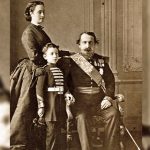
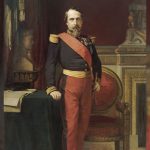
Napoleon III’s political reversal, which supported the Italian revolutionaries, was carefully prepared in secrecy. At the same time, articles in government newspapers gradually shaped public opinion to accept that radical change. Two episodes suffice to show the Emperor’s disloyalty toward Pope Pius IX. In 1859, an anonymous book titled Emperor Napoleon III … Read more
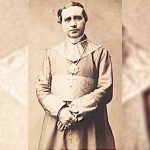
During the Second Empire, some in the Catholic movement unfortunately decided to collaborate with Napoleon III’s policy of favoring Italian revolutionaries. They went so far as to oppose the Holy See openly. These figures included Catholic republicans and ultra-Galicans, of whom Bishop Henri Louis Charles Maret was the most outstanding representative. In … Read more
While the revolutionary tendencies of Napoleon III’s government were becoming increasingly apparent, his attitude towards the Holy See gradually changed. At the beginning of the Second Empire, France protected Pius IX against the Italian Carbonarians. However, after Orsini’s attempted assassination of the Emperor in 1858, the situation changed. Sure of having captured … Read more
During 1857 and 1858, Napoleon III carefully prepared his new policy to support the unification of Italy. He faced a curious dilemma. He sought to pass himself off as an outstanding Catholic who nevertheless could not fail to recognize the just aspirations of Italian revolutionaries and the errors of the Holy See … Read more
The assassination of Paris Archbishop Marie-Dominique-Auguste Sibour in 1857 and the failure of the pamphlet, L’Univers jugé par lui-même completely changed the nature of the offensive against Veuillot and his newspaper, l’Univers. Its enemies understood that doctrinal disputes would not achieve their goals. For his part, the new Cardinal Archbishop, François-Nicholas-Madeleine Morlot, … Read more
In the continuing nineteenth-century battle between liberals and Ultramontanes, Abbé André Sisson’s article in L’Ami de la réligion attempted to shift the burden of proving the errors in the pamphlet, L’Univers Jugé Par Lui-Mème to Louis Veuillot’s shoulders. To deflect the article’s effects, Veuillot sent Abbé Joseph Cognat, the editor of L’Ami … Read more
The existence of a conspiracy against the Ultramontane editor, Louis Veuillot, and his newspaper l’Univers became increasingly evident during the early 1850s. An important factor was the publication of Alfred, the Count de Falloux’s book, The Catholic Party—What it Was and What it Has Become. Perhaps even more apparent was the promotion … Read more
The political philosopher Joseph de Maistre was in a prime position to observe those who presided over the Restoration of the French Monarchy in 1814 and 1815. He coined a famous phrase that aptly summarized the Bourbons’ policy upon their return to the throne of France. “Everything has been reestablished, nothing restored.” … Read more
Before Pope Pius IX’s encyclical Inter multiplices, liberal Catholics and Gallicans promoted disputes in hopes of eliminating Louis Veuillot and his newspaper, l’Univers. However, the encyclical dashed Veuillot’s enemies’ hopes of crushing him in the name of the Church. The Holy See’s clear and unequivocal approval of the newspaper’s guidelines appeared to … Read more
Liberal Catholics had been trying to organize since the late 1830s and the struggle against the state University system(described in parts 1-6 of this series). Bishop Felix Dupanloup of Orléans was the primary architect. In previous installments, we have described how stubbornly he applied himself to attaining this objective. By publishing … Read more