We will send you regular updates that will keep you informed about the culture war and and the restoration of Christian Civilization.
Gary J. Isbell
Webmaster for TFP.org
Two great misfortunes marked Louis Veuillot’s life during Felix Dupanloup’s, the Bishop of Orleans, campaign to get the French episcopate to condemn L’Univers. First, Veuillot’s six-month old daughter, Thérèse passed away in July 1852. In November, his wife died of peritonitis shortly after giving birth to their daughter Medeline. Grief-stricken, the editor-in-chief … Read more
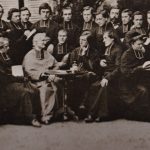
In addition to editing l’Univers, Louis Veuillot sought to enlighten Catholics on the various questions then agitating nineteenth-century France. He conceived a project to publish a series of books by specialists on specific subjects. Each would expound the true doctrine of the Church with clarity and objectivity. That collection would carry the … Read more
After l’Univers published Bishop Pierre-Louis Parisis’s letter praising the newspaper, other prelates expressed support and sympathy for the journal and its editor, Louis Veuillot. That made it impossible for Bishop Felix Dupanloup of Orléans to publish the declaration condemning L’Univers that he had so carefully prepared. After all, his pretext for posting … Read more
After being rebuffed by the editor of l’Univers, Louis Veuillot, Bishop Felix Dupanloup, the liberal Bishop of Orléans, plotted to obtain an ecclesiastical condemnation of nineteenth-century France’s most read Ultramontane paper. On the pretext of quelling rumors about a “so-called division in the episcopate,” Bishop Dupanloup asked that all French bishops sign … Read more
Msgr. John-Joseph Gaume’s 1851 book, Le Ver Rongeur des Sociétés modernes: ou La Paganisme Dans L’Education [The Gnawing Worm of Modern Societies: or Paganism in Education] sparked immediate reactions among Ultramontanes and Liberal Catholics alike. Its central point was that the study of classical (Greek and Roman) literature was harmful to the … Read more
The coup d’état of December 2, 1851, turned Prince-President Louis Napoleon into Emperor Napoleon III. It also deepened the schism among Catholics and sped the formation of the liberal current headed by Bishop Felix Dupanloup of Orléans. Once the resentments over the Falloux school law cooled, the Count de Montalembert drew closer … Read more
Upon taking possession of the Archdiocese of Paris, Most Rev. Marie-Dominique-Auguste Sibour called himself ultramontane. Almost immediately, however, he began to defend religious liberalism and support the republic. Besides attacking the Church, the Parisian anti-Catholic newspapers published the Archbishop’s pastoral letters, on which they lavished praise. Sibour’s liberal ideas spread throughout France. … Read more
As editor of L’Univers, Louis Veuillot ceased his unrelenting struggle against the Falloux Law after it passed in 1850. For Catholics, the law improved the teaching situation in France, despite its severe defects. Accordingly, Veuillot penned a statement of obedience and resignation. “The education bill has been approved. We fought it relentlessly … Read more
In time, the controversial French education law passed in 1850 acquired the name of its sponsor, Frédéric Alfred Pierre, Count de Falloux. After an intense battle with pamphlets and newspaper polemics, the Chamber of Deputies debated the Falloux law. For two months, it was fiercely attacked from both sides. Supporters of the … Read more
Until the education bill was sent to Parliament, the editor of L’Univers, Louis Veuillot, kept his promise to Frédéric Alfred Pierre, Count de Falloux, to remain silent. After the submission of the bill, he began to lead the opposition. Indeed, the vast majority of Catholics shared Veuillot’s position. Many non-liberal Catholics, such … Read more