We will send you regular updates that will keep you informed about the culture war and and the restoration of Christian Civilization.
Gary J. Isbell
Webmaster for TFP.org
As Minister of Public Instruction, Frédéric Alfred Pierre, Count de Falloux showed the full measure of his political value. Alexis de Tocqueville was utterly indifferent to de Falloux’s ideological orientation. Émile Oliver openly disliked him. Yet, sboth men were profoundly impressed by his abilities. De Tocqueville stated: “Whoever has not seen de … Read more
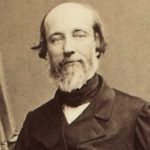
In 1835, two close friends from France met in a London hotel. One was a Legitimist returning from a visit to old King Charles X. The other was a Bonapartist at the service of the ex-King Joseph, brother of Napoleon I. They were Frédéric Alfred Pierre, Count de Falloux and Jean Fialin, … Read more
The Constituent Assembly of 1848 formed fifteen special committees to guide its work better. Among these was a committee on public instruction and education. Each deputy chose the committee to which he wished to belong. The Catholic deputies followed the lead of Count de Montalembert, who urged Catholic Party members to join … Read more
In any movement of ideas, one must distinguish between doctrines, on the one hand, and ideological tendencies and affective leanings, on the other. Doctrines consist of a body of principles. They are consistent with one another and are spelled out in formulas of crystalline clarity. Ideological tendencies are vague ideas that cannot … Read more
Charles Forbes, Comte de Montalembert, was of English descent. He was educated by his maternal grandfather, a Protestant deeply infected with liberalism. Montalembert conceived the illusion that Ultramontanism, which he sincerely and ardently supported, could be reconciled with the seeds of liberalism received during his education and implanted in his mentality. An … Read more
The Church has always had to fight the tendency of certain Catholics to adapt her doctrines and principles to the prevailing ideas of the time. This constant temptation causes almost every heresy and doctrinal deviation that has ever appeared. In France, the Constitutional Church emerged during the Revolution. During the Restoration, Gallicanism … Read more
After the Chambers of Peers and Deputies voted to suppress the Society of Jesus in France in 1844, François Guizot, then Prime Minister, feared meeting with resistance. Therefore, he did not dare to apply the law immediately. Indeed, all Ultramontanes urged the Jesuits not to disperse and to try by all means … Read more
The effects of the Catholic victory in the Chamber of Peers against the education bill were twofold. First, they aroused a never-before-seen opposition. In turn, the strong resistance obliged the rapporteur, Duc de Broglie, to tone down the bill to get it approved. His modifications satisfied neither the stalwart Catholics nor the … Read more
Unfortunately, the Catholic Party’s ever-increasing prestige and successive victories did not prevent differences between its leaders. Indeed, these became sharper and deeper over time. This lack of much-needed cohesion severely hampered the campaign for freedom of education in nineteenth-century France. The Party contained Catholics of all shades and political tendencies. Thus, it … Read more
The government’s unjust and unwise lawsuits against Catholics who criticized the National University System (called “the University”) strengthened the position of the Catholic Party in nineteenth-century France. The University’s supporters decided to go all out to end the resistance to their teaching monopoly. Their short-term goal was to obtain the Assembly’s approval … Read more