We will send you regular updates that will keep you informed about the culture war and and the restoration of Christian Civilization.
Gary J. Isbell
Webmaster for TFP.org
The publication of Pope Pius IX’s Syllabus of Errors upset all governments and provoked incidents in many places. Some incidents were trivial; others were extremely serious. All of them revealed the hatred of the revolutionaries. In Naples and Palermo, they burned copies of the document in the public square. However, demonstrations of … Read more
From the time of the 1848 Revolution, French and Austrian troops protected the Papal States against Italian revolutionaries. The Holy See had no army that could effectively oppose the government of Piedmont-Sardinia. The situation worsened with Napoleon III’s political leftward shift and his victory against Austria in 1859. The defense of Church … Read more
Pope Pius IX’s condemnation of the Count of Montalembert and the Congress of Catholic Scientists (sometimes called the first Mechlin Conference), as well as other measures taken by the Holy See, slowed the momentum of liberal Catholics. The second Mechlin Conference, held in 1864, no longer had such intense liberal hues. Montalembert … Read more
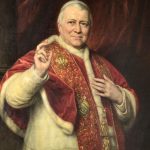
The Holy Father, Pius IX, distributed an early draft of the Syllabus of Errors to bishops in Rome for the canonization of twenty-six Japanese martyrs in 1862. It was no longer a secret that the Holy See was preparing to officially condemn Catholic liberalism. Alarmed by the project, some governments tried to … Read more
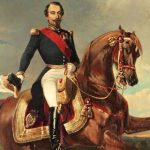
Napoleon III lost the support of the great majority of Catholics between 1864 and 1867 over the Italian unification question. The Emperor abandoned his “wolf in sheep’s clothing” disguise in this matter and likewise sought to do his revolutionary work in France. After 1860, he oriented his policies ever closer to liberalism. … Read more
Louis Veuillot succeeded in forming a grand Catholic movement under the banner of his newspaper l’Univers. He did this in three ways: the clear exposition of Catholic doctrine, taking principles to their ultimate consequences, and rejecting liberal maxims and methods. Liberals did the contrary. They were full of optimism, feared irritating enemies … Read more
Napoleon III signed the order suppressing l’Univers on January 29, 1860. When the police officer arrived with the order, the editorial staff of l’Univers was assembled in the newspaper’s offices. After the order was read, the editors embraced each other. They promised to remain united until the newspaper could be published again. … Read more
Not content with Napoleon III’s peace treaty with Austria, the kingdom of Sardinia-Piedmont continued to entangle itself in Italian politics. True, King Vitorio Emanuel had dismissed his Prime Minister, the Count di Cavour. The king also recalled to Turin, the agitators his former minister had distributed throughout Italy. However, on the other … Read more
When the Franco-Austrian War of 1859 was over, the French bishops abandoned the prudent attitude that circumstances had imposed on them. By acts and statements, they began defending the rights of the Holy See, which were threatened by the Emperor’s Italian policy. Napoleon III faced an unexpected difficulty. Initially, he felt encouraged … Read more
After the peace with Austria, the general amnesty granted to the French Government’s enemies in 1859 canceled the two official warnings l’Univers had received up to that time. It also obliged the newspaper and Louis Veuillot to exercise some caution in combating the Emperor’s revolutionary policy. However, Veuillot knew that the advantage … Read more