
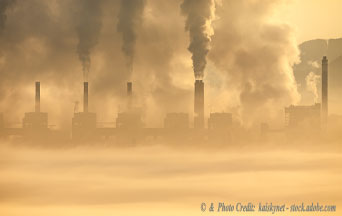
China pretends to comply with green mandates, but it can never get rid of its red communist habits. Looking behind the statistics on carbon compliance, one finds that China is cooking the books.
Indeed, with a mere stroke of a pen, Beijing has managed to conjure a statistical loophole roughly equivalent to Germany’s carbon footprint. This sudden redefinition of what counts as green has halved the reported growth in China’s CO2 emissions over the past five years without any extra effort.
Under the ideology-driven United Nations eco-agreements, countries are permitted to define their own Nationally Determined Contributions (NDCs). However, changing the mathematical methodology throughout the process completely erodes the integrity and honesty needed to track global emissions.
“Creative” Accounting in the World’s Factory
China is the undisputed heavyweight champion in annual carbon dioxide emissions, producing roughly 13.1 billion tons in 2024—a staggering 31 percent of the global total.
But unlike foolish Western activists willing to hamstring their national economies in the name of climate pledges, Beijing prefers a more pragmatic and cynical approach. Rather than sacrifice economic growth, Beijing has opted to cook the books on carbon reporting to fulfill its promises.
China retroactively downgraded its reported CO2 emissions growth from a troubling 14 percent to a far more palatable 7 percent between 2020 and 2025. In the blink of an eye, 700 million metric tons of annual CO2 emissions vanished into thin air.
The Recipe for Fudged Numbers
The mechanics of creating this illusion are dishonest and simple.
First, China excluded fossil fuels used for non-energy purposes from the total. As a result, the massive amounts of coal and oil consumed as raw materials for booming industries—such as chemical and plastic manufacturing—were quietly omitted from the carbon-intensity calculation.
Conversely, they added emissions metrics for heavy industries, such as cement production, because China’s construction sector is in a severe slump. Cement production has plummeted, artificially lowering the resulting emissions figures.
By cherry-picking these and other statistics, Beijing can make them align with the desired results.
A Broken Promise
During the UN climate conferences in Copenhagen in 2009 and Paris in 2015, Beijing made bold claims about its ability to reduce its carbon intensity. Yet by September 2025, the head of China’s Ministry of Ecology and Environment, Huang Runqiu, candidly admitted that controlling these emissions was proving “challenging.”
Miraculously, by March, China proudly reported a 17.7 percent reduction in carbon intensity from 2020 to 2025—just a breath away from its 18 percent goal and a massive leap over the 12.4 percent reduction suggested by earlier, more candid calculations.
Communists Can Never Be Trusted to Tell the Truth
In 2022, President Xi Jinping made it clear that carbon goals should never come at the expense of energy and food security or of the “normal life” of the Chinese people.
Perhaps it is time for the global community, particularly those who loudly champion Beijing’s investments in solar panels and electric vehicles, to recognize the profound hypocrisy in China’s commitment. The West should demand far less blind trust and far more verification.
Photo Credit: © kaiskynet – stock.adobe.com