
The Cathedral of Chartres, France, is one of Europe’s most important and beautiful Marian shrines. For well over one thousand years, Chartres has welcomed countless pilgrims—from kings to humble peasants—who come asking for cures and favors from Our Lady. Even today, 1.5 million pilgrims and tourists visit this breathtaking monument to medieval Catholicism every year, the second-most-visited Catholic cathedral in France after Notre-Dame in Paris.
Chartres’ popularity is due mostly to its most precious relic: the Sancta Camisa, or Our Lady’s veil. In 876, Charles the Bald, Charlemagne’s grandson and king of West Francia (most of what is today France), donated the relic to the bishop of Chartres, where it has remained ever since.
Our Lady’s Miracles at Chartres
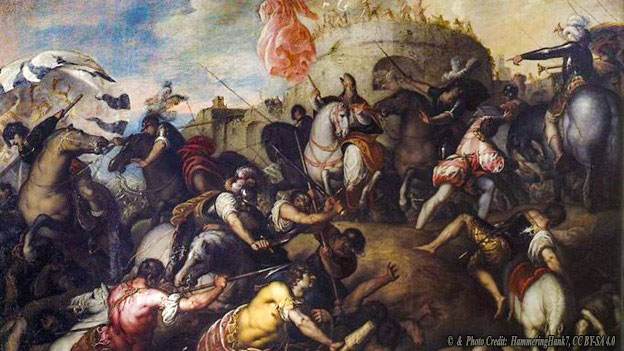
Many miracles have been attributed to the veil over the centuries. The first great recorded miracle was the defeat of the Viking chieftain Rollo at the Siege of Chartres in 911. At a key moment during the siege, the bishop of Chartres processed with Our Lady’s veil on the city walls, asking Our Lady’s intercession in the battle. At the sight of the relic, the Christian army rallied and launched a ferocious counterattack while the pagans inexplicably lost courage and fled in a panic. Shortly afterward, Rollo accepted Baptism, became a vassal of King Charles III, and married the king’s daughter Gisela, putting an end to the Viking raids against that part of France. King Charles granted him the territory that is today Normandy as a fief.
Six and a half centuries later, another great miracle took place at Chartres. On the edge of Chartres’s historic center, just a few yards from the ruins of the city’s medieval walls, sits an unassuming and nearly forgotten chapel with a rather curious title: Notre-Dame de la Brèche (“Our Lady of the Breach”). The “breach” refers to the Protestant siege of Chartres in March 1568 and to a miracle Our Lady performed at that exact spot.
Huguenot Wars in France
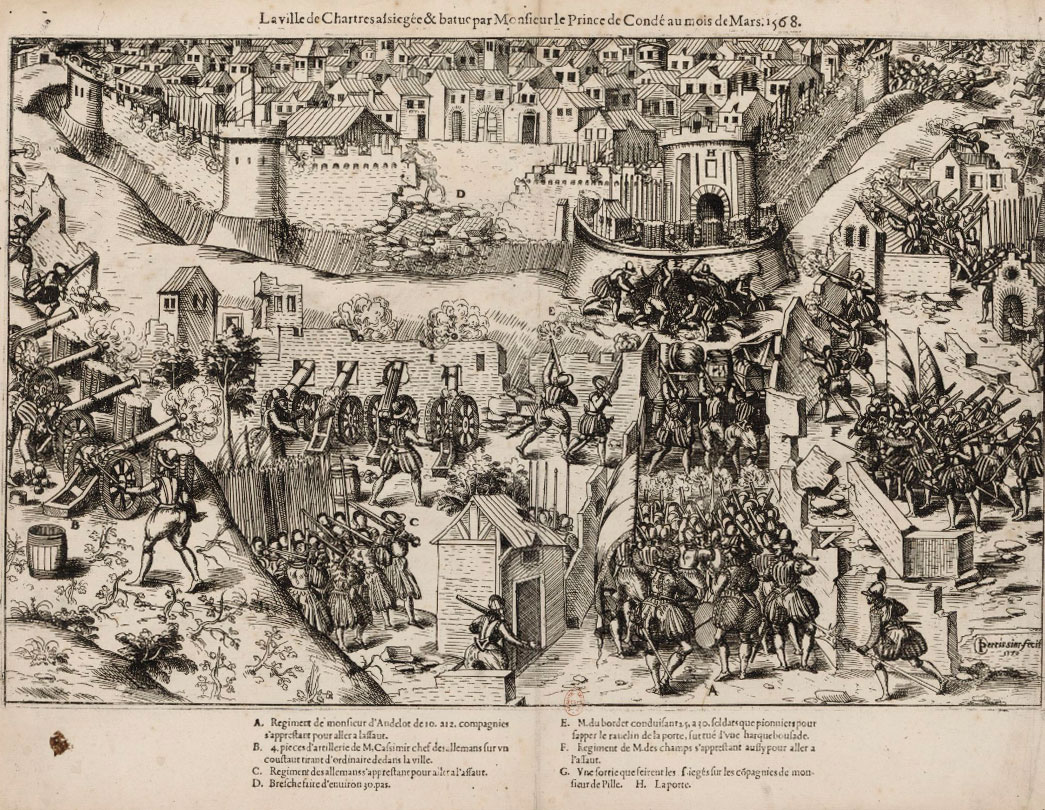
In the sixteenth century, the heretical teachings of Martin Luther, John Calvin, and King Henry VIII had seduced millions of Europeans out of the Catholic Church, destroyed Christendom’s religious unity, and incited terrible religious wars. While Luther’s new religion took root in Germany and Scandinavia, John Calvin’s heterodox teachings took root in his native France.
At its height, as much as 10% of the French population—including a large proportion of the nobility—had abandoned Catholicism for Calvin’s “reformed Christianity.” These French Calvinists—called “Huguenots”—began a religious civil war in France that tried to overthrow Catholicism and the monarchy. Huguenot militia ransacked churches, destroyed statues, desecrated relics, and murdered clergy. With the Pope’s support, French Catholics launched a crusade-like religious movement called the Catholic League. These two sides fought a bitter war of religion that lasted for decades, with terrible consequences for France.
Siege of Chartres
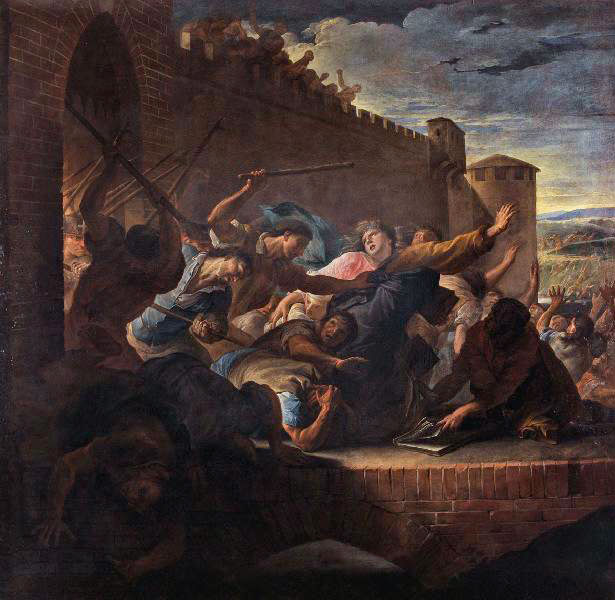
Divine Providence intended the city of Chartres to play a role in this great Catholic crusade. On March 1, 1568, a 9,000-strong Huguenot army under the command of the supreme leader of the Huguenots, Louis de Bourbon, the Prince of Condé, began a siege of Chartres. The walled city was defended by about 6,000 men under the command of the royal governor Antoine de Linières.
The Huguenots needed to take the city for strategic reasons. The city’s fall would put pressure on Paris, the capital and the main Catholic stronghold of the country. But the Huguenots also harbored a deep hatred for Chartres due to its ancient association with the Catholic Marian devotion, as well as the city’s strong resistance to Protestant proselytizing.
As the siege began, the Huguenots captured several Catholic churches on the outskirts of the city. They desecrated holy objects, looted the gold and jewels, burned the churches to the ground, and executed several captured priests. There was little doubt that the same fate awaited the rest of the city and its famous cathedral in a Huguenot victory.
The stakes could not have been higher. Condé himself had promised to destroy all relics and statues of Chartres Cathedral and to feed his horse on its high altar. One of his commanders at the siege, François de Coligny d’Andelot, was known for his violent hatred of Catholicism and of priests in particular. According to the Chartres historian Jean-Baptiste Souchet, d’Andelot kept a collection of the severed ears of dead priests as war trophies, and promised that the first thing he would do in Chartres would be to execute all priests and pour their blood upon the altars of the cathedral in “reparation” for Catholic “idolatry.”1
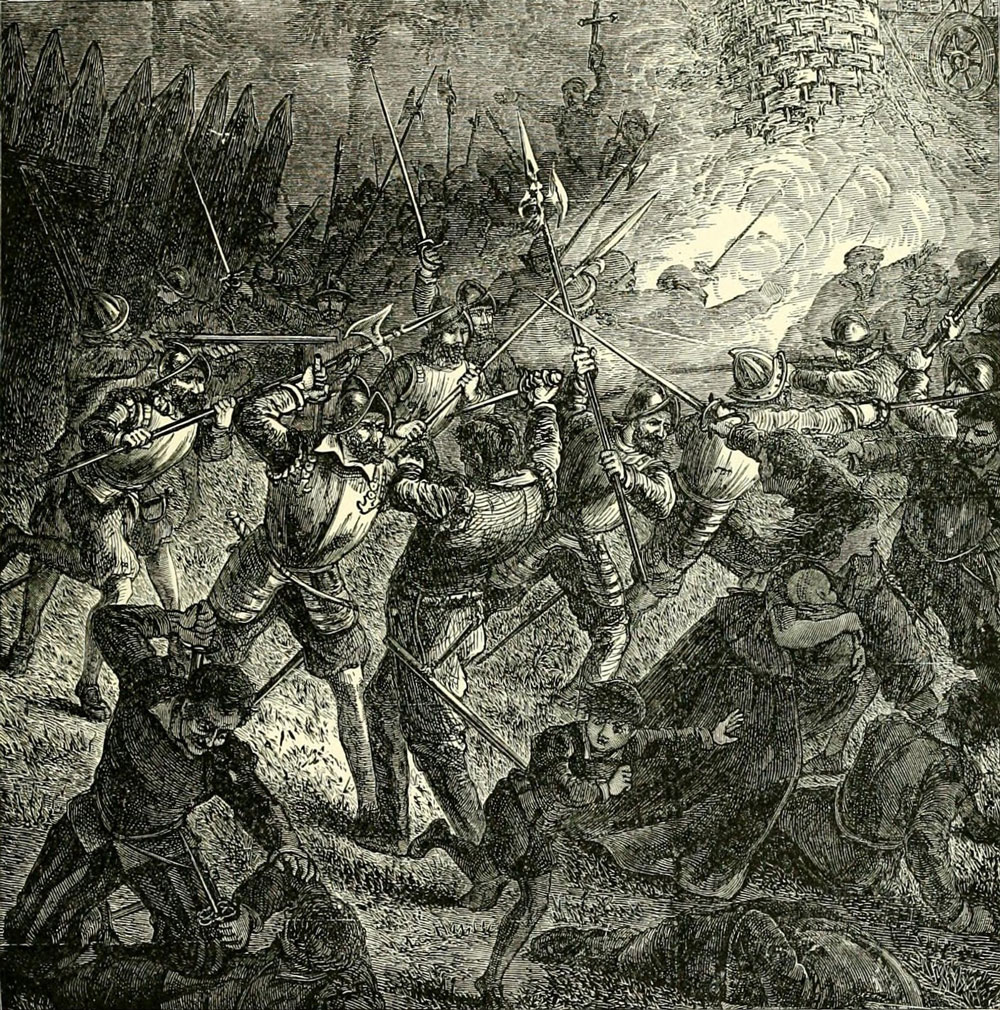
The Protestants determined that the most vulnerable point in the city’s walls was the Drouaise Gate on the northern side. On March 6, they opened fire with five heavy cannon and four light cannon. By the following day, they had blasted a breach in the wall 25 yards (23 meters) wide, allowing the Huguenots to capture one of the wall’s ravelins and begin to enter the city. The governor, sensing the need for bold and decisive action at this critical moment, met with his officers. After promising to each other to vaincre ou de mourir (“to conquer or die”), de Linières personally led his men on a furious counterattack. Their surprise attack stunned the Huguenots, forcing them to withdraw.
Condé then focused his attack on the nearby Herses Tower and its adjacent walls. All day and night on March 9, he blasted the old medieval walls until a large section fell into the Eure River, exposing a new breach for the Huguenots to exploit. But the foresight and quick actions of de Linières saved the day again. The governor reinforced the area with more men and supplies, and the Protestant infantry assaults failed to exploit the breach.
The Catholic defenders were supported by a great canon they called la huguenote (“the Huguenot”). Captured from Condé’s defeated army at the Battle of Dreux in 1562, De Linières placed it in a strategic spot near the Drouaise Gate, allowing the defenders to mow down the Huguenot assaults through the breached walls. The canon performed so well that the defenders began calling it la bonne catholique (“the good Catholic”).
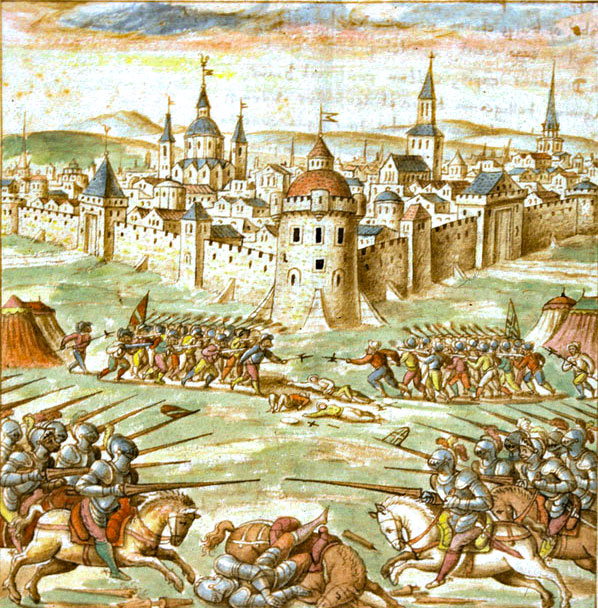
While all the able-bodied men in the city were fighting on the ramparts, the women, children, and old men filled the cathedral’s crypt, praying day and night to Our Lady of Chartres for victory. The Huguenots continued their attacks for days, until, on March 15, Condé unexpectedly called off the siege and withdrew his army. The Catholics had lost about 250 men, while the Huguenots had about double that number. The defenders did not fail to see in this victory the hand of Divine Providence and the special protection of Our Lady of Chartres.
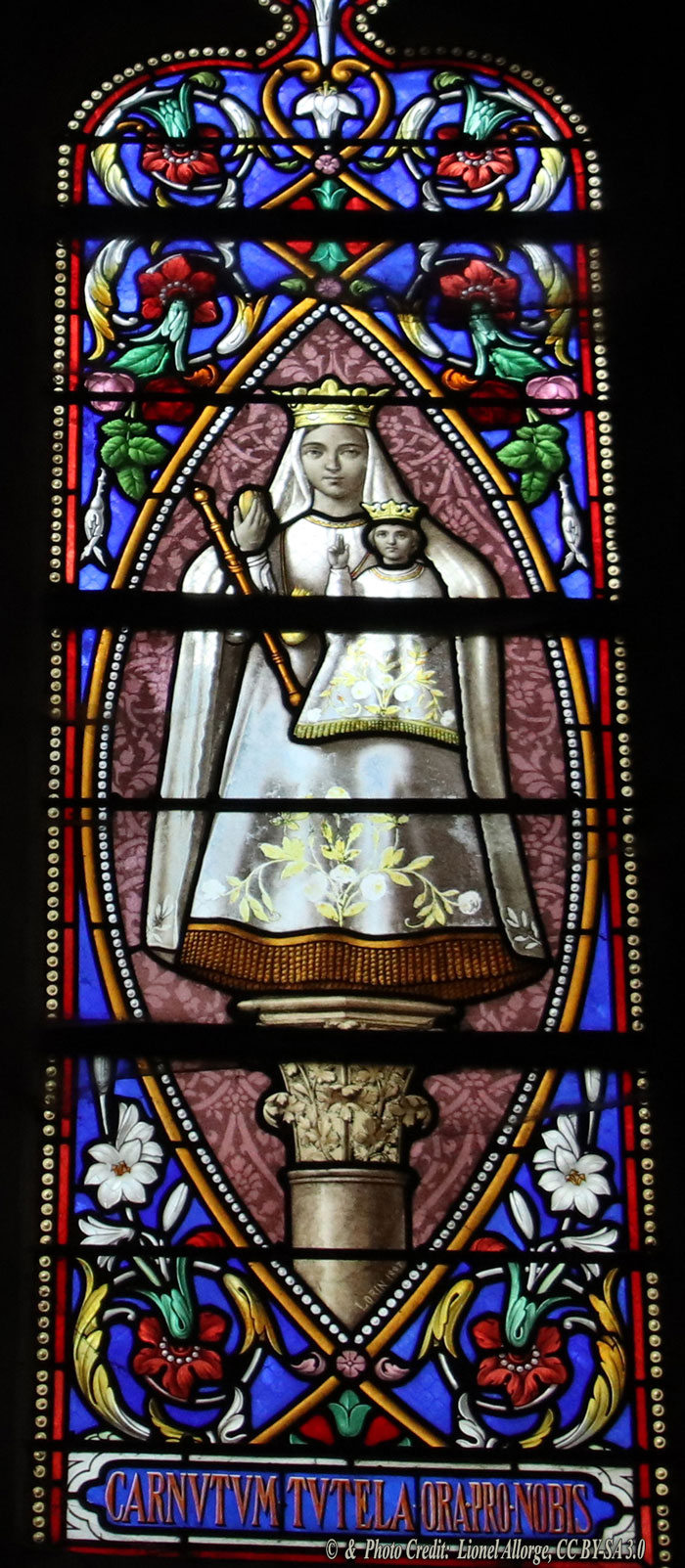
In fact, during the battle, Our Lady performed a miracle that both enraged and terrified the Huguenot soldiers. Ensconced inside a niche above the entrance of Drouaise Gate was a statue of Our Lady, Carnutum Tutela or “Protectress of the people of Chartres.” The Huguenots, full of hate for the Catholic devotion to the Virgin Mary,
“…boasted that Mary had as much power in the city as Diana had in Ephesus, and taking the said image as the object of their rage and fury, they fired so many cannon and artillery shots at it that everything in the surrounding area was shattered to within four fingers’ width, as the traces there still show today; nevertheless, they could never damage the said holy image…. And it was to their great shame that they experienced this at the hands of the patroness of Chartres: for, having been repelled, more by her power than by human arms, they were forced, after great loss and slaughter of their men, to turn back, and to give once more, for the second time, the name to the Prés des Reculés [“the Meadow of Retreat”], in the midst of which they had proudly pitched their abominable tents.”
No matter how many times the Huguenots fired their rifles at the statue, the bullets miraculously swerved away and only hit the surrounding stone frame. This miracle so astounded both attackers and defenders alike that it gave rise to a pious tradition among the people of Chartres. They claimed that Our Lady appeared in the sky with her Divine Son in her arms, and with her dress captured and repelled the Huguenot cannonballs. “The people of Chartres realized that it was the Blessed Virgin, together with her beloved Son, who were visibly taking the city’s defense into their own hands, while the clergy and women prayed and the men of military age rallied together and launched an attack on the besiegers, whom they vigorously repelled.”2
Our Lady of the Breach
On the first anniversary of the victory, March 15, 1569, “in accordance with the wishes of the people,” the city officials and the bishop of Chartres made that day a public holiday in Chartres. They ordered Masses, prayers, and a great procession in thanksgiving for the great victory. In Chartres, March 15 became the feast of Notre-Dame de la Brèche (“Our Lady of the Breach”), also called Our Lady of the Victory.
In 1600, thirty-two years after the miracle that saved their city from the Huguenots, the city authorities and the bishop of Chartres built a small chapel on the exact spot where the miracle occurred, near the Drouaise Gate. This small chapel, Notre-Dame de la Brèche, contained the statue Carnutum Tutela from the siege, which had miraculously deflected the Huguenot rifle bullets and cannonballs.
For more than two hundred years, this great procession took place through the city with great pomp and devotion, second only to Corpus Christi in importance. Our Lady of the Breach and her annual procession were living symbols of the militant Catholicism of the people of Chartres who fought valiantly in defense of God, Our Lady, the Catholic religion, and their king against the Huguenot heresy that nearly conquered France in the sixteenth century.
The procession took place for the last time on March 15, 1789. Just a few months later, the French Revolution began, unleashing a violent persecution on the Catholic Church. All public religious acts were forbidden, and church properties, including Our Lady of the Breach, were confiscated. On July 17, 1791, the National Assembly sold the little chapel to a private owner who decided to demolish it. When the Revolution ended, the public procession through the streets of Chartres was unfortunately never restarted.
A New Chapel
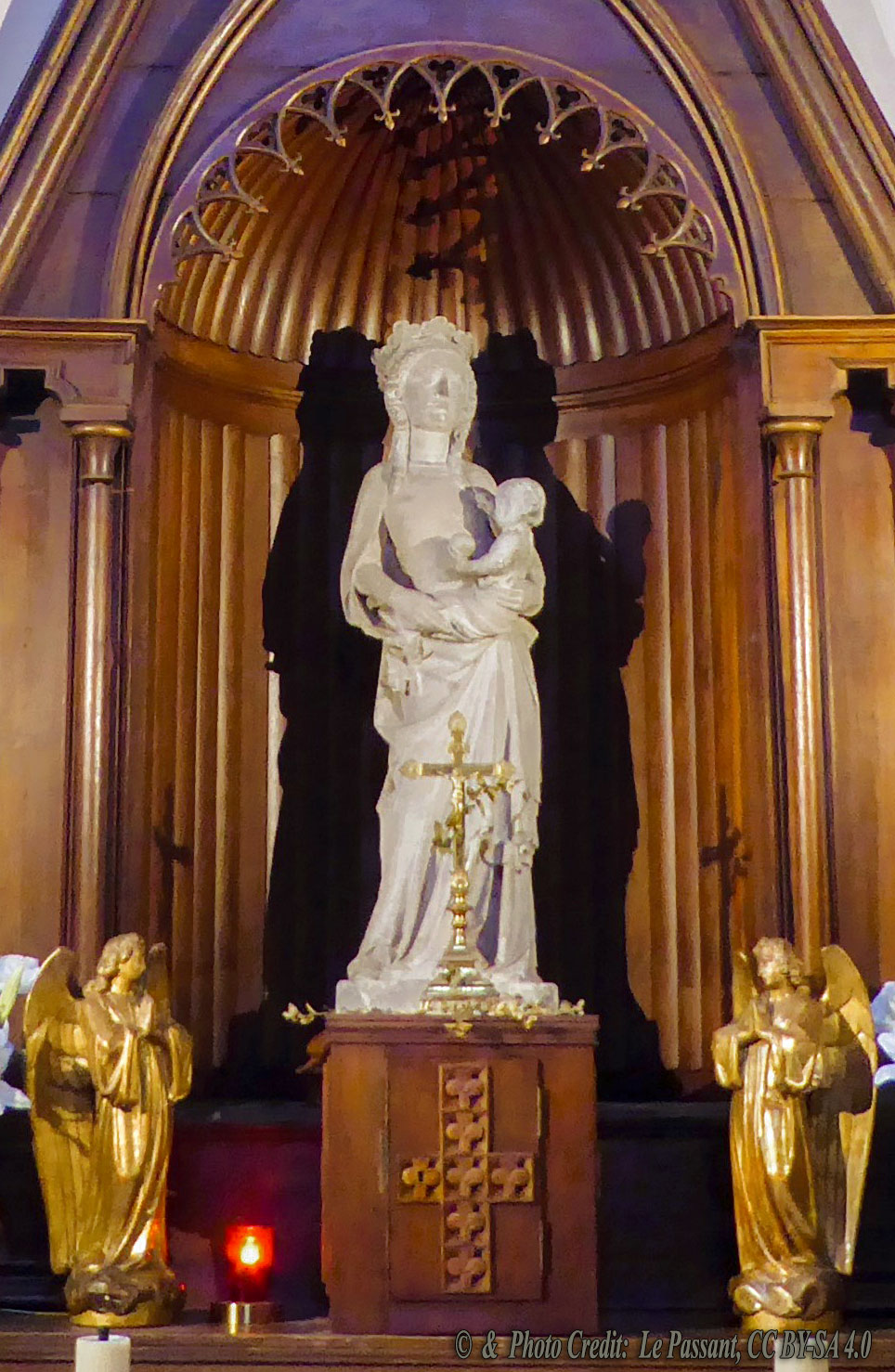
A few years later, responding to a desire among the faithful to restore their ancient devotion to Our Lady, the bishop of Chartres decided to rebuild the little chapel in the same spot. After purchasing the property where the Drouaise Gate once stood, they laid the first stone on March 25, 1843. A prayer composed for the occasion and encased inside the first stone read: “May the Lord watch over His people, and may the Holy Mother of the Lord forever keep her city free from every stain of heresy and every moral corruption!” This chapel still stands today.
The original statue of Carnutum Tutela was saved during the French Revolution by a pious Catholic who hid it in his house. When the new chapel was built, the statue was returned and placed once again in a place of honor in a chapel honoring the miracle she worked so many years before.
Although the rebuilt chapel contributed to a rebirth of fervor for Our Lady of the Breach, by the beginning of the twentieth century, the pilgrimage and the devotion (like so many other Catholic traditions) had sadly died out once again. That which the French Revolution could not destroy entirely was snuffed out by the modern spirit of indifference and “progressivism,” which despises traditional devotions such as processions and miracles.
Rebirth of interest in the twenty-first century
In 2026, however, local Catholics in Chartres decided to revive the devotion. Alexandre Barbier, sacristan of the chapel of Notre-Dame de la Brèche, and Abbé Clément Pierson, priest of the diocese of Chartres, organized a pilgrimage on March 15, Our Lady’s ancient feast day. About 30 Catholics walked the 2.5 miles (4.3 km) from Lèves just outside of Chartres to the chapel of Notre-Dame de la Brèche. After arriving at the chapel, there was Holy Mass and prayers before the statue of Our Lady.
The story of Our Lady of the Breach is one of the great events of Catholic France, a moment when Our Lady directly intervened in a battle on behalf of her faithful children against the armies of the Huguenot heresy. Although it happened nearly five centuries ago, the battle has lessons for today. Western society today is threatened with destruction—not by Huguenot cannonballs—but by materialism, apostasy, religious indifferentism, and immorality. But Our Lady, the “destroyer of all heresies,” can and will protect us…if we are faithful to her and her Divine Son.
Footnotes
- Cardinal Louis-Édouard Pie, Notice Historique sur Notre-Dame de la Brèche (Chartres: Garner, 1843), 6.
- Ibid, 10