
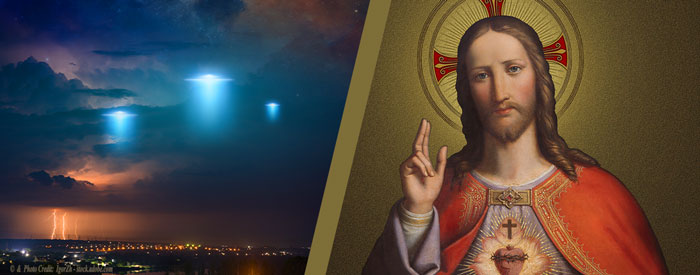
Steven Spielberg’s Disclosure Day comes at a strange time in America’s history. As the nation nears the 250th anniversary of its birth, it faces polarization, not unity, recriminations, not celebration. The worst thing is that there seems to be no human way out of this mess. People are grasping for desperate solutions.
Thus, many might think: If only the nation could imagine some extraordinary, supranatural option that breaks all the rules and moves beyond all the problems. The country might then see the drastic changes that are so needed.
This could happen in two ways.
The Disclosure Day Option
One way would be to imagine something like Disclosure Day. This solution consists of outsourcing humanity’s problems to powerful aliens that have the stuff to get things done quickly and effortlessly.
Like all things Spielberg, this car-chase thriller has parts that are outrageous and improbable. However, he always knows how to turn his films into metaphysical statements that make them seem like real options.
The film is a variation on a plot hardly original to UFO thrillers. The world is on the brink of war, and there is no human solution. Aliens appear with a message and proposed solution, which is sometimes “benevolent” and sometimes sinister.
Reworking an Old Plot
Most of Disclosure Day takes this plot and translates it into an action film to attract the masses. Thus, a man and two women race to disclose an alien’s message that will shake the religious convictions of billions everywhere, but especially Catholics. Government contractors do not want the message revealed and violently oppose them. Hence the endless car chases.
In the anti-climactic end, however, there is no disclosure of a message. Margaret Fairchild, the main protagonist, knows the message and prepares to announce it worldwide, saying, “Listen!” The screen then blacks out, leaving the viewer to imagine what the message might be.1
Thus, the message of Disclosure Day is that strange, extraterrestrial beings exist and that, despite having magical powers, they are oppressed by corrupt human structures. By their empathy, power and wisdom, they will make God and the Catholic Faith irrelevant. The solution lies in listening to them, whatever may be the substance of their message.
Inserting the Movie into World Events
Such a plot inserts itself into the strange circumstances of the times.
The movie enters a real debate about the existence of UFOs, reflected in periodic dumps of government files documenting their mysterious appearances and suggesting an official cover-up. Government figures, past and present, media sources and influencers are all taking this UFO discussion seriously. Many point to a world on the brink of war as an additional sign that fits the narrative.
The topic involves theological debate, which can become quite heated. It concerns the implications of unredeemed intelligent life for Catholic dogma and the Church’s perennial teaching on God, angels, devils, fallen humanity, and Divine Revelation as a whole.
Choosing sides in the debate, synodality Catholics can see the movie showcasing their theology of listening, empathy, and inclusion for everyone. Liberation theology Catholics can resonate with its heroes’ solidarity for the “marginalized” and the “oppressed” in their saga to broadcast the truth about government-persecuted extraterrestrials.
In opposition are those on the traditional side who rightly caution that the Disclosure Day aliens have all the preternatural powers over humans and nature that the Church has always taught that demons possess, since they are fallen angels. Many among these faithful Catholics were disconcerted when Cardinal Robert McElroy abruptly dismissed Msgr. Stephen Rossetti as a Washington, D.C. exorcist, because of his casual remarks about UFO sightings and demons.
Thus, the stage is set for this Disclosure Day option to have an impact. In some, the film awakens hopes that a convenient, effortless way can be found to transcend humanity’s polarizing rifts and clashes so that everyone can enjoy lives of happiness, health and pleasure. The movie’s anti-Fatima message denies the need to reform messy, sinful lives or restore moral social norms. All it asks for is listening and empathy.
The Sacred Heart Option
The second option that opens up as America faces its future is completely different and unexpected. It is truly supernatural. It involves recourse to the Sacred Heart of Jesus.
Across America, billboards, yard signs and bumper stickers are popping up everywhere. Their message is simple: “June is the month of the Sacred Heart. Christ is King!”
The Sacred Heart has captured the imagination of many Catholic Americans this year, as the nation celebrates its 250th anniversary. The Sacred Heart is entering into the national debate in a way unseen since America’s birth in 1776. One could even say that the Sacred Heart of Jesus is now part of the Culture War.
Inserting the Sacred Heart into What’s Happening
The Sacred Heart of Jesus is the object of consecrations, enthronements, devotions and special mentions. Catholic businessmen are consecrating their companies to the Sacred Heart. One Florida gubernatorial candidate consecrated his campaign to the Sacred Heart.
On June 12, the Solemnity of the Sacred Heart, President Trump recognized the importance of the Sacred Heart in America’s history. On the same day, U.S. Congressman Riley Moore (R-WV) introduced a resolution honoring the Sacred Heart in glowing terms.
“The Sacred Heart of Jesus remains the furnace of divine charity, the refuge of sinners, the source of mercy, and the sure remedy for the wounds of a world disfigured by sin,” the Congressional resolution states.
The devotion is generating a lot of enthusiasm in the faithful to the point that it is taking on a life of its own. People see this devotion as a heavenly solution for our impossible problems.
It is also generating opposition, with some unjustly labeling the Sacred Heart as a “nationalist” sign of Catholic identity, instead of the loving and confident devotion it is and its faithful acceptance of Christ as King.
Listening to a Different Message
The Sacred Heart option differs from the Disclosure Day one in that it calls for the moral reform of individuals and society in accordance with God’s law. Above all, it calls on people to allow themselves to be overwhelmed by His Divine Love and His desire to help humanity. Its anti-Spielberg message is: Listen… to this Divine Heart.
“Behold this Heart which has so loved men that it has spared nothing, even to consuming itself to witness its love. And in return, I receive from most of them only ingratitude from their irreverences and their sacrileges and by the coldness and contempt that they have for Me in this sacrament of love…” (From the revelations of the Sacred Heart to Saint Margaret Mary Alacoque.)
Such a plea is hard to resist in a brutal epoch dominated by egoistic love. For those seeking protection and solace, the impulse is to give oneself to this loving Heart that so desires both the individual’s progress and the common good.
Thus, America faces two options: one supra, the other supernatural. Exactly how these options will play out in the future is unknown. Everything depends on who America will listen to.
Photo Credit: © IgorZh – stock.adobe.com