
In the grand theater of creation, God gifted us with the beautiful, fragrant and profoundly humble flower. Some might think that the flower’s only role is to grace a wedding table, offer quiet sympathy at a funeral or adorn formal attire. However, from the innocent daisy to the graceful and elegant orchid, flowers communicate a wide variety of messages that extend beyond domestic use.
Flowers are incredibly effective political messengers that help unite nations and aid negotiations. Ironically, something so incredibly fragile holds so much power.
Soft Power in Soft Petals
Flowers are a surprisingly effective form of soft power in diplomacy. They use non-verbal cues to build goodwill, send highly symbolic messages or ease tense situations.
Used at state visits, international summits, and in public spaces, they can convey cultural and diplomatic themes, creating an accessible language of beauty that bridges significant divides. From the blue lotus flowers, poppies, and willows used in the temples of Ancient Egypt, to the roses, violets, lilies, and narcissus of Rome, and to the modern political summits of 2026, flowers have consistently contributed to a harmonious atmosphere for serious political meetings.
It is hard to imagine a high-stakes political summit without flowers. A table without flowers would suggest a lack of preparation and care. Interestingly, it is their fleeting freshness and very short lifespan that contribute to their lure.
Since they need care to preserve their beauty, charm and delicacy, they symbolize the need for similar attention in the environment they adorn. If they were made of durable materials and required no care, they would do little to foster goodwill in rooms filled with political tension.
The Tulip: A Bulb of Hope and Hubris
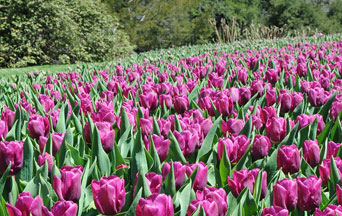
Consider the vibrant tulip. It is a flower intimately linked to the Netherlands, symbolizing the hope of spring—a gentle reminder that good things take patience. The Dutch frequently use tulips in their international relations. During the Easter Sunday blessing at the Vatican, these flowers always come from the Netherlands. Similarly, the tulips gifted each year by Dutch growers are famously in bloom in the White House gardens in the U.S.
Today, the tulip remains a captivating, affordable symbol. Whether the Netherlands uses them to ease trade tensions with the United States over tariffs or donates 150,000 bulbs to a war-torn park near Kyiv as a sign of hope, the visual display always conveys its message effectively.
Wilting Messengers in a Digital Age
Flowers attract because they are living and demand attention. They are unlike emails, which can be deleted or texts, which can be left unread. They stimulate our sight, smell and touch, leaving lasting psychological and emotional impressions. In a world where most interactions happen online, the gentle sway of flower diplomacy becomes all the more powerful.
Flowers act as nonverbal messengers that transcend language and politics. Their delicate nature reminds us of our own contingency and vulnerability, while their beauty mirrors God’s love for us through His merciful creation.
Planting Seeds for Tomorrow
Floral gifts have long eased the strict, often rigid rules of international relations. Leaders exchange bouquets not just out of politeness, but to signal openness, trust and compassion. In recent years, everyday people and diplomats alike have used flowers in brilliantly creative ways to communicate unspoken intentions.
Olive branches and jasmine are intertwined to show a desire for peace in the Middle East. Sunflowers have covered Europe as symbols of solidarity for Ukraine, a key producer of the flower. Orchids and lotus flowers adorn Asian summits to symbolize knowledge.
As global challenges change, our understanding of these botanical ambassadors will also grow. A bouquet exchanged across borders today might favor the partnerships that could save our country tomorrow. Thus, those delicate petals have the remarkable potential to foster better relations because bouquets really do build bridges.