
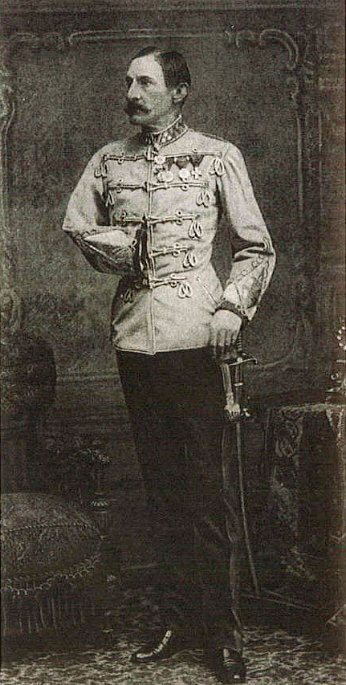
 Leisure and war are two words that people think of as oil and water—things that can never mix, under any circumstances.
Count Nikolaus Pejacsevich of Veröcze would have disagreed.
Count Pejacsevich (1833-1890) was born into a noble family of Croatian and Hungarian descent.
With over two-thirds of his life spent in the military, the count was clearly acquainted with combat. He joined the 6th Light Cavalry Regiment of the Austro-Hungarian Army as a young 16-year-old cadet. During this time, he fought against revolutionary movements in Hungary and Italy.
At the Battle of Königgrätz in 1866, he was wounded and lost his arm. Far from ending his time on the battlefield, the count continued his military service until his premature death in 1890, at the age of 57.
These are the credentials of a fighting man—a man of war.
A striking painting of the count is featured in Vienna’s Museum of Military History. The scene is of a foxhunt. In the foreground, Count Pejacsevich is mounted on a well-groomed horse.
His posture is impeccable. His back is stiffer than a plank. Despite missing an arm, he displays no concern about losing his balance. Even though his grasp of the reins is gentle, he retains complete control.
As the horse gallops forward, the count’s gaze is on the horizon, focused on what is to come, not on the reins.
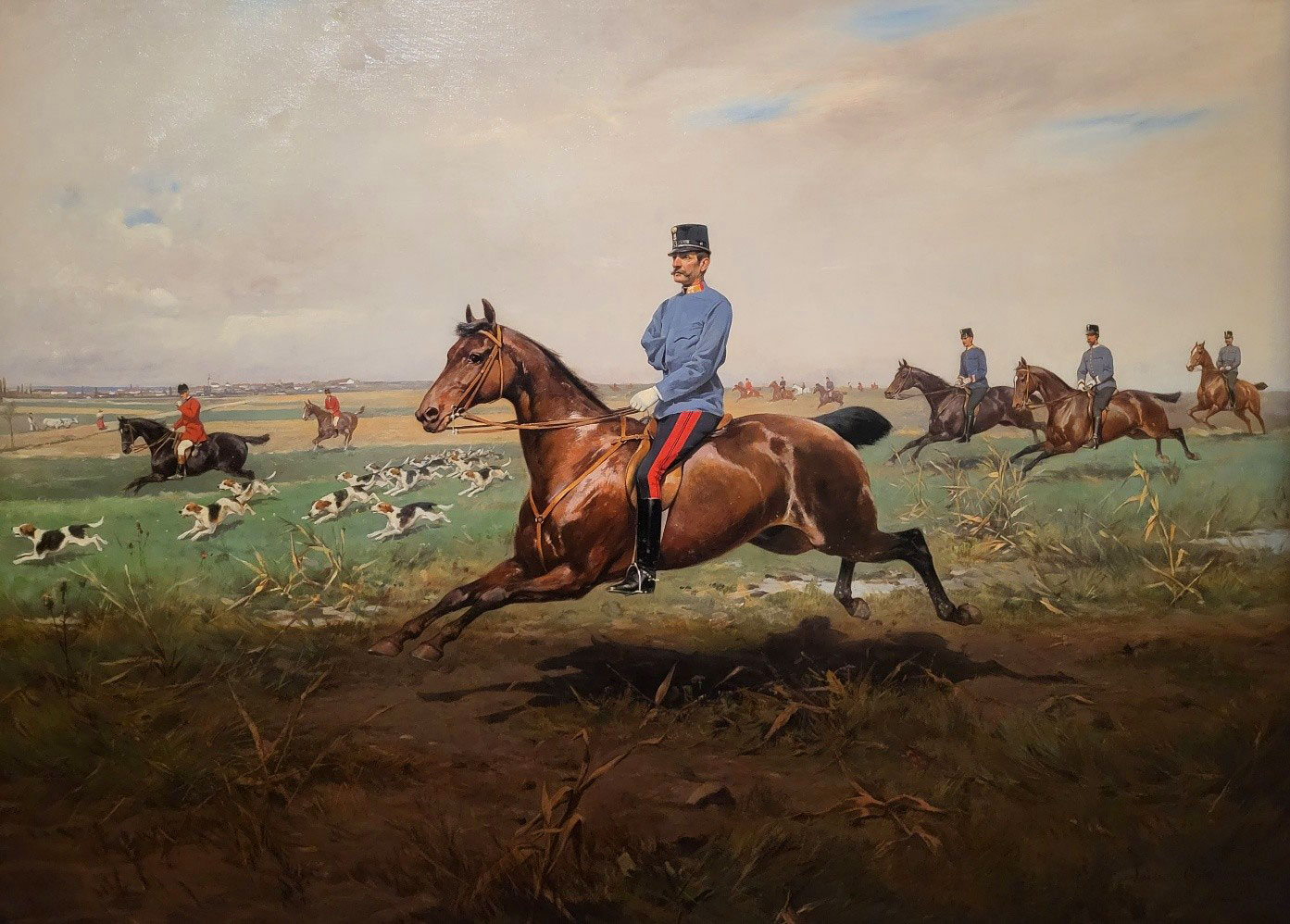
In the painting, the count’s posture is bellicose. Considering his storied life on the battlefield, this comes as no surprise.
It is easy to forget that the painting depicts a fox hunt, which was a traditional form of leisure for nineteenth-century noblemen.
Today, modern man spends his free time on comfortable or easy activities such as relaxing outside, playing games and looking at his devices. Leisure is so often considered synonymous with idleness and playing.
In his book Leisure: The Basis of Culture, Thomist philosopher Josef Pieper refutes this misconception:
“Leisure is not the attitude of mind of those who are ‘off duty.’ It is not the same thing as idleness or a break from work. It is an attitude of mind and a condition of the soul that fosters a capacity to perceive the reality of the world.”
Under this light, the above scene becomes a perfect example of leisure. While fox hunting is not nearly as dangerous as war, it demands a certain discipline that keeps a soldier’s skills honed, such as charging forward on horseback.
If Count Pejacsevich were to take a vacation, relaxing on a Mediterranean coastline between battles, his battlefield skills would be lessened.
This relaxation was not his way of doing things. Instead, he filled his free time with activities that better prepared him to fulfill his duties in life. For the count, his war was leisure and his leisure was war. One prepared for the other.
Thus, he is such a good example for the modern day. Leisure is not supposed to help run away from reality but to prepare for it.
A person is not made to tune out reality. Observing the count can help one get priorities straight.
The Book of Job states that “the life of man upon earth is a warfare.” One can be engaged in either a spiritual or actual war. The best way to survive these sufferings is to embrace them head-on, despite all handicaps and problems. It is to use one’s time wisely, preparing for what lies ahead.
This is what Count Pejascevich did his whole life. It is so well portrayed in this magnificent painting.