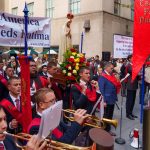
In January 2024, two dozen students from Muscatine High School in Iowa stood on Chinese soil and presented Xi Jinping with a flag that read “Grandpa Xi, Here We Are.” Communist China funded the trip to promote “Marxism-Leninism.”
That first presentation represented the whole program in miniature — and the program is now much bigger. In August 2026, the research group Defending Education documented that at least 83 American universities and 26 K-12 schools across 30 states had participated in Beijing’s Young Envoys Scholarship (YES).
YES exists to fulfill Xi’s November 2023 pledge in San Francisco to bring 50,000 young Americans to China over five years. Beijing says more than 42,000 had arrived by December 2025.
Who Signs the Checks for These Trips?
Communists are not known for telling the truth, and Americans are told these are “cultural exchanges.” However, YES is administered by the China Education Association for International Exchange, whose Chinese-language charter names its guiding ideology as Marxism-Leninism, Mao Zedong thought, Deng Xiaoping theory and Xi Jinping thought, and pledges that it “adheres to the overall leadership of the Communist Party of China” and integrates Party work “into the entire process of the association’s operation.”
The arrangement is straightforward. A review of the program’s 22 newsletters found the group’s operating procedures were always the same: they subsidized travel, used organizer-controlled routes, recorded praise and sustained follow-up through relationships in American schools.
A 2025 newsletter reports that 27 students from a Chicago high school toured Xinjiang — the province that hosts the largest mass internment of a religious minority since the last century, cynically presented to American teenagers as a “travel destination.” In 2024, Xi told Kean University that the point is to cultivate young envoys who know both countries well.
“Same Devil, New Disguise”
Americans fought this fight for influence over China’s youth once before and thought they had won. Confucius Institutes were driven off campus after a decade of scrutiny: roughly 100 at their peak, fewer than five survived by 2023. The effort to corrupt did not disappear; only the address changed.
After recruiting in the U.S., the Chinese moved the classroom to places like Chengdu, China, where no state legislature can subpoena the syllabus, no trustee can read the contract and no parent can sit in the back of the classroom. Geography solved the oversight problem.
American universities’ involvement can take several forms:
- Promoting scholarships and accepting student applications.
- Arranging group visits through Chinese university partners.
- Providing coursework, faculty-led activities or cultural and business experiences as part of the exchange.
- Individual students can participate, which does not necessarily mean the university has a formal, institution-wide agreement with YES. The published participation lists encompass different types of involvement.
There are several problems with American universities sponsoring YES programs. For this reason, Americans should sound the alarm. The first involves the communist Chinese persecution of the Catholic religion. Additionally, China’s YES program is harmful because a subsidized educational exchange becomes a vehicle for political influence, financial pressure and restrictions on open inquiry.
A university’s endorsement makes the communist government-selected itinerary look like an independent academic assessment. A pleasant visit can provide genuine cultural learning. However, it cannot, by itself, establish whether China allows the freedom of the Catholic Faith, treats dissidents fairly or allows independent scholarship. The concern is not that students enjoy China; it is that the curated experience they are presented with is a lie.
The Catholic Church has a duty to preach. Religious liberty is not the right to be left alone in a locked building. It is the right to convert — to teach, publish, ordain, send missionaries, run schools and publicly declare that a man’s soul is not the property of his government. Beijing understands this better than anyone, which is why it does not merely restrict Chinese Catholics but replaces them. It seeks to have bishops appointed for the Party’s convenience, congregations coerced into the Patriotic Association, and a 94-year-old cardinal convicted for paying protesters’ legal bills.
This is not regulating worship; it is confiscating the mission itself. An American university that hosts a program guided by an ideology committed to that confiscation is not seeking objective truth; it is a useful idiot.
The University’s Duty is to Condemn Communism
The university needs to teach that Marxism is always wrong. Thus, a curated tour of Xinjiang that hides the Uyghurs’ misery when the cameras are rolling is not teaching; it is communist propaganda. Institutions that would never accept a syllabus written by a domestic political party have handed the itinerary to a Marxist one and called it an exchange.
Private property is the ground on which the other two stand. The American university’s real endowment consists of ideals and actions — independent boards, private endowments, chartered corporations, tenure and land held in trust against the state’s convenience. A scholar may contradict the government because someone else signs his paycheck.
Without action, the freedom to proclaim the truth does not survive on its own. That is the connection Americans keep failing to draw, and Beijing has never forgotten. A regime that will not let a bishop lead a church or a professor state an opinion does so for the same reason: both require taking a position the Party neither grants nor withdraws. Sinicization and expropriation (stealing) are one policy wearing two coats.
Right now, the U.S. screens Chinese students arriving on American campuses. It should definitively cut all Chinese students coming to the U.S. and ban all American students traveling to Beijing.
Congress should cancel the Young Envoys Scholarship — investigate who funds it and who benefits, which institutions partner with it, and whether the universities and school districts promoting it have ever disclosed it under federal foreign gift reporting rules. State legislatures can ask the same of their own campuses and withhold the taxpayer dollars that subsidize them.
For administrators, the question is simpler. Xi’s Politburo has already published the program’s purpose: to teach foreigners that the errors of socialism and Sinicization are beneficial. Do their institutions agree with that purpose?
Beijing is not being subtle. It calls the students it recruits envoys and advocates abroad for China’s warped vision of world order. Xi announced his plans for American campuses in writing years ago. Universities that pride themselves on teaching never bothered to read them, and communist China has successfully created little red classrooms for Americans.