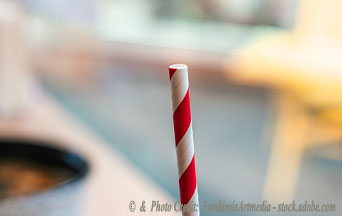
The milkshake is half gone when the paper straw gives out. It folds at the lip, swells, becomes limp and becomes clogged and useless.
Millions of Americans know the ritual. Few know that the soggy paper tube in their paper cup is, by most scientific measures, harder on the environment than the plastic one it replaced.
Statistics From a Fourth Grader
The campaign to ban plastic straws began with a bogus statistic from a fourth grader that was never fact-checked. For years, activists, reporters and the National Park Service dutifully repeated the mantra that Americans use 500 million plastic straws a day.
In 2018, The New York Times traced that figure to its source: a 9-year-old boy, Milo Cress, from Shelburne, Vermont. In 2011, he phoned a few manufacturers and averaged their answers to come up with his figure. Professional estimates, however, ran far lower: straw producer Technomic put daily use near 170 million and Freedonia near 390 million.1
The bogus number keeps circulating anyway. Now a teenager, Cress told USA Today that “if it were another number, it still illustrates the fact that there is room for reduction.”2
That comment reflects the methods of the environmentalist movement as a whole. The story is always to put the conclusion first; evidence is optional.
What the Studies Really Showed
To put things in perspective, the fact is that plastic straws make up just 0.025 percent of the 8 million tons of plastic that enter the ocean each year, according to National Geographic.3
The next thing to show is that the paper straw is the wrong solution. A 2022 study in Science of the Total Environment compared plastic and paper straws across eight environmental categories in the United States.4 Paper straws’ combined negative impact score on the environment was more than double plastic’s when put in a landfill (5.1 versus 2.4) and even higher when burned. A paper straw weighs more than twice as much, and thus, releases more pollutants.
Other researchers concur. A Michigan Tech analysis found that making a plastic straw used less than half the energy of a paper straw and had roughly one-third the global warming potential.5 The BCC reported on a 2020 assessment from Brazil that rated paper worse on the environment because it requires land to grow trees.6 A 2025 European study found paper and bioplastic straws had up to 2.5 times the negative climate impact of plastic.7
Plastic is much better for disposal in landfills. Britain’s pact assessment for its straw ban acknowledged that a ton of paper in landfill emits 1.042 tons of CO2 and polypropylene emits only 0.009 tons.8
Toxic Forever Chemicals
In 2023, University of Antwerp researchers tested 39 straw brands for polyfluoroalkyl substances (PFAS), the toxic “forever chemicals” linked to liver damage and cancer.9 They found them in 90 percent of paper brands, compared with 75 percent of the plastic brands tested.10
The most contaminated straw was paper and the most common compound was Perfluorooctanoic acid (PFOA), banned worldwide in 2020.
“Straws made from plant-based materials, such as paper and bamboo, are often advertised as being more sustainable,” said lead scientist Thimo Groffen. “However, the presence of PFAS in these straws means that’s not necessarily true.”
Agenda Over Facts
Thus, the facts prove that heavier paper straws took more energy to produce, emitted more landfill emissions, contained more forever chemicals than the “eco-friendly” straws that no one could recycle.
None of this research was hidden from do-gooder environmentalists. Life-cycle assessment is a standard tool used in environmental management to evaluate products. However, the campaigners behind Seattle’s ban and San Francisco’s ordinance used a 9-year-old child’s estimate rather than conduct studies on what would replace the plastic straw.11
That behavior betrays a deeper failure. Too often, the radical environmental movement chooses a villain first and checks the evidence later, if at all. A plastic straw is visible and easy to weaponize. A pulp mill, a landfill and a chemical coating don’t have any emotional pull.
In 2025, the White House ordered federal agencies to stop buying paper straws along with state and city bans nationwide.12 If a city or state still bans plastic straws, residents should write to their representatives and ask one question: Where is the study that showed paper was better?
Forcing a paper straw upon everyone should be the last straw. As paper straws in milkshakes bend, swell and clog, it appears the policy behind banning plastic straws is collapsing the same way.
Footnotes
- https://www.nytimes.com/2018/07/19/business/plastic-straws-ban-fact-check-nyt.html
- https://reason.com/2018/08/10/bad-stats-are-being-used-to-push-straw-b/
- https://www.nationalgeographic.com/environment/article/news-plastic-drinking-straw-history-ban
- https://pmc.ncbi.nlm.nih.gov/articles/PMC8897272/
- https://digitalcommons.mtu.edu/etdr/1064/
- https://www.bbc.co.uk/future/article/20231103-plastic-or-paper-the-truth-about-drinking-straws
- https://www.mdpi.com/2073-4360/17/9/1235
- https://www.legislation.gov.uk/ukia/2020/36/pdfs/ukia_20200036_en.pdf
- https://english.elpais.com/science-tech/2023-08-28/the-last-straw-the-paper-sipper-contains-substances-harmful-to-health-and-environment.html
- https://fortune.com/well/2023/08/24/paper-straws-harmful-forever-chemicals-plastic-straws/
- https://reason.com/2018/08/30/the-united-nations-cites-bad-straw-stats/
- https://www.npr.org/2025/02/11/nx-s1-5292234/trump-paper-straws-plastic-executive-order