
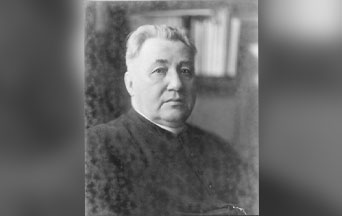
Towards the end of Leo XIII’s pontificate, the errors of modernism started to pose a danger to the Catholic Church. Particularly at academic institutions such as the Institut Catholique in Paris and the Catholic University of Leuven, the field of exegesis was compromised by the errors of historical criticism.1
In the Netherlands, Fr. Henri Andreas Poels, soon after obtaining his doctorate in Leuven with his dissertation Examen critique de l’histoire du sanctuaire de l’arche (1897), was tasked to write a series of exegetical articles for the theological magazine De Katholiek.
In his first article, Belangrijkheid der geschiedenis van Israël (1898), he criticized Catholic exegesis for lacking “an extensive investigation into the truth”. He claimed that “the method followed by the earlier Protestants was the true method of historical criticism.”2
The publication immediately sparked division within De Katholiek’s editorial staff. Among the three priests who had filed a complaint against the article, two were professors of exegesis at the seminaries of Warmond and Hoeven.3
Why America Must Reject Isolationism and Its Dangers
In De oorsprong van den Pentateuch (1898), which was subsequently published by De Katholiek with a disclaimer, Fr. Poels denied the tradition held by the Church, according to which Moses authored the Pentateuch, the first five books of the Old Testament:
“More and more, the tradition of the Synagogue regarding the origin of the Pentateuch is being declared untenable and abandoned. The number of Catholic scholars who share this conviction is growing daily. In the Netherlands, the so-called ‘new’ direction of the critical school has gained little ground among Catholics. The level-headed Dutchman rightly sticks to his ‘tradition’ as long as it proves tenable. Just a few years ago, Professor Schets defended the strict Mosaic origin of the Torah with great talent in this journal. The introduction to Professor Dessens’ beautiful translation of Genesis also leaves nothing to be desired in terms of clarity. However, as is already apparent from the above, not all Catholics are equally convinced of the truth of the traditional view.”4
To reconcile his own position with the encyclical Providentissimus Deus (1893), in which Leo XIII declared the unanimous interpretation of Holy Scripture by the Church Fathers to be infallible,5 Fr. Poels claimed that the Fathers weren’t historians and therefore only infallible in matters of faith and morals.6
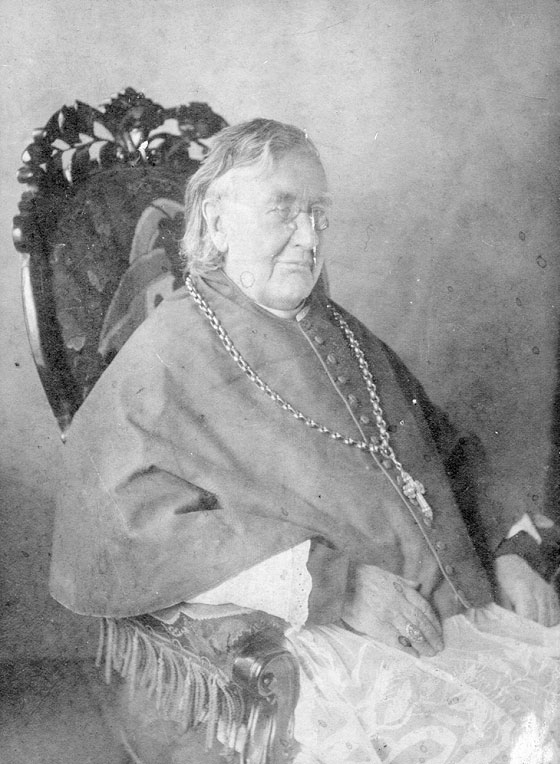
This led to the intervention of Bishop Caspar Josephus Martinus Bottemanne,7 who forbade any further publications on the matter. He then wrote a letter to Cardinal Mieczysław Halka-Ledóchowski, the Prefect of the Propaganda Fidei, to settle the matter:
“If Dr. Poels’ propositions can be taught and disseminated without reservation, I would certainly not wish to hinder the progress of exegetical science; on the other hand, the purity of the faith is too dear to me to allow even the slightest danger to orthodoxy to threaten my flock. Moreover, the clergy and educated lay people are uncertain as to which view to follow in this matter, and I myself believe that this uncertainty of mind must be removed as quickly as possible. I therefore take the liberty of politely but urgently requesting Your Eminence to assist me in this matter with your wise counsel in the near future.”
Cardinal Ledóchowski replied that the bishop had acted wisely and urged the bishop to extend his prohibition until the Holy See had made its decision.8 After the Cardinal had forwarded the matter to the Holy Office, Fr. David Fleming O.F.M., one of its consultors, drafted a letter containing a condemnation of the modernist exegesis of Fr. Poels.9
 Read About the Prophecies of Our Lady of Good Success About Our Times
Nonetheless, the Roman Curia remained divided on the issue, which delayed the case. Due to the intervention of Cardinal Lucido Maria Parocchi, the liberal secretary of the Holy Office, the condemnation remained unsent.10
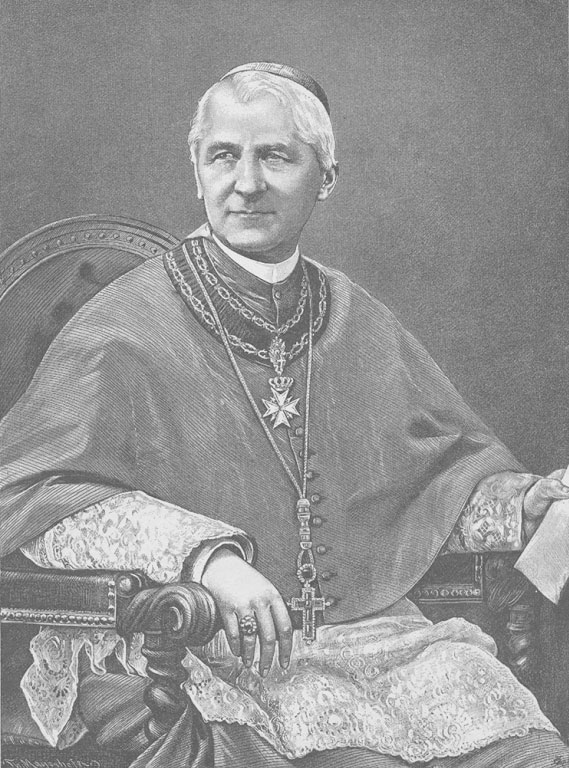
Meanwhile, in the Netherlands, Fr. Poels had been appointed chaplain in Venlo by his bishop to prevent him from teaching exegesis at the major seminary of Roermond, although various Catholic newspapers had already announced the appointment.
Frustrated with his situation, Fr. Poels travelled to Rome in the fall of 1901 to plead his case. There Cardinal Parocchi assured him that a favorable ruling had already been prepared; since the death of Cardinal Camillo Mazzella S.J., the Prefect of the Congregation for Rites, the tide had turned in favor of the modernists.
Fr. Fleming O.F.M., who was now also the secretary of the Papal Biblical Commission, wrote a letter to Cardinal Ledóchowski, in which Fr. Poels was vindicated, and the measures taken by Bishop Bottemanne were deemed unjust, contradicting what he had drafted in 1899:
“After considering all aspects of this case, it has been determined that Fr. Poels, who was denounced by the Bishop of Haarlem to the Congregation for the Propagation of the Faith and referred by that congregation to the Holy Office, did not expound or defend any position that, in the strict sense, cannot be taught without danger to the faith; that, moreover, the conduct of Fr. Poels, both before and after the publication of his article, cannot in any way be criticized; that, on the contrary, the action of the high-ranking bishop of Haarlem was particularly harsh and unfairly vehement. At this moment, there is an intention to include Fr. Poels among the consultors of the newly established Papal Biblical Commission.”11
When the letter had been sent to Bishop Bottemanne, he answered that various professors of exegesis in his diocese had objections to the publications of Fr. Poels. He moreover requested “the ruling of the Holy Office be reworded” and the ambiguity behind the words “in the strict sense” be clarified.12
Cardinal Ledóchowski answered by reassuring the bishop that the ruling of the Holy Office would remain unpublished.13 A month later, Fr. Poels was appointed a consultor of the Papal Biblical Commission.
Two years after the ruling of the Holy Office, the pontificate of Leo XIII came to an end on July 20, 1903, two months after the death of Bishop Bottemanne. The reign of his successor would mark a turning point in the modernist crisis, as Saint Pius X would definitively settle the matter by solemnly condemning the errors of modernism.14
Footnotes
- Kübel, J. (1909). Geschichte des katholischen Modernismus. Tübingen, Germany: Verlag von J.C.B. Mohr (Paul Siebeck), p. 74-89; Pijper, F. (1921). Het modernisme en andere stroomingen in de Katholieke Kerk. Amsterdam, the Nederlands: S.L. van Looy, p. 126-128; Colsen, J. (1955). Poels. Roermond – Maaseik, the Netherlands: J.J. Romen & Zonen, p. 60-81.
- Poels, H. A. (1898). Belangrijkheid der geschiedenis van Israël. De Katholiek, 113, p. 226-227.
- Colsen, J. (1955). Poels. Roermond – Maaseik, the Netherlands: J.J. Romen & Zonen, p. 86-87.
- Poels, H. A. (1898). De oorsprong van den Pentateuch. De Katholiek, 114, p. 366-367.
- This was previously declared by the Council of Trent (Denz. 786), which the First Vatican Council then renewed (Denz. 1788). For its repetition in Providentissimus Deus (1893), see Denz. 1942-1944, taken from the thirtieth edition (pre-1963) of Fr. Henry Denzinger’s Enchiridion Symbolorum et definitionum (1954).
- Poels, H. A. (1898). De oorsprong van den Pentateuch. De Katholiek, 114, p. 372-378.
- Bishop Bottemanne was the fourth bishop of Haarlem since the restoration of 1853. Before Leo XIII elevated him to the Dutch episcopacy in 1883, he was president of the major seminary of Warmond and a leading author of the magazine De Katholiek. In his article Het Gallikanisme onzer dagen (1870) in De Katholiek, 35, p. 81-99, he proved himself to be a zealous Ultramontane by denouncing the French bishops who were opposed to the dogmatic definition of papal infallibility, particularly Bishop Dupanloup and Bishop Maret.
- Colsen, J. (1955). Poels. Roermond – Maaseik, the Netherlands: J.J. Romen & Zonen, p. 95-96
- De Valk, J. P. (1988). De bisschop en de exegeet. Documentatieblad voor de Nederlandse Kerkgeschiedenis van de negentiende eeuw, 28, p. 30; De Valk, J. P. (1998). Roomser dan de paus? Nijmegen, the Netherlands: Valkhof Pers, p. 184.
- De Valk, J. P. (1988). De bisschop en de exegeet. Documentatieblad voor de Nederlandse Kerkgeschiedenis van de negentiende eeuw, 28, p. 29-33; De Valk, J. P. (1998). Roomser dan de paus? Nijmegen, the Netherlands: Valkhof Pers, p. 183-186.
- De Valk, J. P. (1988). De bisschop en de exegeet. Documentatieblad voor de Nederlandse Kerkgeschiedenis van de negentiende eeuw, 28, p. 36-37.
- Ibid., p. 43; De Valk, J. P. (1998). Roomser dan de paus? Nijmegen, the Netherlands: Valkhof Pers, p. 186-187.
- De Valk, J. P. (1988). De bisschop en de exegeet. Documentatieblad voor de Nederlandse Kerkgeschiedenis van de negentiende eeuw, 28, p. 32; De Valk, J. P. (1998). Roomser dan de paus? Nijmegen, the Netherlands: Valkhof Pers, p. 186.
- Under the pontificate of Saint Pius X, the Papal Biblical Commission affirmed the inerrancy of Sacred Scripture (Denz. 1979), its historical nature (Denz. 1980) and the Mosaic authorship of the Pentateuch, the first five books of the Old Testament (Denz. 1997-2000). In the decree Lamentabili Sane (1907), the Holy Office condemned with papal approval 65 propositions held by the modernists (Denz. 2001-2065), which in the encyclical Pascendi Dominici Gregis (1907) were further expounded upon and refuted thoroughly (Denz. 2071-2109). In the Motu proprio Praestantia Scripturae (1907), the decree Lamentabili Sane (1907) and the encyclical Pascendi Dominici Gregis (1907) were declared to be dogmatic (Denz. 2113-2114).