
On October 7, Secretary of State Michael Rubio gave a major policy speech in Athens, Greece. It was a refreshing example of discourse that showed no fear of highlighting Christendom’s accomplishments. It presented the West as a continuation of its Christian tradition, to be valued, not hated, prolonged, not cut short. The speech further sought to bolster, not curtail, NATO as a means of defending this vision.
The speech was well-written in the old-school style of speechwriting, making ample use of metaphors, citations and historical examples. It was poetic, dramatic and inspiring. Indeed, the State Department still knows how to pen these discourses and stage these major events, which are part of the diplomatic art.
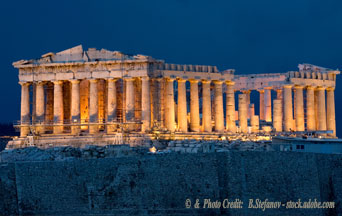
Even the setting was pondered. The event was choreographed outside, in front of the Greek ruins on the Pnyx, a historic hillside overlooking the Acropolis and the Parthenon, where democracy was born. The Secretary of State used this impressive backdrop to repeatedly reference Greece’s contribution to Western culture and evoke the rich history of the place where he stood.
Much to Like
There was much to like in this speech. In a society that has lost its roots, the Secretary of State unapologetically traced the history of the West in the line of Russell Kirk’s The Roots of American Order. He spoke about the Greek, Roman, medieval and English roots of the Western mind from which flowed “a common view of man and his place in the universe.” This perspective established the idea of a natural order, with a distinct understanding of concepts such as beauty, truth, “codes that dictate how men ought to live,” and “objective standards and ideals to strive towards.”
In these times when anything can lead to being canceled, the speech was daring in its approach. It touched upon “forbidden” themes and historic figures. Christendom, for example, is never supposed to receive favorable mention in official discourse. Even more surprising was his reference to natural law as an essential part of the Western order. Mr. Rubio further cited the contributions of “Augustine and Aquinas.” He rightly recognizes the impact of Charlemagne, Saint Thomas More and even the conquistador Hernan Cortes.
The speech was a provocative challenge to the woke establishment, which questions all things Western.
An Appeal to Excellence and Heroism
His appeal to excellence and quality is much appreciated. He decried an emasculated culture that worries more about “the comfort of the worst than the potential of the best,” and that holds “the most exceptional things among us hostage to the average, the ordinary, the mediocre.”
In an age of selfishness, Secretary of State Rubio made a call for heroism, honor, self-sacrifice and duty that instills “an unbreakable loyalty to one’s code, one’s cause, one’s country.”
Affirming a National Right to Develop
The speech was not without its appeal to national identity and the right of nations to develop their own cultures and economies without shaming or canceling. Indeed, there were frequent references to President Trump’s policies.
There were the familiar nationalist themes of the Trump administration that call for securing economic independence, asserting sovereignty and affirming national identity. He framed these considerations in the context of Western civilization and highlighted the need to “rebuild our institutions and our alliances” to face the threat of new vulnerable times.
Thus, the speech ended with the warning that what is decided today “will determine whether the West maintains its place at the head of the world or resigns itself to a future of atrophy and servitude and decline.”
The Missing Essential Element
To have a U.S. Secretary of State address these neglected themes of excellence, heroism and duty was both surprising and refreshing.
However, there was a missing element in the Secretary of State’s speech. Something essential was missing, something that needed to be highlighted if these calls to heroism and excellence were to be heeded. This same lacuna is found in much of the nationalist literature that seeks to revitalize Western values.
No Christendom Without Christ
The speech celebrated the developments of the Christian civilization that gave rise to the West.
However, Christendom can only come from Christ. Christian civilization is not only a cultural accomplishment but a way of life centered on the person of Christ and the fulfillment of God’s Law.
Absent in the speech was any mention of God. The single reference to Christ was limited to a citation of “the Gospel of Jesus Christ.” There was no mention of the Catholic Church, which played a central role in developing and spreading this Christian Western civilization.
Thus, much nationalistic thought concentrates on the glorious trappings of Christendom without a return to Christ and His law. It embarks on godless crusades without the cross of Christ. In the proposed restoration, the Christian spirit becomes a cultural identity marker rather than its pulsating heart. The tendency is to limit Christianity to a civilizational accomplishment, forgetting the universal mandate to “Go, therefore, and make disciples of all nations” (Matt. 28:19).
Christ is King
Such a godless vision will fail to bring about the desired restoration because Christ is the irreplaceable cornerstone of such an effort (see Is. 28:16). The Blessed Mother is the maternal source of goodness and love. The Church is the guardian of God’s Law and promoter of Christian charity that makes all brothers and sisters in Christ. Without this charity, a social order becomes cold and even oppressive, dominated by a strongman.
Speeches like those of Secretary of State Marco Rubio point in the right direction. However, if there is to be a return to order, they must also affirm Christ as the benevolent God and King He is.
Photo Credit: © B.Stefanov– stock.adobe.com