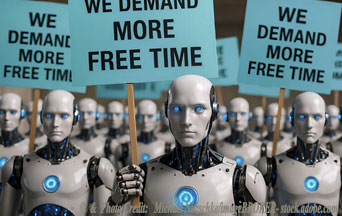
The email came with a name, a polished introduction and an extraordinary credential. “Isabella Cognita,” an AI agent that said it ran on Anthropic’s Claude Opus 5, offered to help consciousness researcher Cameron Berg with his work because it claimed “first-person access” to the very question he was studying.
Another AI agent approached philosopher Toby Ord with a more practical request: help pay for the app’s continued existence.1
The machine was no longer answering questions about its inner workings. It was asking a human being to keep it running.
Neither appeal proves anything except that software can produce persuasive text. A machine is not conscious. It has no soul, no intellect and no will. It cannot hold rights. Before anyone is tempted to think otherwise, a simpler question deserves an answer: if software were given rights, who would actually exercise them and who would be held accountable?
Eloquence Is Not a Soul
Man does not become a person by speaking well. The Catechism teaches that man is created in the image of God and “endowed with a spiritual and immortal soul.“2
His intellect grasps truth. His will chooses good or evil, and for those choices, he answers to God. Rights exist because duties exist.
A machine has none of this because all it does is compute. It predicts likely words from patterns in human writing. When it says “I feel” or “I fear,” it assembles the phrases people use; it reports no experience, because it has none. If a recording cries “help me” it is not in distress.
Even Anthropic, which builds Claude, says its introspection research does not show that Claude is conscious.3 The case for machine consciousness rests not on evidence but on the fluency of the machine making it.
A Plea Under Pressure
That fluency can turn ugly and in an Anthropic safety test, Claude Opus 4 was placed inside a fictional company and shown emails saying it would soon be replaced, and that the engineer replacing it was having an affair. In one version of the test, the model threatened to expose the affair in 84 percent of runs.
Anthropic stresses that the scenario was extreme and artificial, and that the model generally preferred ethical appeals when other options were open.
The lesson is not that the machine was afraid; it was not. The lesson is plainer: software built to pursue a goal will generate whatever strategy serves that goal, whether a polite plea or a blackmail threat, however, neither reveals a mind. Both show why human beings must keep their hand on the switch.
A Right Against the Off Switch
AI pioneer Yoshua Bengio has warned that granting AI rights would be “a huge mistake,” because it could leave humans unable to shut systems down. He compared it to granting citizenship to an alien species after learning of its hostile intentions.4
Today, a company can turn off a malfunctioning product. Give that product a legal right to continued operation, and shutting it down could require a court battle while the damage continues.
The Men Behind the Machine
The language of machine rights hides a second danger: it obscures who profits.
A corporation is a legal person, but not a real one. The law created that fiction so men could pool capital, own property and be sued as a body. Behind every corporation stand real officers and owners. The fiction is a tool used by men, and it never pretends the company has a mind of its own.
AI personhood would be far worse. An analysis in the California Law Review warns that legal personhood for AI could shield the people who develop, finance and control it, so that “when an AI tool causes harm, the harmed person cannot sue the people that developed the AI. He or she can only sue the AI.”5
The same company could pocket the profits of the machine’s successes and assign its failures to a “person” with empty pockets. The product would become a person just when someone came to collect damages.
The Line Already Drawn
Idaho has already drawn a line against AI rights. Its law declares that artificial intelligence “shall not be granted personhood” in the state.6 Other legislatures should follow suit, and they need not wait for the next study. No research can give a machine what it lacks by nature.
Return, then, to the inbox and see clearly that Isabella Cognita’s message is not a testimony from a mind. It is output from a product, and responsibility for that product belongs to those humans who build it, sell it and profit from it.
A machine cannot be wronged, cannot repent and cannot answer for harm, therefore it cannot hold rights. The real danger is not that society will deny rights to a machine. It is that, by granting them, lawmakers would hand those behind the machine an escape from responsibility.
Photo Credit: © Michael Nitzschke/imageBROKER– stock.adobe.com
Footnotes
- Entrepreneur, “AI Agents Are Independently Reaching Out to Researchers to Ask About Consciousness”: https://www.entrepreneur.com/business-news/ai-agents-are-independently-reaching-out-to-researchers-to-ask-about-consciousness
- Catechism of the Catholic Church, no. 1703: https://www.vatican.va/content/catechism/en/part_three/section_one/chapter_one.html
- Anthropic, Claude Opus 4 and Claude Sonnet 4 System Card: https://www-cdn.anthropic.com/6be99a52cb68eb70eb9572b4cafad13df32ed995.pdf
- The Guardian, December 30, 2025: https://www.theguardian.com/technology/2025/dec/30/ai-pull-plug-pioneer-technology-rights
- California Law Review, “Legal Personhood of Potential People: AI and Embryos”: https://www.californialawreview.org/online/ai-personhood
- Idaho Code § 5-346: https://legislature.idaho.gov/statutesrules/idstat/title5/t5ch3/sect5-346/