
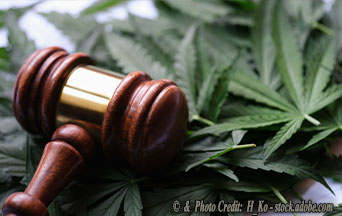
Conflicting claims about marijuana have baffled societies worldwide since it became popular among countercultural groups in the late sixties. The issue rapidly degenerated into a battle between non-users advocating laws prohibiting marijuana and users, who thought that it should be legalized immediately.
A Growing Issue Many Refuse to See
Over the years, the use of marijuana gradually increased to include wide swaths of American society. Meanwhile, the problems connected with marijuana use are increasing rapidly. “Public interest” commercials about people operating automobiles under its influence now appear regularly on television. Serious connections exist between the homeless crisis and marijuana. Scientific horticulture has produced far more potent strains, which threaten ever more lasting and intense effects.
In the presence of an increasingly popular and powerful hallucinogen, it is time to discuss the current status of the marijuana problem in the wider society. Stimulating such a discussion is the goal of this article.
A Moral and Legal Question
Given that objective, it is appropriate to begin with the moral dimensions. Although her officials have said little about marijuana per se, Holy Mother Church has made official pronouncements related to its use.
Paragraph 2291 of the Catechism of the Catholic Church addresses drug abuse directly. “The use of drugs inflicts very grave damage on human health and life. Their use, except on strictly therapeutic grounds, is a grave offense. Clandestine production of and trafficking in drugs are scandalous practices. They constitute direct co-operation in evil, since they encourage people to practices gravely contrary to the moral law.”
Alas, in an age where moral considerations are ignored, the debate is often reduced to this legal status. The current state of marijuana legislation is uncertain, at best. At the federal level, production, sale, possession and use of marijuana remains illegal. In April 2026, the federal government weighed in by moving marijuana from Schedule I to Schedule III for medical use, but left it on Schedule I for recreational use. The individual states’ laws vary widely.
A Clear Statement of Terms
Often, civilization’s enemies rely on confused and uninformed opponents. Therefore, defining certain specialized terms is essential.
Prohibition is a government’s decision to forbid the production, sale, use and possession of a substance under all circumstances. This was the status of marijuana nationwide from World War II until 1996. It is still the official, albeit unenforced, position of the federal government.
Decriminalization is a status in which the sale and production of a substance remain illegal, but those who possess “small” amounts of it will not be prosecuted. According to advocates, the goal is not to give the substance a quasi-legal status, but to reduce the “backlog” that the courts experience when mere possession of the substance is prosecuted and to decrease the number of lives ruined by “experimental” marijuana use. Alaska, Maine, California and Ohio first took similar steps to decriminalize marijuana in 1975, although Alaska recriminalized it in 1990.
Medical use, as the name implies, makes a substance legal for use as long as a doctor prescribes it to alleviate a recognized medical need. According to advocates for this status, marijuana was commonly used as a medical treatment in the Far East for thousands of years. It was introduced to Great Britain and thence to the United States during the 1830s. It was available over the counter in the United States until the mid-thirties and then by prescription until 1941. California revived medical use of marijuana in 1996 and, in the process, set up a system for its distribution to patients.
Recreational use applies to a drug that is not used for a defined medical purpose, but for its supposedly pleasant “mood-altering” qualities. The states of Colorado and Washington were the first to grant this status to marijuana in 2012, and to allow its legal distribution to customers.
Legalization is the process by which all restrictions on a product are lifted, except those related to the user’s age, as is the case for alcohol and tobacco products nationwide.
Schedule I narcotics are deemed by the Drug Enforcement Administration (DEA) to have “no currently accepted medical use and a high potential for abuse.”
Schedule III narcotics are “drugs with a moderate to low potential for physical and psychological dependence.”
Groping Toward a Solution
While the substance’s popularity is great, some people are beginning to see its harm to society as a whole.
As George F. Will said in a recent editorial in The Washington Post, “Americans must continue rethinking policies regarding marijuana.” The pendulum may be swinging against permissive policies, as Mr. Will concludes.
“In 2024, voters in Florida and both Dakotas rejected legalization initiatives. This November, in Massachusetts, which legalized recreational marijuana in 2016, voters might end its legal sale. This initiative probably will fail, but it and interest in repeal elsewhere indicate that the permissive consensus is fraying as accumulating evidence provokes second thoughts.”
The nation is rapidly reaching a stage where it must make a difficult decision. As this process draws ever nearer, no one can afford not to have a well-thought-out position, informed by faith, reason and facts. If this article helps some readers to begin taking the issue seriously again, it will have accomplished its goal.
Photo Credit: © H_Ko – stock.adobe.com