We will send you regular updates that will keep you informed about the culture war and and the restoration of Christian Civilization.
Gary J. Isbell
Webmaster for TFP.org
In 1799, Napoleon Bonaparte made himself the First Consul of the French Republic. That title was, in itself, a deception. He pretended to be the “first among equals” while setting the stage for his dictatorship of France. Understanding the importance of the Church in French politics. he pretended to work toward good … Read more
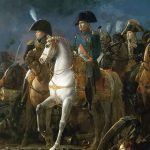
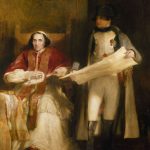
On December 2, 1804, Napoleon was consecrated emperor by Pope Pius VII in Notre Dame Cathedral in Paris. The new Emperor’s consolidated power appeared permanent. He had defeated two coalitions of the leading European powers. At that point, only England dared to fight him openly. Even so, despite the naval force at … Read more
In 1802, although overburdened with work, Father Luigi Virginio decided the time was right to expand Italy’s Amicizie. Florence appeared to be a promising venue for expansion. As seen in the previous installment, while in Vienna, Father Virginio had cultivated many relationships with Italians frequenting Princess Rospigliosi’s salon. Some were influential Florentines. … Read more
With Father Nicholas Diessbach’s death in 1798, Amicizia lost its founder. That worthy priest was never able to achieve his plan to combat the Revolution in ideas. He accomplished relatively little compared to the great work he had planned. The Amicizia associations he had established were only the foundation of a grand … Read more
The last article in this series (see link here) described political events that prevented Amicizie’s full development in Italy. However, these setbacks did not dampen Father Nicholas Diessbach’s spirits. With the assistance of Baron Joseph von Penckler (1751-1830) and other Austrian members, he continued his illustrious apostolate and prevented the sodality from … Read more
(Editor’s note: The last four articles in this series (found here, here, here, and here) concerned aspects of a message that Father Nicholas Deissbach sent to the newly crowned Holy Roman Emperor Leopold II around 1790. During this time, the disastrous French Revolution was in progress, although it had not yet reached … Read more
The last three articles (found here, here and here) in this series have examined a remarkable letter sent by Father Nicholas Deissbach to the newly crowned Holy Roman Emperor Leopold II in 1790. This article will conclude that exploration. In that missive to the Holy Roman Emperor Leopold III, Father Nicholas Deissbach … Read more
Father Nicholas Diessbach sent a 1790 message to Holy Roman Emperor Leopold II. It first mentions the political difficulties Leopold encountered when ascending to the throne of Austria. These challenges threatened the very existence of the Holy Roman German Empire. Father Diessbach enumerates these difficulties, which we will see in greater detail … Read more
Up to now, this series of articles has presented the history of Amicizie in Italy. However, this was an international movement inspired by the ideas of Father Nicholas Diessbach. Therefore, it is logical to cover – at least briefly – the activities of its counterparts in other countries, especially since these naturally … Read more
As mentioned in previous installments of this series, little is known about the Amicizia apostolate in Italy in the years leading up to the French Revolution. Father Pio Brunone Lanteri unquestionably organized Aa, Amicizia Sacerdotale, and Amicizia Cristiana in Turin. He was also a driving force in disseminating good books. At the … Read more