

With morals and natural law under siege today, and the liberal agenda’s cross hairs targeting our right to voice our moral convictions, we must be prepared to defend our position’s legitimacy.1 Either we accept that the foundation of morals and law lies in God’s wisdom or we become mired in the quicksand of today’s relativism.
Without Objective Moral Law, Chaos Follows
For moral order to exist, there must be an objective moral law easily perceived, common to all men and obliging to all equally. Otherwise, everything would be subject to men’s fantasies or to the rulers’ whims, leading to social chaos and tyranny. Today we witness complete scorn for any moral rule that restrains individual behavior, especially in sexual matters, and a kind of legislative/judicial dictatorship imposing unnatural laws on society. On the one hand, liberal judges approve death by starvation, abortion “rights” and favor the homosexual agenda while on the other hand, they remove religious symbols from public places.
FREE e-Book: A Spanish Mystic in Quito
Moral Law Is Connatural to Man
Without an objective moral law, social order is impossible. Therefore, an objective moral law must exist to guide human behavior, and prevent that individual freedom and the good of society be endangered. Not only must moral law be objective but also be in accordance with man’s nature, that is, connatural with him. If what the law commands, forbids and allows did not resonate deep within man’s conscience, the only thing keeping man from breaking the law would be the fear of the police. In that case, morality would depend entirely on the number of policemen, and each man would need a policeman to watch him a tall times. But then, as Juvenal, a pagan Roman satirist, put it, “Sed quis custodietipsos custodes?” “But who shall watch the watchmen?”
The Law and the Will of the Legislator
Let us consider another point. All law is a manifestation of the will of a legislator who imposes, commands, forbids, permits and punishes. If the law is only a fruit of man’s will, how can it be imposed upon other men? Since we all have the same nature, the will of any man is equal to that of another, and no one man can impose his will on another. Therefore, for a man-made law to bind other men, it must proceed from a will superior to man’s will. For a law to be effective, it must originate in the God’s divine will.
 Learn All About the Prophecies of Our Lady of Good Success About Our Times
Saint Paul makes this clear when he affirms that all authority comes from God: “Let every soul be subject to higher powers: for there is no power but from God: and those that are, are ordained of God. Therefore he that resisteth the power, resisteth the ordinance of God, and they that resist, purchase to themselves damnation.”2
This is the solution—a human legislator is only the representative of the Supreme Legislator, and when we obey the will of the human legislator, we submit to God’s will, not to a man’s will.
The law that precedes all human law is called Eternal Law. How can we prove through reason the existence of Eternal Law?
The Laws of Nature
We begin by observing reality. As we contemplate the universe, we sense a harmony, an order that reverberates deeply in our souls and fills us with peace and awe. Order is the proper disposition of things according to their end. Saint Thomas Aquinas teaches that the order of the universe is not random but of God.
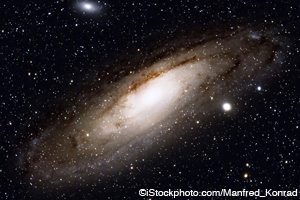
As Supreme Wisdom, God could not create without a goal in mind. Being infinite, God has in Himself all that is necessary to the perfection of His nature. Therefore, the goal of Creation could only be God’s extrinsic glory. This goal is what orders and gives meaning to the universe.
The order of the universe is only possible because created beings are endowed with perfection, with laws that guide them to their individual and general finality. For instance, all celestial bodies move in an orderly manner following a specific pattern. In a word, with the Psalmist we must say, “The heavens shew forth the glory of God, and the firmament declareth the work of his hands.”3 Thus, laws direct the whole universe. What about man?
Intelligent Beings and the Laws of Nature
In this orderly universe—guided by the laws of nature that God uses to direct things—there are creatures that, though having material bodies, are endowed with a spiritual soul superior to matter: human beings.
The laws of nature compel material things to react in a predetermined manner. These are applicable to the human body, not to the soul. Would man in his superior part, the soul, not also have laws to help him understand and make decisions? In a universe guided by laws, could the creature whose intelligence and free will place him above all others be the only one not guided by laws? Of course not. In his intelligence and will, man is also guided by laws that help him without impairing his liberty. He is naturally subject to the laws of logic that direct his reasoning, and to the principles of morals that direct his behavior.
These laws that guide men have been made by God.
Eternal Law
In order to explain Eternal Law, Saint Thomas Aquinas makes a comparison: just as an artisan conceives a project, such as a stained glass window, or a ruler conceives a law before executing it, so does God, before creating something, conceive in His Divine Wisdom the idea that will serve as a model for the being He wanted to create. And since for God there is no time, He conceived Creation and its laws from all eternity. This is why we call eternal the laws that Infinite Divine Wisdom conceived. “Accordingly,” says Saint Thomas, “Eternal law is nothing else than the type of Divine Wisdom, as directing all actions and movements.”4
Natural Law
Saint Thomas Aquinas explains that natural law is nothing more than the rational creature’s participation in the Eternal Law. Its general precept, from which all the others follow, is that “good is to be done and pursued, and evil is to be avoided.”
By his natural reason, man perceives what is good or bad for him. He preserves his life, his property; he tends to marry and procreate. At the same time, the fact that he shares the same nature with all men creates a natural link of fraternity to his fellow men. Thus, man perceives the goodness of his life, the legitimacy of his property and the sanctity of his marriage; and he knows that it is bad to kill, to steal someone’s property or to commit adultery. He also knows the end of each of his acts and how they must be in accordance with happiness on this earth and eternal beatitude.
As a consequence, he knows it is wrong to transform the means that help him accomplish an act into the finality of that act. For instance, if he did not take some pleasure in eating, an act that is fundamental for maintaining his life and health, he would tend to neglect eating. The same goes for procreation. If some pleasure were not linked to it, it would also be neglected, thereby causing problems for the perpetuation of the human race.
But, if man transforms pleasure, which is a means that facilitates the aforementioned acts, into an end in itself, he goes against his own reason that shows it as a disorder. And in doing so he contradicts natural law and violates the objective norm of morality. As further proof to this point, Saint Paul taught the Romans that the natural law is inscribed in man’s heart.5
Disorder as a Sin
Saint Thomas Aquinas affirms that order is connatural with nature, and thus, when something is disordered, it does not proceed from nature. We can say that disorder is unnatural. Therefore, to disobey a law is to disobey God, and since God is the Author of natural law, to disobey natural law is to sin, and sin is a disorder.6
Universality of the Natural Law
Being rooted in human nature, natural law is universal and immutable because it applies to the entire human race equally. It commands and forbids consistently, everywhere and always. All men who have the use of reason recognize natural law. This knowledge is incomplete in young children and impaired in insane people. The same occurs with savages, since extreme cases of savagery can obscure the acknowledgement of natural law. Extreme religious or moral degradation can cause the same phenomenon. History registers several examples of religions engaging in human sacrifice as with the Carthaginians, and Aztecs and “sacred” prostitution in the case of the Phoenicians.7
Even the Pagans Knew About Eternal Law and Natural Law
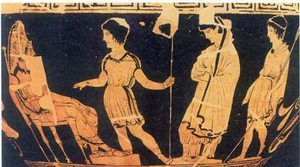
Historically, even pagan cultures had the notion of Eternal Law and natural law. Thus, in Antigone, Sophocles writes of a tyrant, Creon, who upon conquering a city forbids that the corpse of the city’s leader be buried. Antigone, the sister of the city leader, defied this cruel law and buried her brother. She is summoned before Creon:
Creon: Tell me briefly—not in some lengthy speech—were you aware there was a proclamation forbidding what you did?
Antigone: I’d heard of it. How could I not? It was public knowledge.
Creon: And yet you dared to break those very laws?
Antigone: Yes. Zeus did not announce those laws to me. And Justice living with the gods below sent no such laws for men. I did not think anything which you proclaimed strong enough to let a mortal override the gods and their unwritten and unchanging laws. They’re not just for today or yesterday, but exist forever, and no one knows where they first appeared.8
Positive Law
Positive laws are those that God or man enacts, set as precept and command obedience under threat of punishment. In the first case, we have Divine Positive Law (for instance, the Decalogue). In the second case, we have human positive law, which is made by human legislators.
Human positive law must be based on natural law, and not on anyone’s whims, popular consensus or historical circumstances. When positive law is not based on natural law, it is not a true law. We are not obliged to obey it, and sometimes cannot obey it, as in Antigone.
Objective Moral Law Versus “Choice”
If we deny in theory or in practice the objectivity of moral law, we transform the moral act into a mere “personal choice.” Many declare, “It is my conscience that decides what a moral act is.” It is true that conscience guided by reason judges whether something is good or bad, but to judge correctly conscience must apply correct moral principles, which are the objective norms that must guide our actions. In other words, personal conscience does not create the norm of morality: it only applies the moral rules embodied in the natural law.
Liberals confuse these two things and convert morals into a capricious personal choice. By claiming that one can “choose” to act as one wishes they deny the objectivity of the moral law and the fact that all men have a fundamental notion of good and evil.
Moral Chaos and the Revolutionary Process
Today’s moral chaos is the consequence of the revolutionary process that Professor Plinio Corrêa de Oliveira called the “Revolution,” and denounced and analyzed in his masterpiece, Revolution and Counter-Revolution. He saw this chaos as a result of the abandonment of the basic principles of Catholic doctrine and of Christian Civilization.9
Professor Corrêa de Oliveira emphasized that the loss of the sense of sin is one of the main causes of the current crisis. And he presented, as an important task for the Counter-Revolution, to revive the notion of good and evil, of sin in general, Original Sin and actual sin.10 Thus, the notion of Eternal Law and natural law, as the basis of morals and the law, is of crucial importance nowadays.
At the Apex of Revolution, an Opportunity for Counter-Revolution
If it is true that the moral fiber of society is disintegrating and we are entering a time of persecution for Catholics, it is also true that this tragic situation offers hope. The Revolution is an evil process. But its power lies in disguise and hypocrisy, like with the devil. That is why Our Lord defined the devil as “a liar, and the father thereof.”11 And Saint Paul admonishes us that “Satan himself transformeth himself into an angel of light.”12 But when the Revolution proclaims that the vice against nature is a reason for “pride” and that a mother can “choose” to kill her baby, its true hideous face begins to appear and consequently its power of seduction weakens.
“The Truth Shall Make You Free”
Although many are seduced by the power of the Revolution, those who wish to “counter” it have something the deceived do not. They have the force of truth and the power of grace. In spite of the general confusion and chaos, many people harbor a growing disgust for the lies of the Revolution, its ugliness, tyranny and darkness.
Slowly but surely, to use Professor Corrêa de Oliveira’s metaphor, more and more people are getting off the train of Revolution and turning toward the ideals of Counter-Revolution. More people are longing for something they have never really known: Christian Civilization. There is a widespread notion that we must return to the basics, to the essentials of life, to the Eternal Law and natural law, to the Truth. In a word, people are beginning to long for the promise of Our Savior, “And you shall know the truth, and the truth shall make you free.”13
And since without grace we can do nothing, what could be better than to resort continuously to Our Lady, who the Church calls, seat of the Incarnate Wisdom and throne of the Divine Word Himself?
Footnotes
- This article is based on a lecture given to TFP supporters in April 2007.
- Rom. 13:1–2.
- Ps. 18:2.
- Saint Thomas Aquinas, Summa Theologica, I–II, q. 93, a. 1.
- Cf. Rom. 2:14–15.
- Cf. Saint Thomas Aquinas, Summa Theologica, I–II, q. 71, a. 1.
- Some apostate kings of Judah adopted, at times, the Phoenician cult of Astarte and Baal with the “sacred” prostitution and were condemned by the Prophets (Cf. I Kings 14:23–24; II Kings 23:7).
- Sophocles, Antigone, trans. Ian Johnston; http://www.mala.bc.ca/%7Ejohnstoi/sophocles/antigone.htm.
- Cf. Plinio Corrêa de Oliveira, Revolution and Counter-Revolution (Hanover, PA: The American Society for the Defense of Tradition, Family and Property, 2002), at https://tfp.org/revolution-and-counter-revolution/.
- Cf. Revolution and Counter-Revolution, 73.
- John 8:44.
- 2 Cor. 11:14.
- John 8:32.