
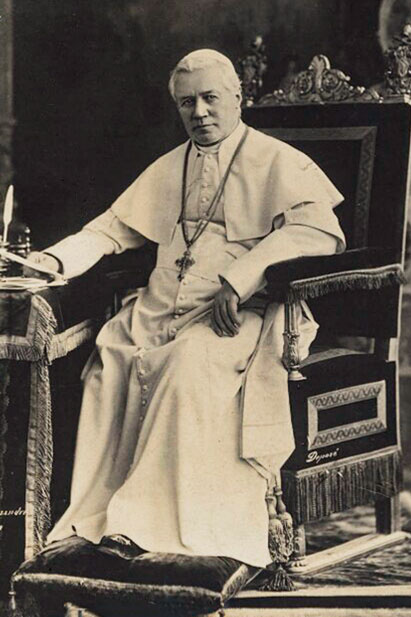
“As the twig is bent, so grows the tree.”
This once-popular aphorism is easily applied to the life and career of the man who became Pope Saint Pius X.
A Christian Home
Giuseppe Melchiorre Sarto was born on June 2, 1835. Most available sources describe his parents as “poor but industrious.” Their home, open today as a museum, is located in a small village between Vicenza and Treviso in northern Italy. During Giuseppe’s youth, that area was part of the Austrian Empire. His father, Giovanni, scraped together a living for his ten children—two of whom died in infancy—as a cobbler, parochial janitor and village postmaster.
By all accounts, the Sarto home was a pious one. One source says, “[T]he day began by prayer and examination of conscience in common: they all confessed their faults, and asked pardon of those they had offended.”
As a child, Giuseppe was noted for his piety and quick mind. He learned easily; however, he also quickly became bored. Subsequently, his behavior was not always admirable. One biographer reports that he was well acquainted with the sensations of his teacher’s cane.
A Priest in Training
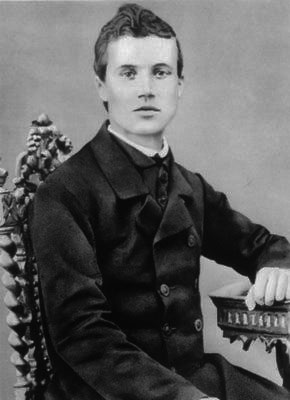
At the same time, his piety and quick mind made him an excellent altar server. His ability won him a mentor in his parish priest, Father Tito Fusarini. In accord with the practice of the time, he received his First Holy Communion at the age of twelve, one year after his confirmation. Years later, as Pope, he remembered the incongruity of serving at Holy Mass for years before he could receive Our Lord. Surely, someone intelligent enough to respond within the rubrics of the Latin Mass had sufficient intelligence to understand Our Lord’s Sacrifice. As Pope, he would substantially lower the age for First Holy Communion.
Giuseppe rapidly learned all that the village schoolmaster could teach him. Father Fusarini took over his education, preparing him for the equivalent of high school. Attendance at high school entailed a four-mile walk. As the son of a cobbler, he knew the value of shoe leather. He conserved the soles of his boots by making most of the trip barefoot, his boots slung over his shoulders.
Giuseppe entered the Seminary of Treviso on a scholarship at the age of fifteen. His father died soon after Giuseppe entered the seminary. His mother took in sewing and farmed a small plot, no doubt with the help of her younger children. Those meager resources, plus the milk of one cow, made up all of her earthly goods. Yet she would not allow her son to leave the seminary. He then completed his training at the Seminary at Padua. Priestly ordination came on September 18, 1858, at the age of 23.
His First Assignment
Father Sarto’s first parish assignment was as curate in Tombolo. He would stay there for nine years. During this time, he devoted much of his spare time to studying Saint Thomas Aquinas and canon law. He also established a free night school for uneducated adults. He admonished his students, Stop cursing in the future: this is all the remuneration I ask.”
The young curate’s homilies soon gained a reputation throughout the area. Other parish pastors frequently invited him to preach. In 1866, he was invited to preach in honor of Saint Anthony of Padua at the Cathedral of Treviso. According to one report, many in the cathedral congregation asked mockingly among themselves, “What good can possibly come out of Tombolo from a junior priest of only thirty-one years?”
On the day of the homily, the cathedral was crowded. Among the listeners were the diocesan canons, thirty-six seminarians and several other priests. To everyone’s surprise, the curate from Tombolo kept them spellbound for seventy-five minutes.
Pastor to Bishop
In 1867, the curate became the pastor of a parish church in Salzano. In 1879, rumors circulated that Monsignor Sarto would be elevated to a bishopric. He resisted such ideas. In a letter to a cousin, he described his trepidation.
“Dear Cousin, you know how little I long for any such post. I fear the dangers of ambition mentioned by Saint Philip Neri to a young cleric aspiring to higher things: ‘And then? And then? And then? – in other words, ambition is never satisfied.”
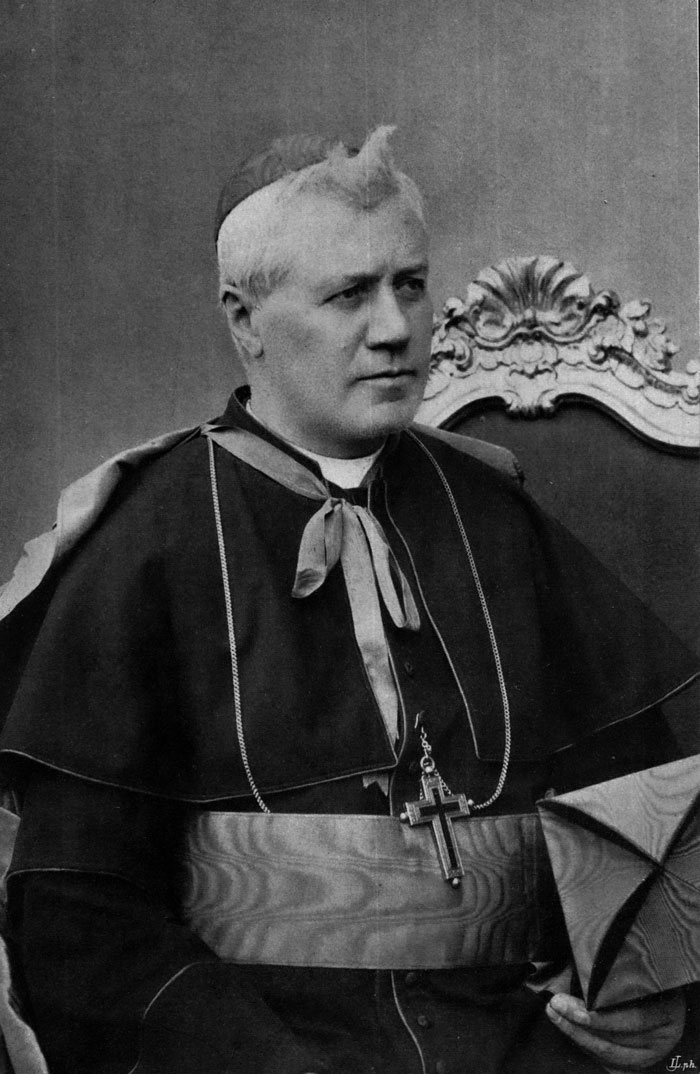
Those rumors proved to be premature. Nonetheless, five years later, Pope Leo XIII made him Bishop of Mantua. Even so, his mother kept him grounded. After his consecration, he showed her his new episcopal ring. “Yes, Giuseppe, it is a beauty; but, my son, you would not have it,” she said as she fingered the wedding ring she had worn for fifty years, “if I had not this one.”
Problems on the Horizon
On his arrival in Mantua, Bishop Sarto found problems that foreshadowed those he would face as Pope. One of his early biographers, René Bazin, described those conditions.
“The spiritual status of this diocese at the time was deplorable, owing largely to an underpaid and negligent clergy. Many of the faithful had already fallen away from the Church, the intellectuals were seduced by freemasonry and liberalism, the proletariat by socialism, which had taken firm root in Mantua; the majority no longer made their Easter Day, workers and peasants desecrated the Sunday, the Lenten regulations had fallen into disusetude, marriages were contracted before civil magistrates, and cursing and blasphemy were common.”
Bishop Sarto’s own assessment wasn’t much better.
“God is driven from politics by the theory of the separation of Church and State; from science, by the establishment of doubt as a system; from art, lowered through realism; from the laws, modelled according to the notions of flesh and blood; from the schools by the abolition of the catechism; finally, from the family, by the attempt to secularize it in its origins and deprive it of sacramental grace.”
Upholding the Faith
It was also during this phase of his life that Bishop Sarto made a statement to some university students.
“Religion has no fear of science. Christianity does not tremble before discussion, but before ignorance. Tertullian proclaimed as much to the Emperors of Rome. ‘One thing,’ he said, ‘our faith demands; not to be condemned before it is known.’ It is this that I ask of you, young men most dear to me, not to condemn religion before you have studied it.”
On another occasion, his words prefigured a significant theme of his papacy.
“The restoration of society in Christ is the only cure for all the world’s evils. No good is good which is not rooted and founded in Christ.”
Cardinal to Pope
In June of 1893, Bishop Sarto received two promotions. On the twelfth, he was elevated to the rank of cardinal. Three days later, Pope Leo XII appointed him Patriarch of Venice.
His nine years in Venice laid the foundation for his Papal reign, although he, obviously, could not have known it. Nonetheless, the record indicates that he regularly struggled against rationalism, naturalism, socialism and communism in the pulpit, classroom and lecture stage. In an August 1896 address, for instance, he challenged his listeners. “Christianity will be the most insurmountable obstacle to disorder, the implacable enemy of all excess and error, the incorruptible guardian of all truth, divine and human.”
With the death of Pope Leo XIII on July 20, 1903, the conclave gathered for its sacred task. In the first ballot, Cardinal Sarto received only five votes. However, for the last time in history, the Habsburg Emperor vetoed the leading candidate, Mariano Cardinal Rampolla, Secretary of State to Leo XIII. On the seventh ballot, Cardinal Sarto received fifty votes and became Pope Pius X.