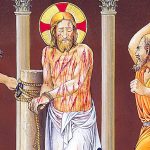
As Our Lord made His way up to Calvary, there was a touching scene. A woman, powerless to stop the injustice, simply offered her veil as an act of compassion. Our Lord gratefully accepted the cloth to wipe His bruised and bloody face. With the Savior’s face miraculously stamped on her veil, she would come to be known simply as Veronica, from the words “Vera Icon” or true image. Her compassionate gesture inspired a devotion to the Holy Face of our Redeemer that has continued throughout the Church’s history.
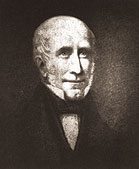
Venerable Leo Dupont
The greatest development of the devotion to the Holy Face was seen in the turbulent nineteenth century because of the efforts of a wealthy lawyer named Leo Dupont. He was born into an aristocratic French family during the final years of the French Revolution and was sent to America owing to the upheavals in France. He would later return to his homeland where he finished his studies in Paris. Although the bloodstained guillotines were now silent, a far greater threat remained. The errors promulgated by the French Revolutionaries were eroding the faith of Catholic France and spreading throughout the world.
Surrounded by a spirit of irreligion, Mr. Dupont gave himself up to numerous apostolic ventures. He distributed Saint Benedict medals by the thousands and was an active member of the Saint Vincent de Paul Society where he gave his time and huge amounts of money in the support of those less fortunate. He promoted all-night vigils honoring Our Lord in the Blessed Sacrament and desired to have such vigils all over the world. Saint Peter Julian Eymard, who once visited Mr. Dupont in his home, appreciated this particular work.
One day, Mr. Dupont was approached by Prioress Mother Mary of the Incarnation regarding an occurrence in her convent that would change his life. She was the prioress of the Carmel in Tours, France, and was puzzled by Our Lord’s revelations to Sister Marie Pierre, one of her young novices.
The Holy Face Devotion
The main request Our Lord made to Sister Pierre was for an association to do reparation for the sin of blasphemy. “You cannot comprehend the malice of this sin,” the novice reported Our Lord saying. “Were my Justice not restrained by my Mercy, it would instantly crush the guilty. All creatures, even those that are inanimate, would avenge My outraged honor, but I have an eternity in which to punish them.”1
Punishments were not long in coming. Tours was nearly destroyed when the Loire River left its banks and a generalized panic gripped the citizens. Many people recognized this as a punishment from God and even non-practicing Catholics were forced to acknowledge that it was only through a miracle that the whole city did not perish.
 Learn All About the Prophecies of Our Lady of Good Success About Our Times
The instruments Our Lord would use to punish sin, however, would not only be the elements, said Sister Pierre, but also the “malice of Revolutionary men.”2 First among them was a new group of people called Communists whom Our Lord designated as His worst enemies. It was around this time that Friedrich Engels and Karl Marx were putting the finishing touches on the Communist Manifesto, which was commissioned by the Communist League. Although at this time the workings of this anticlerical sect were primarily in the intellectual field, it was not long before they put theory into practice, provoking a worldwide bloodshed untold in history.
The appeal for an association, properly approved by the Church for honoring God’s name and doing reparation, met with resistance foretold by Our Lord. Sister Pierre accepted this with patience and though her short life was ending, she knew that Leo Dupont would continue to work toward its realization.
Persecution of the Church
Sister Pierre died on July 8, 1848, content that she had done everything requested of her. Six months later, the hatred of revolutionary men would be directed against Pope Pius IX. Members of the Carbonari, an anticlerical secret society, murdered Count Pellegrino Rossi, Pope Pius IX’s trusted assistant. The following day, Pope Pius IX was besieged in his palace of the Quirinal and forced to accept a revolutionary ministry. He escaped in disguise a week later to Gaeta in the Kingdom of Naples.
The Apostolic Strategy of Blessed Pius IX
In January 1849, from his retreat in Gaeta, Pope Pius IX requested public prayers for the Papal States and had the relic of Veronica’s veil placed for public veneration in Rome. Those in attendance were astonished on the third day of the exposition when the image on the veil, formerly so faint as to be barely visible, became transformed.
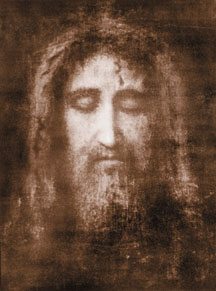
“The Divine Face appeared distinctly, as if living, and was illuminated by a soft light. The features assumed a death-like hue, and the eyes, deep sunken, wore an expression of great pain.”3 An apostolic notary was immediately summoned, and a certificate drawn up and sent to Pope Pius IX. Reproductions of the veil were later printed, touched to the original and sent abroad for veneration. One of these copies fell into the hands of Leo Dupont. Another reached the convent of Lisieux where a nun named Thérèse was practicing her “little way.” She would later become one of the greatest saints in modern time and attributed her spiritual progress to the contemplation of the Face of her Divine Spouse. Saint Thérèse of Lisieux will always be remembered as a devotee of the Infant Jesus but “however tender was her devotion to the Child Jesus, it cannot compare to that which Sister Thérèse felt for the Holy Face.”4
Miraculous Image
Mr. Dupont made a shrine with his representation of the Holy Face in his small apartment and kept an oil lamp burning in front of it. One day he received the visit from a woman who complained of an unknown malady in her eyes that caused her constant pain. At his suggestion, they prayed together in front of the Holy Face. Afterwards he took some oil from the lamp and blessed her eyes with it. To her astonishment she was immediately cured.
Word of this cure spread quickly and throngs of people visited his shrine looking for similar healings. The cures obtained were so numerous that Pope Pius IX declared Leo Dupont to be perhaps the greatest miracle worker in Church history. Mr. Dupont eventually photographed his representation of the Holy Face and had 25,000 lithograph copies made and distributed at his own expense. He also began filling bottles with the oil from his lamp and eventually distributed over one million vials of the miraculous liquid.5
FREE e-Book: A Spanish Mystic in Quito
The turning point for approval of the association for reparation came one day when two men visited Mr. Dupont’s residence. One of them, Father Musy, who lost his voice as a result of a throat infection, was sent to visit Leo Dupont by Cardinal Morlot, the same prelate who five years earlier had placed Sister Pierre’s writings under lock and key. After reciting the litany to the Holy Face composed by Sister Pierre, Mr. Dupont anointed Father Musy’s throat with the oil. To the astonishment of everyone in the room, Father Musy’s speech was immediately restored.
In 1874, Archbishop Charles-Théodore Colet was installed as the new ordinary for Tours. He wasted no time in opening the sealed archives concerning Sister Pierre’s revelations. He read them and was so edified he had them sent to the Benedictines at the Abbey of Solesmes where they were given the highest recommendations.6 Leo Dupont died two years later with his dream having been fulfilled.
In 1885, Pope Leo XIII endorsed this devotion by establishing an Archconfraternity of the Holy Face. In 1958, Pope Pius XII formally declared the Feast of the Holy Face of Jesus as Shrove Tuesday, the Tuesday before Ash Wednesday, for all Roman Catholics.
“Bruised for Our Sins”
Besides Veronica’s veil, the only other picture we have of Our Lord is imprinted on the Shroud of Turin. What is most impressive about both images is the manner in which Our Lord allowed His face to be remembered. Whereas most people choose to look their best for the camera, the two representations of His Divine Face did not show Our Lord at His best.
Our Lord Jesus Christ’s Passion is unparalleled in history for its brutality. Of all the ill treatment heaped upon Our Lord however, none was more injurious to His infinite dignity as those directed at His face. “If I have spoken the truth why dost thou strike me” was His response to the slap from the high priest’s servant. When slapped, He meekly turned the other cheek, and when His enemies spat in His face, He merely lowered His eyes. He was wounded this way for our iniquities and bruised for our sins.7
His physiognomy is a testimony of the enormous sacrifice He made for us and an invitation to see Him through the distorted lens of His enemies’ unbridled hatred.
This treatment might have disfigured His face and obscured the majesty it expressed, but it did not dampen the affection of His followers.
Although our Lord’s enemies today are unable to physically harm Him, they nevertheless continue to insult Him with waves of blasphemies whose number is only outdone by the audacity of their content. Since these insults are public they demand public reparation. “Woe to those cities,” Our Lord told to Sister Pierre, “that will not make this reparation.”8
14,000 Rally Captains Prepare for the 2015 Public Square Rosary Crusade
Had Saint Veronica stayed at home during Our Lord’s Passion, she would have remained anonymous in face of the most monstrous crime in history. By doing otherwise, she became the patron saint for all those who are willing to face the crowds in the public arena defending Our Savior. With a simple and public act of compassion, a previously anonymous individual walked onto the stage of history and will never be forgotten.
The Golden Arrow Prayer
May the most holy, the most sacred, the most adorable and the most incomprehensible Name of God be always praised, blessed, adored, loved and glorified in Heaven, on earth and under the earth, by all the creatures of God, and by the Sacred Heart of Our Lord Jesus Christ in the Most Holy Sacrament of the Altar. Amen.
Footnotes
- Dorothy Scallan, The Holy Man of Tours (Rockford, Ill.: TAN Books and Publishers, Inc., 1990), p. 126.
- Ibid. p. 131.
- Peter Janvier, The devotion to the Holy Face at St. Peter’s of the Vatican (1894), p. 154.
- From the testimony of Sister Agnes at the canonization process of her sister, Saint Thérèse. See Dorothy Scallan, The Holy Man of Tours (Rockford, Ill.: TAN Books and Publishers, Inc., 1990), p. 210.
- Ibid., p. 176.
- Ibid. p. 198.
- Isaias 53:1–11.
- Doris Sheridan, Golden Arrow (Rockford, Ill.: TAN Books and Publishers, Inc., 1990), p. 132.