

Below is the text of a talk given by American TFP speaker James Bascom at the October 5 Synod Conference held in Rome.
Ladies and gentlemen, distinguished guests,
At first glance, it would seem that Marxism, socialism, and communism have little in common with ecology. After all, communist and formerly communist countries such as Russia and China have perhaps the worst environmental records in history. Just the word Chernobyl summarizes the massive disregard for the natural world under communist governments. Today, China is the worst polluter in the world, by far.
And that is not surprising since Marx, Lenin, Stalin, and Mao all praised heavy industry—such as steel mills, oil refineries, and chemical plants—as integral to communism. They wrote about the need to dominate the forces of nature with brutal, overwhelming force by building massive hydroelectric dams, canals, and other projects.
So why is it that, since the fall of the Berlin Wall, socialists have enthusiastically adopted ecology? Why have people who previously espoused Marxism as their creed, people who turned a blind eye to communist devastation of the Earth during the Cold War, now worship at the temple of Gaia? Why is Green the new Red?
Ecology as Part of a Historical Process
Because upon closer inspection, Marxism and modern ecology indeed have much in common. Ecology is both the natural successor to and a more radical application of the principles of Marxism, socialism, and communism. They all share the same principles and the same final goals. Ecology is, in fact, a more advanced stage of the same historical process described by the Brazilian Professor Plinio Corrêa de Oliveira in his book, Revolution and Counter-Revolution.
The same anarchical and egalitarian yearnings apparent in the Protestant revolt, the French Revolution, and the Communist Revolution all find their completion and fulfillment in ecology and its twenty-first-century incarnation: indigenous tribalism, which the Pan-Amazon Synod is proposing for the Church.
Like the French Revolution from which it drew much inspiration, absolute equality was the central tenet of Marxism. Justice and morality, in communist thought, is determined by the degree to which someone or something eliminates inequality of wealth. Communism also embraces evolution, applying to society the same principles that Charles Darwin applied to biology.
For Marxism, the primary means of achieving this perfect equality is class warfare. “The history of all hitherto existing society is the history of class struggles,” wrote Karl Marx and Friedrich Engels in the Communist Manifesto. To establish the communist utopia, these superior classes must be eliminated by violence if necessary. All this is to achieve a future utopian society that has no classes, hierarchies, inequalities, and especially private property. “Communism,” they continued, “can be reduced to a single sentence: the abolition of private property.”
Ecology as Part of Communist Theory
Much less known, however, is that both Karl Marx and Friedrich Engels incorporated ecology into their communist theories.
According to Marx, man is one with nature: “The plants, the animals, the stones, the air, the light and so forth, are part of man’s life and of man’s activity. Nature is the inorganic body of man. That man lives in nature means that nature is his body, with which he must be in constant relation so as not to die. To say that the physical and spiritual life of man is one with nature is nothing else than affirming that nature is one with itself, because man is part of nature.” (Philosophical Manuscripts, 1844).
On his part, Engels states that being “one flesh” with nature, man originally respected it. The dominion he had over nature was brotherly and not oppressive: “We don’t dominate nature as a conqueror dominates a foreign people, oppressing it. We don’t dominate nature as someone who is different from nature, but as someone who is one with nature. We belong to nature, we are one flesh and one blood with nature, we are one brain with nature. We live in its womb.” (Dialectics of Nature, 1876).
The Idyllic State of Engels Destroyed by Property
This idyllic state—which Engels identifies with the primitive tribes—was made possible by the absence of private property. Men thought not in terms of “me” and “mine,” but in terms of “us” and “ours.” There were no hierarchies and, therefore, no domination of some over the others.
At a certain point, there was a violent rupture in human relations. The communitarian “us” and “ours” gave way to the individualistic “me” and “mine.” Some men began to overwhelm others. First, by appropriating the women (whence the family). Then, by appropriating the means of production (whence private property). Finally, by appropriating the mechanisms of power (whence the State). Hierarchy was born, and with it oppression and alienation. This disruption also affected the relations with nature, upon which man began to exert the same type of oppressive dominion the upper classes exerted on the lower ones (Engels, The Origin of the Family, Private Property and the State, 1890).
Engels concludes that the epitome of this oppression of man over nature is capitalism based on the bourgeois mentality, whose only goal is profit no matter the costs for the environment. An Italian communist thinker thus synthesizes his thought: “The root of the violence against nature and the environment are to be found in private property, in the laws of maximum profit, in the rules and reasons of the capitalist society.” (Giorgio Nebbia, Communism and ecology, 1995).
Ecology: Liberating the Earth From Man’s Oppression
From these premises, communist and anarchist thinkers like Piotr Kropotkin and Henry David Thoreau began to analyze the roots of man’s violence over nature, seen as intrinsic to the capitalist and bourgeois system based on consumerism. As a consequence, they saw in ecology a necessary element of the socialist / communist / anarchist revolution they proclaimed.
According to them, Revolution will not fully triumph unless the “liberation” of the proletariat from the bourgeoisie is accompanied by the “liberation” of nature from man’s oppression. No surprise that Marx called for the liberation of animals, quoting Thomas Münzer, the leader of the German peasant revolt in the early sixteenth century: “All creatures have been turned into property, the fishes in the water, the birds in the air, the plants on the earth; the creatures, too, must become free!” (On the Jewish Question, 1844).
Later, neo-Marxist schools developed the concept of “species imperialism,” that is, an imperialism of man over nature that mirrors that of the upper classes over the lower ones, and the stronger peoples over the weaker ones. Further developing these ideas, revolutionary currents during the fifties and sixties came to question the whole of industrial society as being intrinsically oppressive of nature. Whence originated the ecologist and anti-consumerist movements.
The Birth of Modern Ecology
At about the same time that Karl Marx and Friedrich Engels were developing the theories of communism, modern ecology was born. The term “ecology” was coined in 1866 by German naturalist Ernst Haeckel. By ecology, he meant a sort of “economy of nature” that studied the interchange of matter and energy between living organisms and their environment. He created the scientific foundation of the modern ecological movement.
A fanatical disciple of Charles Darwin, Haeckel viewed nature as an ecosystem in which organisms struggle for the survival of the fittest.
He also founded a new naturalist and pantheist religion that intended to replace Christianity in Germany: the Monist League. Unlike Christianity, which considers the material universe and God to be distinct from each other, the primary principle of Monism is that the universe is made up of one sole substance. He wrote:
“Dualism…breaks up the universe into two entirely distinct substances – the material world and an immaterial God, who is represented to be its creator, sustainer, and ruler. Monism, on the contrary…recognizes one sole substance in the universe, which is at once ‘God and nature,’ body and spirit (or matter and energy) it holds to be inseparable. The extra-mundane God of dualism leads necessarily to theism; and the intra-mundane God of the monist leads of pantheism.”1
A Pantheistic Vision of Nature
According to Haeckel, Monism saw the whole universe as a single being made of the same substance. Humans, animals, plants, and minerals therefore all have the same moral worth and a fundamental equality. Monism is essentially pantheism. As Haeckel himself wrote: “The monistic idea of God…recognizes the divine spirit in all things…God is everywhere…We might, therefore, represent God as the infinite sum of all natural forces, the sum of all atomic forces and all ether-vibrations.”2
Haeckel also taught that nature is the source of all truth and our sole guide for human behavior. He despised Christian revelation as an abominable myth that distracts from real source of truth, which is nature itself. “Truth unadulterated is only to be found in the temple of the study of nature, and…the goddess of truth dwells in the temple of nature, in the green woods, on the blue sea, and on the snowy summits of the hills – not in the gloom of the cloister…nor in the clouds of incense of our Christian churches…The paths which lead to the noble divinity of truth and knowledge are the loving study of nature and its laws…not senseless ceremonies and unthinking prayers.”3
Human society, he taught, should be demolished and reorganized in accordance with the rules established in the natural world. All those social institutions, traditions, and religions that separate man from the natural world must be abolished.
The Spread of Haeckel’s Ideas
Haeckel’s ideas about ecology spread rapidly in the late nineteenth and well into the twentieth centuries. Charles Darwin, Konrad Lorenz, Alexander von Humbolt, and Carl Ritter in Europe and Henry David Thoreau, John Muir, Aldo Leopold, Rachel Carson, and David Brower in America all contributed to or further developed the ideas of Haeckel and Monism, among many others. Not surprisingly, these men and women were all socialists or very left-wing.
German philosopher Arthur Schopenhauer spoke for many when he wrote in 1890 that “the fundamental error of Christianity [is]…the unnatural distinction Christianity makes between man and the animal world to which he really belongs. It sets up man as all-important, and looks upon animals as merely things.”
Deep Ecology
The ideas of Monism and ecology were taken even further by so-called “deep ecology.” Developed by Norwegian philosopher Arne Naess in the sixties and seventies and popularized by American philosopher George Sessions, it forms the basis for nearly all ecological thought today.
Deep ecology takes the radically egalitarian ideas of Monism even farther. It considers all non-human life, from animals to single-celled organisms, to have equal value to man and a final purpose not for man, but for themselves. A dog, a river, a snake, a fly, a microbe, a mountain, and a baby all have equal value. Therefore, the Earth does not exist to serve man, but rather has an end in itself.
Its followers detest what they call the “Christian arrogance towards nature.”4 It was the Catholic Church that taught Western man to use nature for his own selfish ends and not live in communion with it in perfect equality, like the Buddhists or American Indians. Deep ecologist Chellis Glendinning even compares the effects of our modern civilization to the Catholic dogma of Original Sin, calling it “Original Trauma,” supposedly the cause of widespread psychological and emotional disorders.5
Human Beings Not Superior to Plants or Animals
American deep ecologist Gary Snyder writes that when human beings consider themselves superior to plants and animals, “we are ignorant of our own nature and confused about what it means to be a human being. This confusion stems from judging ourselves independent from and superior to other forms of life rather than accepting equal membership in the seemingly chaotic and totally interdependent world of wildness.”6
Deep ecologists hate Western civilization for its role in establishing a hierarchy of man over nature. Thomas Berry, an American Passionist priest and self-described “geologian,” describes contemporary human civilization as a form of “patriarchy” that is oppressing the natural world. For him there are four basic patriarchal oppressions that must be destroyed: rulers over people, men over women, possessors over non-possessors, and humans over nature.7
This egalitarianism extends so far that deep ecologist Jack Turner wrote that we must “see [ourselves] as food” for other animals just as they are food for you. Humans must “take up residence” in the biological order without any privileges above other animals, “to be in harmony with Gaia.” If human’s needs come into conflict with those of non-humans, the humans should defer to the latter.8
“Core Democracy of the Biosphere”
Arne Naess admitted that society must change its attitudes towards the Earth and submit to what he called the “core democracy of the biosphere,” that is, of the radically egalitarian ideology of deep ecology. If not, he admitted that we will “need a dictatorship to save what is left of the diversity of life forms…A ‘smooth’ way, involving harmonious living with nature, or a ‘rough’ way, involving a dictatorship and coercion—those are the options.”9 “The longer we wait to make the necessary changes, the more drastic will be the measures needed.”10
Deep ecologists have an enthusiasm for communal living and a rejection of private property. Gary Snyder wrote that “the complication of possessions, the notions of ‘my and mine,’ stand between us and a true, clear, liberated way of seeing the world.”
In fact, the societies that most closely resemble the ideal for deep ecologists are the primitive, tribal societies of the American Indians. They live a subsistence lifestyle without technology, without civilization, without private property, without hierarchy and they worship the Earth, the Sun, and Nature as gods.
Deep ecologist George Sessions praised the “cultures of most primal (hunting/gathering) societies throughout the world” that were “permeated with Nature-oriented religions that expressed the eco-centric perspective.”
How Ecology and Communism Come Together
As we have seen, communism and ecology have many principles in common. They are both radically egalitarian, they both reject Christianity and the notion of a personal God, they both hate Western European civilization, they both are anarchical, they both embrace evolution, they both reject private property in any form, and they are both utopian. Modern ecology, in fact, can simply be seen as a more advanced form of socialism with quasi-religious overtones.
This type of ecology is a part of the revolutionary process analyzed by Plinio Corrêa de Oliveira in Revolution and Counter-Revolution. In a lecture, commenting on the 1992 United Nations Earth Summit in Rio de Janeiro, he said:
“[The] Revolution willed to overthrow ecclesiastical authority though Protestantism, secular authority through the French Revolution, and socio-economic inequalities through communism. Now it wants to overturn the hierarchy whereby man can no longer dominate nature but has rather to obey it. From being the king of nature, man becomes its serf. As you see, ecology is nothing else but the metamorphosis of communism. The Revolution wants to destroy the authority man possesses over nature, which is God-given, and put him at the service of something that is inferior to him. This is against the order of creation established by God. So, to those who say that communism is dead, we answer that this ecological egalitarianism realizes the egalitarian and anarchic utopia of communism.”
Enthusiasm for Primitive Tribal Life
The most important common element between ecology and socialism, however, is their mutual enthusiasm for primitive, pagan, pre-Christian tribal life exemplified by the Indians of the Americas.
As far back as 1928, at the Sixth World Congress of the Communist International in Moscow, the Communist Parties of Latin America were instructed to fight for self-determination for the Indian tribes, to produce propaganda in Indian languages, and to try to win over Indians to the communist cause. In the thirties, the Peruvian and Chilean Communist Parties began to agitate for the creation of independent Indian republics in their respective countries. In 1950, the Mexican communists launched a slogan: “autonomy in regional and local administration” for the indigenous peoples. And the Second Declaration of Havana, published in Fidel Castro’s Cuba in 1962, invoked the cause of Indians, mestizos, black people in order to make them into a powerful army for the revolution.
The pre-Christian, primitive Indian of the Americas serves as a model for both socialism and ecology. It was in Latin America in the seventies, specifically in Brazil, where these ideas were adopted and implemented by the Catholic Left. Leonardo Boff, the Brazilian ex-Franciscan friar, Marxist, liberation theologian, and co-author of Laudato Si’, summarized this well when he wrote that “the cry of the Earth is the cry of the poor and the cry of the poor is the cry of the Earth, our Mother Earth” who is “being crucified, and it is our task to rescue her, like we have done for decades with the poor.”
A Prophetic Denunciation
In response to this Revolution, in 1977 Plinio Corrêa de Oliveira wrote a book called Indian Tribalism: Communist-Missionary Ideal for Brazil in the Twenty-First Century.
Prof. Plinio showed, in their own words, how Catholic leftist missionaries in Brazil see the lifestyle, morals, and religion of the Brazilian Indians as expressing the principles of socialism and ecology to the highest degree. Primitive Indians live without capitalism, private property, without Christian faith or morals, and live in harmony with the Earth. In other words, they live both the socialist and ecological utopias.
Therefore, to save the Earth and themselves from destruction, Westerners must destroy their economic, political, and social institutions and imitate the tribal life of the Amazon Indians.
Indigenous Tribalism: A Trans-Communist Movement
Bishop Pedro Casaldáliga, a leading figure of indigenous tribalism in Brazil in the seventies, described himself and the movement as “trans-communist,” that is, a movement based on the same principles of communism yet taking them to a more radical conclusion. The perfect fulfillment of communism, if you will. Likewise, this ecological indigenous tribalism, which the Pan-Amazon Synod aims to implement, is nothing less than old communism that has simply metamorphosed.
Communism has not died, but lives on in the form of ecology. Green is the new Red. Ecology is the perfect fulfillment of the egalitarian dream of Karl Marx and the total subversion of the hierarchical order that God placed in the universe. It would be impossible to conceive of a greater rejection of God’s order than this.
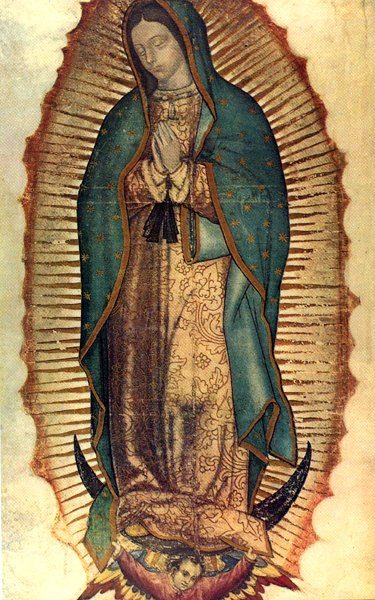
Let us pray to Our Lady of Guadalupe, patroness of the Americas and symbol of the triumph of Catholicism over paganism, and Christian civilization over barbarism, that she expose and crush this diabolical maneuver both in the Church and in society.
More articles related to the Synod on the Amazon may be found on Pan-Amazon Synod Watch, at https://panamazonsynodwatch.com/.
Footnotes
- Ernst Haeckel, Riddle of the Universe, (Buffalo, New York: Prometheus Books, 1992), p. 20.
- Haeckel, Lecture at Altenburg, 1892.
- Haeckel, Riddle of the Universe, p. 337.
- George Sessions, Deep Ecology for the Twenty-First Century: Readings on the Philosophy and Practice of the New Environmentalism (Boston: Shambhala Publications, 1995), p. x.
- Sessions, p. 5.
- Sessions, p. 44.
- Sessions, p. 14.
- Sessions, p. 74.
- Sessions, p. 28.
- Sessions, p. 69.