
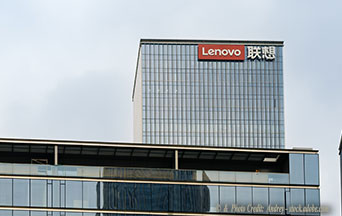
On March 5, 2026, Indiana Governor Mike Braun signed Public Law 131. It was a popular move. The new law passed the State Senate by 44-0 and the State House by 82-13.
The new law covers largely untested ground for state legislators. They are trying to limit China’s possible infiltration into Indiana schools. The unusual move reflects one side of a deep division over America’s relationship with China.
Are Student Computers Chinese Listening Posts?
A specific target of the law concerns the computers used in Illinois schools. As National Review pointed out in a recent article, Indiana public schools have distributed over 20,000 Lenovo computers to students since 2020. Additionally, some school districts use a “remote digital learning system” called LANSCHOOL. The company has a very slick website, claiming that their “cloud-based classroom management software is a big win for educators” in the schools that use it. Furthermore, these electronic wonders are free if the school system purchases enough Lenovo computers.
Such considerations loom large for cash-strapped school districts.
A typical passage on the website explains “screen monitoring” to teachers.
“When students are working on 1:1 digital devices in the classroom or learning remotely, it can be difficult for teachers to maintain visibility into what each individual is working on and how they’re progressing. LanSchool’s Screen Monitoring feature gives teachers the ability to view individual students’ screens or see all screens at once in thumbnail view so they can more effectively guide learning within the digital workspace.”
What is a Lenovo?
The website, however, leaves out one important piece of information. A Chinese company owns Lenovo, which means that it, and the information it collects, are controlled by the Chinese Communist Party (CCP). The only physical address that appears on the site is in Morrisville, North Carolina. A school system could conceivably purchase thousands of Lenovo computers and connect them via LANSCHOOL to student-and parent-owned home computers, without anyone knowing that their information is available to the CCP. Can Chinese eyes be monitoring the child’s computer along with the teacher? Does the monitoring stop when the lesson ends? Can the CCP monitor other information stored on the home computers?
In reality, Lenovo is a trade name for a Chinese company. In 2005, it purchased IBM’s personal computing division. If customers asked about the unfamiliar name, the sales representative could explain without deceit that this was the new name for what were once IBM’s personal computers.
Data control is a very big business. Many readers scroll through content on social media platforms such as Facebook, TikTok, Instagram, X and others. Clicking on or even lingering over an ad for one product triggers an avalanche of ads for similar products.
The Business of Data
However, sharing information about the computer-usage habits of millions of Americans with the Chinese government opens up whole new fields of concern that go far beyond the annoyance of unwanted advertising.
All of this raises important questions about how the Chinese came to hold such a dangerous position in American commerce.
When the Chinese purchased IBM’s personal computer business, it was still possible to pretend that the Chinese were simply outperforming many American firms. At the time, most Americans thought of Chinese products much as they regarded Japanese televisions and automobiles in the mid-seventies. Lower prices and greater reliability often overcame any regrets about buying foreign products.
A Gradually Developing Issue
The Nixon Administration defined that historical position. Its narrative held that China’s adversarial relationship with the U.S. before 1971 was an unfortunate historical accident. China had adopted communism at exactly the time that the Soviet Union most threatened the U.S. It was time, the president said, to look past old antipathies. Opening trade barriers would enhance economic and political freedom for China’s citizens while boosting U.S. economic growth. Presidents Ford, Carter, Reagan, Bush the Elder, Clinton, Bush the Younger, and Obama all followed Nixon’s pattern to varying degrees.
While President Nixon began promoting trade with China, the longtime leader, Mao Zedong, gradually grew increasingly feeble. When he finally died, the Chinese Communist Party (CCP) replaced him with Deng Xiaoping (1978-1992). Deng projected a comfortable image and eagerly accepted American trade. His successors Jiang Zemin (1992-2002) and Hu Jintao (2002-2012) appeared, at least to American eyes, to come from the same mold. Even the Tiananmen Square massacre proved to be only a hiccup in the prevailing mood.
However, China wore two hats at once. One promoted economic cooperation. The other became increasingly competitive, as the CCP subsidized its industries in an attempt to destroy its international competitors.
An Aggressive and Dangerous Attitude
However, Xi Jinping’s ascent to Chinese leadership projected a more strident tone. It was almost as though China was proud to be breaking the rules of international trade. In November 2012, The Beijing Review’s Zhou Xiaoyan wrote that “China’s personal computer Lenovo Group Ltd. overtook U.S. based Hewlett-Packard in the third quarter to become the largest sellers of personal computers (PCs) in the world.” Yang Yuanqing, the Chairman and CEO of Lenovo, exuded optimism. “Becoming a leading enterprise in the PC market is just a milestone in Lenovo’s development, as it is also looking to become a leader in other markets.”
CCP infiltration into schools is one especially thorny aspect of a multifaceted problem. There is also penetration into other government technology contracts, university research, foreign agents, and even real estate purchases in militarily sensitive areas. Each aspect deserves study on its own merits. The new Indiana law aims to address all of these issues.
There will, no doubt, be court challenges to some or all of the aspects of this law. The CCP has a large bankroll and a legion of willing attorneys in the U.S. However, it is a beginning salvo in a long-overdue battle. CCP infiltration is real, and national security requires that the United States resist it.
Photo Credit: © Andrey – stock.adobe.com