
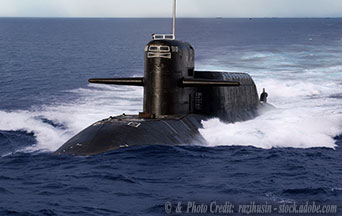
The New Strategic Arms Reduction Treaty (New START) is set to expire on February 5, 2026. The present administration has expressed a willingness to extend the treaty for another year. The idea of an extension would have disastrous consequences and must be opposed by all who value world peace through strength.
For more than a decade, this START treaty has symbolized a unilateral, naive American faith in rules-based restraint in the face of a Russian strategy of opportunism and bad faith. Signed in 2010 by President Barack Obama and extended for five years by President Joe Biden, the agreement assumed reciprocal transparency, verifiability and strategic responsibility.
However, the record demonstrates a persistent asymmetry: The United States has continued to respect ceilings, inspections and reporting obligations, while Russia progressively hollowed out the treaty’s substance, transforming arms control from a mutual stabilizing instrument into a tool of strategic deception.
An Unverifiable Treaty
This pattern did not emerge in a vacuum. The collapse of the Intermediate-Range Nuclear Forces Treaty already revealed Moscow’s approach to arms control: violate the agreement in secret, deny wrongdoing and continue to leverage Western compliance into paralysis. Russia’s deployment of prohibited missile systems, followed by its later testing and use of intermediate-range and hypersonic weapons, confirmed that treaties were never understood in Moscow as binding moral or legal commitments, but as temporary constraints imposed on an adversary that unwarily believes in them. Arms control, in this context, became a mechanism by which the United States restrained itself while Russia prepared for escalation.
Vladimir Putin’s “suspension” of New START in 2023 merely formalized what had already become reality. By blocking inspections, refusing data exchanges and rejecting dialogue “without preconditions,” Russia effectively dismantled the treaty’s verification regime while cynically claiming continued compliance.
American authorities admitted they could no longer verify whether Russia was complying with the 1,550-warhead limit. A treaty that cannot be verified is not arms control; it is self-imposed blindness. Russia’s insistence that strategic stability discussions must be subordinated to its war against Ukraine further underscores that arms control is treated as a bargaining chip, not a shared responsibility.
The START Treaty Must Not be Extended
Against this backdrop, calls to extend or renew New START—even “voluntarily”—are strategically and morally indefensible. Vladimir Putin’s September 21, 2025 offer to respect numerical limits for one additional year, conditioned on U.S. behavior, is not a gesture of good faith but an attempt to preserve constraints on American capabilities while Russia retains freedom of action.1
The United States gains nothing from perpetuating treaties that it alone respects. Continuing arms control under these conditions does not promote stability; it rewards violation, entrenches asymmetry, and signals weakness. True strategic realism demands abandoning the illusion of reciprocal restraint and recognizing that deterrence, not paper agreements, is the only language Moscow has consistently understood.
Catholic Teaching Defends Ending the Treaty
Some Catholics may claim that the extension of New START is a moral obligation since the late Pope Francis stated that the mere possession of nuclear weapons is intrinsically immoral.2
As we show in our 2019 declaration reproduced below, such an attitude represents a profound rupture with the Catholic moral tradition and a dangerous moral absolutism masquerading as evangelical radicalism. For centuries—from Saint Augustine to Saint Thomas Aquinas, from the medieval doctrine of just war to the prudential judgments of popes during the Cold War—the Church acknowledged that coercive power, even lethal power, can be morally licit when ordered to the preservation of justice, peace, and political community.
To condemn possession of nuclear weapons as such is to deny the legitimacy of deterrence, sovereignty, and prudential judgment, replacing them with an ethic of unilateral vulnerability.
This position does not merely depart from previous papal teaching; it inverts it. Popes Pius XII, John Paul II, and Benedict XVI all recognized—explicitly or implicitly—that deterrence, while tragic and provisional, could be morally tolerable under conditions of grave threat, especially when it prevented greater evils.
Pope Francis’s formulation abandoned this prudential realism, replacing it with an immoral framework in which the preservation of biological life and environmental integrity becomes an absolute norm, overriding honor, justice, political responsibility, and even the survival of the true Faith and the moral order itself. Such an ethic reduces morality to risk management and peace to the avoidance of catastrophe at any cost.
Surrender Is Not an Option
In doing so, it implicitly asserted that humanity must sacrifice its highest moral values—truth, honor, freedom, and the defense of the innocent—on the altar of mere physical survival. This is not a Catholic hierarchy of values. Our Lord Jesus Christ never taught that life, as a biological fact, is the supreme value. His death on the Cross, for our redemption, proves the very opposite.
Martyrdom, too, is the definitive refutation of that spurious claim. The Catholic Church venerates those who chose death rather than apostasy, dishonor, or submission to sin and evil. The moral universe presupposed by an absolute condemnation of nuclear deterrence would render the life sacrifice of the martyrs irrational and history’s heroic defenders of their homeland immoral.
The declaration of Judas Machabeus applies: “For it is better for us to die in battle, than to see the evils of our nation, and of the holies” (1 Mach. 3:59). Such courage stands as a permanent judgment against this reduction of ethics to biolatry or life-worship. It affirms that there are conditions worse than death and values higher than mere continuance of life. A world in which the good disarm themselves while the evil expand their destructive capacity and their threats is not a world ordered to peace, but to submission and annihilation.
To reject deterrence in such a world is not “prophetic” but sinfully and criminally negligent. True moral seriousness does not consist in condemning armed power abstractly, but in recognizing that, in a fallen humanity, the refusal to wield power responsibly can be a grave moral failure.
Call to Redefine Just War
Recent commentaries by Archbishop Paul Richard Gallagher3 and Chicago’s Cardinal Blase Cupich are articulated in the language of peace and solidarity.4 However, such stands rest on moral premises that are neither historically grounded nor theologically adequate.
To assert, as Archbishop Gallagher does, that peace cannot be secured through deterrence is to ignore the concrete historical fact that deterrence has prevented large-scale war among nuclear powers for decades, precisely by restraining aggressors rather than trusting in their professed goodwill. His appeal to “revitalized arms control processes” presumes a symmetry of moral intention and political reliability that does not exist. It risks turning moral exhortation into strategic gullibility and naïveté.
Likewise, Cardinal Cupich’s call to “redefine” just war doctrine and to pursue “integral disarmament” replaces a moral judgment rooted in reality with a “wishful thinking” aspirational ethic. His lament over public willingness to use nuclear force misidentifies the problem: the issue is not a lust for violence, but the sober recognition that political leaders have a duty to protect their people, even under tragic constraints. To dismiss deterrence as a mere “threat” is to succumb to the fanciful illusion and lie of peaceful coexistence without reckoning with injustice, aggression, and the persistence of evil.
Respectfully but firmly, such positions risk transforming the Church’s moral voice from a guide for resolute and faith-informed action in a sinful world into an exhortation to disarmed surrender before armed and evil adversaries—a posture that may intend to preserve moral purity in theory, but abandons justice, honor and the defense of the Faith and the innocent in practice. It would be a gross and sinful dereliction of duty.
Not a “Good Idea”
It is therefore not a “good idea” to follow Putin’s 2025 proposal. An extension of New START’s quantitative limits without trust, verification, or reciprocity would serve only to restrain the United States while leaving Russia free to maneuver.
After suspending inspections, rejecting negotiations, and treating arms control as a tactical instrument, Moscow has forfeited any presumption of good faith. Accepting such an offer would not preserve stability but reward deception and institutionalize strategic imbalance.
If You Want Peace Prepare For War
The wise Roman maxim “Si vis pacem, para bellum”—“If you want peace, prepare for war” still applies today. The prospects for peace in our times have dimmed since the fall of the Berlin Wall thirty long years ago. The reality of war was made patent by the brutal 9/11 attacks and the rise of Islamic terrorism that continues into our days. Rogue regimes like that of Communist North Korea remind us that nuclear missiles are still being developed and aimed at America and its allies. Russia and China maintain substantial nuclear arsenals. Pakistan is vulnerable to Islamist pressure. Iran, the world’s greatest state sponsor of terrorism, is elbowing its way into the nuclear club. In a certain sense, the world is more dangerous than ever.
However, the moral licitness for nuclear weapons was questioned by Pope Francis I in Hiroshima, Japan, in late November 2019. He condemned as immoral not only the use of such weapons but their very possession. Moreover, during his Press Conference on the return flight to Rome, Pope Francis stated that “this must go in the Catechism of the Catholic Church.”5
While a world “free from nuclear weapons” is to be greatly desired, such an ideal cannot be entertained without a moral conversion of all involved. It would be imprudent and wrong to take the course of disarmament in the face of real and dangerous threats to America and the world.
Why We Cannot Cut Our Nuclear Arsenal Without the World Returning to Ethical Principles
For years now, nuclear disarmament (even unilateral disarmament) has been vehemently debated in Catholic intellectual circles. Since the Trump Administration is now facing pressure to extend the Strategic Arms Reduction Treaty (New START) with the Russian Federation beyond its expiration date of February 5, 2026, and this Catholic debate influences to some extent the realm of public policy, it seems opportune for the American Society for the Defense of Tradition, Family, and Property—TFP to pronounce itself on the moral legitimacy of America maintaining, improving, and expanding its nuclear arsenal and delivery capability, particularly as the TFP’s viewpoint runs contrary to that expressed by some Catholic commentators.
The Erroneous Position: Morally Acceptable Only if Pursuing Gradual Nuclear Disarmament
According to these Catholics, a nuclear arsenal would only be justified as an interim measure while the nation pursues its gradual dismantling, thus tending to bring about a peaceful world.
However, they argue, since this progressive dismantling has not occurred, the moral justification for maintaining that arsenal no longer exists. Thus, for example, Canadian diplomat Douglas Roche claims: “In the eyes of the Catholic Church, nuclear weapons are evil and immoral and must be eliminated as a precondition to obtaining peace.”6
This position is wrong. As we shall see, Catholic teaching permits America to have and use a nuclear arsenal, and world conditions today are such that it would be gravely imprudent for America to reduce its nuclear arsenal and delivery capabilities. Only when the world undergoes a moral conversion could America prudently do so.
A. The Principle of Legitimate Self-Defense
According to natural law and Catholic morality, the principle of self-defense applies both to individuals and nations. This pertains to personal or territorial integrity, as well as natural and supernatural values, without which life loses its meaning.
A corollary of this principle as it applies to nations is that they should develop the means to cope with current or potential threats to their sovereignty and territorial integrity, as well as to restore justice, safeguard their citizens’ rights and the nation’s honor, even, if necessary, through a defensive or preemptive war.7
In other words, the principle of self-defense justifies maintaining a standing army, properly equipped to carry out its mission. For America, in the present context, this includes the right to maintain, improve, and expand its nuclear arsenal and delivery capabilities. Besides playing a critical deterrence role, these weapons and delivery systems provide America with the proven ability to carry out large-scale, focused strikes on multiple military targets simultaneously that can quickly and drastically alter the configuration of a war.
B. History Teaches: “If You Want Peace, Prepare for War”
There is no doubt that, in theory, one should seek to preserve world peace by avoiding as much as possible the risk of armed conflict and thus making it unnecessary to maintain nuclear arsenals or even, to some extent, large stockpiles of conventional weapons. In theory, it is also preferable that disputes between nations be resolved through diplomacy, international agreements or treaties, rather than by wars or armed standoffs.
However, not all things that are better in theory can be carried out in practice. History shows that unilateral gestures of goodwill are seldom sufficient to resolve conflicts. A strategy of effective deterrence coupled with the determination and ability to wage war is usually the only way to preserve peace.
The wise maxim coined by the ancient Romans still applies today: “Si vis pacem, para bellum”—“If you want peace, prepare for war.”
C. Strategic Decisions Must Be Based on an Objective Analysis of Reality
A moral and strategic assessment of a fact or situation depends not just on good intentions or principles, but also an objective examination of reality. Since morals and political science are practical and normative sciences, for their principles to be correctly applied, it is essential to start with an accurate assessment of reality. Otherwise, if the assessment of the facts or situation does not correspond to objective reality, one can come to false conclusions, even when based on correct principles.
An example of a completely different nature can make this point clearer.
The Gospel teaches us that Saint John the Baptist rebuked Herod Antipas for his immoral behavior, as he was living with Herodias, the wife of his brother Philip (cf. Mark 6:18). Now then, if Herod were not living with his sister-in-law, Saint John the Baptist would still be right about the intrinsic immorality of adultery (a question of doctrine) but would be wrong about the actual behavior of the tetrarch of Galilee (a question of fact).
So also, to study the legitimacy of our nuclear arsenal and delivery capabilities, one must consider both aspects of the matter: the question of doctrine (the lawfulness of the use of nuclear weapons) and the question of fact (whether the actual situation allows for such use).
It is obvious that if the use of nuclear weapons were doctrinally unlawful in every situation, then the assessment of a particular set of facts justifying the use of America’s nuclear arsenal would be pointless.
D. Is It Morally Licit to Employ Nuclear Weapons? In What Conditions?
There is no doubt, however, that it is lawful to use nuclear weapons in some circumstances. Nine years after Hiroshima and Nagasaki, while the world sank deeper into the Cold War, Pope Pius XII accepted in principle the legitimacy of using nuclear weapons as a last resort, stressing however the need to do everything possible to avoid nuclear war through diplomatic negotiations.
In a speech on September 30, 1954, the Pope laid down the following conditions for the legitimate use of nuclear weapons:
- Such use must be “imposed by an evident and extremely grave injustice;”
- Such injustice cannot be avoided without the use of nuclear weapons;
- One should pursue diplomatic solutions that avoid or limit the use of such weapons;
- Their use must be indispensable to and in accordance with a nation’s defense needs;
- That same use would be immoral if the destruction caused by nuclear weapons were to result in harm so widespread as to be uncontrollable by man.
- Unjustified uses should be severely punished as “crimes” under national and international law.8
E. Life is Not the Supreme Value for Man
One should note, moreover, that Pope Pius XII is referring here only to goods of the natural order: “the protection of legitimate possessions” or “the defense against injustice.” He is not analyzing the possibility of having to use such weapons to defend supernatural values; in other words, to prevent or eliminate situations that place the salvation of souls in great and imminent danger, for example, the imposition of a regime that is gravely contrary to Natural Law or which persecutes Catholics who show fidelity to their Faith.
Nor is the Pope ruling on the opinion of those who hold that human life is the supreme value for man. While life is the most excellent natural good, its preservation is not the ultimate end of man. As moralists Lanza and Palazzini write: “Life takes on meaning and is fully realized only if it is directed toward the search for God, with all other, particular and contingent ideals being dependent on that which is the supreme good.” They also explain that man’s ultimate goal—God’s glory and man’s eternal salvation—is the “supreme normative principle of human action.”9
Therefore, when man’s ultimate supernatural goal is at stake, the defense of human life cannot be placed above that ultimate good. Judas Maccabeus expressed this truth in his famous phrase: “It is better for us to die in battle than to witness the ruin of our nation and our sanctuary” (1 Mach. 3:59). And the Divine Savior was adamant: “For what shall it profit a man, if he gain the whole world, and suffer the loss of his soul? Or what shall a man give in exchange for his soul?” (Mark 8:36–37).
Losing the Faith Is a Greater Evil than Total Nuclear Destruction
We provide below some reflections on the issue of nuclear war written by the great Catholic thinker Plinio Corrêa de Oliveira in 1963. These excerpts are taken from his essay The Freedom of the Church in the Communist State, which was distributed to the Council Fathers during the Second Vatican Council.
The essay received numerous letters of praise from Cardinals and Bishops. One such letter, signed by the Prefect and Secretary of the Vatican’s Sacred Congregation for Seminaries and Universities, described the essay as a “most faithful echo of all the Documents of the Supreme Magisterium of the Church.”
While it focuses on communism, the arguments made in the essay apply to any “red or dead” false dilemma; in other words, to any situation when a Catholic is forced to choose between apostatizing from the Faith to avoid a nuclear hecatomb or risking death in a nuclear confrontation to remain faithful to the Catholic faith.
Losing the Faith is a greater evil than total nuclear destruction . . .
Wars have as their principal cause the sins of nations. For, as Saint Augustine says, since nations cannot be recompensed or punished for their sins in the next life, they already receive in this world the reward for their good actions and the punishment for their crimes.
Thus, if we wish to avoid wars and catastrophes, let us fight their causes: the corruption of ideas and morals, the official impiety of secular states and the growing opposition of positive law to the law of God. This is what exposes us to the wrath and chastisement of the Creator and leads us to war more than anything.
If to avoid war, the Western nations were to commit a sin even greater than current ones by consenting to live under a Communist yoke in a situation condemned by Catholic morality, they would thereby defy God’s wrath and call down upon themselves the fruits of His ire. . . .
Facing the dramatic option at hand, which this essay tries to make evident, let us not reason like atheists who ponder pros and cons as if God did not exist.
A supreme and heroic act of fidelity in this hour could cover a multitude of sins, inclining Him to turn away from us the cataclysm that approaches.
That should be an act of heroic fidelity, an act of entire and heroic confidence in the Heart of Him who said: “Learn from Me because I am meek and humble of heart: and you shall find rest to your souls” (Matt. 11:29).
Yes, let us trust in God. Let us trust in His Mercy, whose avenue is the Immaculate Heart of Mary.
The Mother of Mercy said to the world in the Message of Fatima that wars are turned away by prayer, penance, and the amendment of our lives, not by convenient and shortsighted concessions made out of fear.
Facing the insidious approaches of international communism, may Our Lady of Fatima obtain for all of us, who must fight, the courage to exclaim “non possumus” [“we cannot”] (Acts 4:20).
Plinio Corrêa de Oliveira, The Church and the Communist State: The Impossible Coexistence, Chapters 4 and 10. For the full document, see https://tfp.org/tfp-home/statements/the-church-and-the-communist-state-the-impossible-coexistence.html (our emphases).
F. The Objective Reality: To Reduce America’s Nuclear Arsenal Is Gravely Imprudent Today
As mentioned earlier, a strategic decision must also be based on an objective analysis of the present reality and the foreseeable future. On this fundamental point, the words of Pope Pius XII in 1953 are particularly instructive:
“The community of nations must reckon with the criminals without a conscience. These are unafraid of unleashing total war to achieve their ambitious plans. Therefore, if the other nations wish to protect the lives and property of their citizens, and rein in the international criminals, they must prepare for the day when they will have to defend themselves. This right to defense cannot be denied, even today, to any State.”10
Is the world today free from international “criminals without a conscience,” who could resort to “total war”? Who could seriously think so, in light of, for example, the 2005 statement to foreign reporters by Chinese Red Army Maj. Gen. Zhu Chenghu, a dean at China’s National Defense University: “. . . If the Americans draw their missiles and position-guided ammunition onto the target zone on China’s territory, I think we will have to respond with nuclear weapons. . . . [The United States] will have to be prepared that hundreds of cities will be destroyed.”11
G. Disarmament Only with the Restoration of Ethical Principles
In a message to the United Nations Second Special Session on Disarmament, in 1982, Pope John Paul II explained the real problem: The arms race is the fruit of an ethical crisis and only with a restoration of ethical principles can possible global disarmament have a chance at being effective. Otherwise, any such initiative is doomed to fail:
“The production and the possession of armaments are a consequence of an ethical crisis that is disrupting society in all its political, social and economic dimensions. Peace, as I have already said several times, is the result of respect for ethical principles. True disarmament, that which will actually guarantee peace among peoples, will come about only with the resolution of this ethical crisis. To the extent that the efforts at arms reduction and then of total disarmament are not matched by parallel ethical renewal, they are doomed in advance to failure.
“The attempt must be made to put our world aright and to eliminate the spiritual confusion born from a narrow-minded search for interest or privilege or by the defense of ideological claims: this is a task of first priority if we wish to measure any progress in the struggle for disarmament. Otherwise we are condemned to remain at face-saving activities. . . .
“In current conditions “deterrence” based on balance, certainly not as an end in itself but as a step on the way toward a progressive disarmament, may still be judged morally acceptable. Nonetheless in order to ensure peace, it is indispensable not to be satisfied with this minimum which is always susceptible to the real danger of explosion.”12
H. Morally, Our World Today Is Much Worse than in 1982
Now then, the “ethical crisis” and “spiritual confusion” have only worsened since 1982. The breakdown of moral standards in individuals and the world’s political, cultural, and economic realms, the clerical sexual abuse scandals, the near destruction of the institution of the family everywhere, are leading the world to an ever-greater state of chaos.
Communism continues to dominate many countries, including China, Cuba, Vietnam and North Korea; the Russian Federation cannot be trusted, as shown by its 2008 invasion of Georgia and its 2014 occupation of Crimea. It is no secret that the influence of the true Communist Party—the former KGB—in the Russian government is dominant.13
Terrorism has taken on worldwide and apocalyptic dimensions and is protected by countries that already possess or are on their way to acquiring nuclear weapons.
All this makes the considerations of John Paul II in the above-mentioned message to the United Nations even more valid today than they were in the early years of his pontificate.
I. The Role of the United States in Defense of Christian Values
Over the decades, the United States has repeatedly come to the defense of peoples whose freedom or Christian values are threatened. We fought against Hitler’s neo-pagan Nazi regime in Europe, and after that, against Communism in Korea, Vietnam, and Grenada.
Without delving into the political reasons or intentions of our nation’s leaders in those conflicts, we must emphasize the generosity with which the American people paid a bloody tribute in defense of Christian values, which in turn obtained from Divine Providence special graces for our country.14
This spirit of generosity is still alive in our people and our Armed Forces in spite of the unprecedented moral crisis sweeping our country. Consequently, the United States can still play this great role of charitable intervention in defense of values without which life is not worth living.
If our nuclear arsenal and delivery capabilities are decreased or dismantled, however, the only military force seriously capable of confronting the international “criminals without a conscience,” as Pius XII called them, will be greatly impaired. Only these “criminals” profit from this self-imposed state of weakness.
Conclusion: Moral Conversion Is the Indispensable Prerequisite for Nuclear Disarmament
In grappling with these complex and consequential strategic issues, it is not legitimate for Catholics to ignore their supernatural aspect. As Pope Pius XII observed, “the Christian desire for peace is practical and realistic,” and “the genuine Christian will for peace means strength, not weakness or weary resignation. It is completely one with the will for peace of Eternal and Almighty God.”15
This Divine will was manifested anew to men, and this time by the Mother of God herself, in 1917, at Fatima, Portugal, in apparitions to three little shepherd children. She asked for prayer, penance, and a change of life, in sum, a moral conversion of the world. It is the TFP’s long-held opinion that until the world undergoes this conversion, there are simply no conditions for America to reduce its nuclear arsenal and delivery capabilities.
When this moral conversion occurs, it will be the fulfillment of Our Lady’s prophetic words at Fatima: “Finally, my Immaculate Heart will triumph!”
Photo Credit: © razihusin – stock.adobe.com
Updated January 28, 2026.
Footnotes
- See Ivan Nechepurenko, Paul Sonne, and David E. Sanger, “Putin Proposes One More Year of Nuclear Caps With U.S.,” The New York Times, Sept. 22, 2025, https://www.nytimes.com/2025/09/22/world/europe/putin-trump-start-nuclear-treaty.html.
- Cupich, Blase. “Cardinal Cupich: ‘The Use of Nuclear Weapons Is a Crime Against God.’” Vatican News, August 11, 2025. https://www.vaticannews.va/en/church/news/2025-08/cardinal-cupich-homily-80-anniversary-nagasaki-atomic-bombing-us.html.
- Vatican News. “Archbishop Gallagher: Arms Race Is ‘Unacceptable,’ Leads to Nuclear Catastrophe.” September 26, 2025. https://www.vaticannews.va/en/vatican-city/news/2025-09/gallagher-arms-race-unacceptable-nuclear-catastrophe-un.html.
- Vatican News. “Pope Francis: A World Free of Nuclear Weapons Is ‘Necessary and Possible.’” June 21, 2022. https://www.vaticannews.va/en/pope/news/2022-06/pope-francis-a-world-free-of-nuclear-weapons-is-necessary.html.
- Nicole Winfield/AP, “The Pope Is Planning to Make Nuclear Weapons Immoral in the Catholic Doctrine,” Time, Nov. 27, 2019, https://time.com/5740288/pope-catholicism-nuclear-weapons/.
- Douglas Roche, O.C., Nuclear Weapons and Morality – An Unequivocal Position (Address to U.S. Catholic Bishops’ Panel ‘Ethics, Policy, and the Proliferation of WMD’), Washington, D.C., Nov. 11, 2005, 10, at www.gsinstitute.org/mpi/docs/Roche_CatholicBishopsNuclearWeapons.pdf.
- “A people threatened with an unjust aggression, or already its victim, may not remain passively indifferent, if it would think and act as befits Christians.” Pius XII, “Christmas Message of 1948,” Vincent A Yzermans, ed., The Major Addresses of Pope Pius XII (St. Paul: The North Central Publishing Company, 1961), Vol. 2, 124.
- “In principle, is modern ‘total war’ permissible? Specifically, is ABC [atomic, biological and chemical] warfare permissible? There can be no doubt – especially because of the horrors and the immense suffering resulting from modern warfare – that to initiate it without just cause (in other words, without it being imposed by an evident and extremely grave injustice that cannot be avoided through other means) is a ‘crime’ worthy of the severest national and international sanctions. In principle, one cannot even consider the question of the lawfulness of atomic, chemical and bacteriological war, except in the case when it is indispensable to defense, within the conditions mentioned. Even then, however, one must strive by all means to avoid it through international agreements or by creating limits for its use that are so clear and narrow that its effects are confined to the strict requirements of defense. When this form of warfare entails an extension of harm that completely escapes the control of mankind, its use should be rejected as immoral. Here it would no longer be the ‘defense’ against injustice and the necessary ‘protection’ of legitimate possessions, but purely and simply the annihilation of all human life within range. This is never permitted for any reason.” Pius XII, “Sintesi di verità e di morale espressa alla VII Assemblea Medica Mondiale,” Sept. 30, 1954, in Discorsi e Radiomessaggi, Vol. XVI, 2 Marzo 1954 – 1 Marzo 1955, 169 (our translation from the French original).
- Antonio Lanza and Pietro Palazzini, Principios de Teologia Moral (Madrid: Ediciones Rialp, 1958), Vol. I, 108 (our translation).
- Pope Pius XII, “Per il VI Congresso Internazionale di Diritto Penale,” in Discorsi e Radiomessaggi, Vol. XV, 1969, 340 (our translation from the French original and our emphasis).
- Austin Ramzy, “Don’t Mess With Us,” Time, July 28, 2005, at http://content.time.com/time/magazine/article/0,9171,1083955,00.html.
- Message of His Holiness Pope John Paul II to The General Assembly of The United Nations, June 7, 1982, at http://www.vatican.va/holy_father/john_paul_ii/speeches/1996/documents/hf_jp-ii_mes_07061982_gen-assembly-onu_en.html (our emphasis).
- See Yevgenia Albats, KGB – State Within a State (London-New York: I.B. Taruris Publishers, 1995); Edward Lucas, The New Cold War – Putin’s Russia and the Threat to the West (New York: Palgrave-MacMillan, 2008).
- The great Catholic thinker Plinio Corrêa de Oliveira often manifested this opinion, which is in line with the Christmas message of Pope Pius XII on Dec. 24, 1948.
- Pius XII, “Christmas Message of 1948,” Yzermans, ed., The Major Addresses of Pope Pius XII, Vol. 2, 124.