
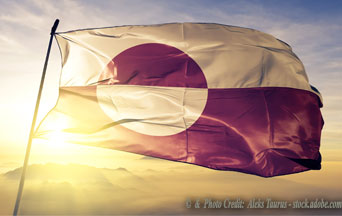
The Trump administration’s threats to take over Greenland make no sense. Whether by pressure or invasion, the acqusition of the thinly populated island would be a brutal act of aggression that is morally impossible to justify.
Granted, the Arctic region is a place of growing strategic importance. However, the matter is not a national security emergency. There is no reason to invade or force a sale.
The Benefits of Not Invading
What makes the insistence to own Greenland even more mystifying is that the island’s government is presently more than willing to work to further America’s national security interests in whatever way it can.
Such free, goodwill cooperation would allow America to use numerous military bases without conflict. The Midwest-sized island already has excellent governing bodies and good, although limited, infrastructure. The people are very open to foreign business that could facilitate mining opportunities.
The legal framework for expanding ties already exists in past treaties. If needed, the Danish dependency’s NATO membership could bring the alliance’s assets into play to help secure the area.
Working with the goodwill of Greenland and Denmark is a win-win situation. Everything favors cooperation, not confrontation. For an administration that likes to make deals with everyone, surely there is a deal to be done here that would be mutually beneficial.
The Donroe Doctrine
However, the Administration is insisting on nothing less than ownership. The issue is far from settled. Even after assuring the world that he would not use force, the President still seeks total control, while he might accept soveirgnty over bases.
One explanation for the crisis is that a Greenland takeover fits into the newly minted “Donroe” Doctrine, where America would assert dominance and influence over North and South America as part of its national security perimeter.
Such a perspective, while morally indefensible, seems more likely than just a whim of the President to own the massive island. However, this view is flawed and illogical.
Aquiring Greenland would contradict the Venezuelan template now in vigor that might soon be applied in Cuba, Nicaragua and other American countries. The Donroe model does not call for acquisition and assumption of responsibility but for leveraging power.
Indeed, the Donroe Doctrine does everything possible to avoid onerous responsibilities. Thus, America did not occupy hostile, communist Venezuela and is unfortunately willing to work with its corrupt and criminal regime, backed up with the threat of surgical strikes if things fall out of line.
In this way, the logic goes, America has saved the expense of occupation and the instability of regime change. The Administration puts no boots on the ground and allows the old regimes to implement American policy and advance its interests.
A Greenland takeover would run contrary to the Donroe Doctrine. America would own and occupy Greenland, a friendly land. It would assume all expenses, financial needs, risks, and policies associated with ownership, including boots on the ground.
By taking out Maduro while leaving Delcy Rodriguez and the other Chavistas in power, the Administration signals that it is willing to trust an internationally recognized communist government to do its will in Venezuela. However, it is strangely unwilling to negotiate with a proven ally like Denmark, which has worked together with America for decades.
A final point of contradiction is the reason given for wanting Greenland is to counter the moves of Russia and China. However, the recent National Strategy Statement does not name these nations as enemies. America is selling strategic computer chips to China and seeking to make a favorable deal with Russia at the expense of Ukraine.
These contradictions are glaring and incomprehensible. The Administration’s policy is effectively treating enemies like friends and friends like enemies.
A Multipolar World
There is another, more terrifying interpretation surrounding the Greenland case, and it merits close attention. It involves a new understanding of the world order.
This may well be the most plausible rationale behind the Greenland affair. The avowed goal of many populist and nationalist movements worldwide is to form a “multipolar” world in which key nations become poles of influence for the nations around them. Indeed, Secretary of State Marco Rubio referenced this development as informing the Administration’s foreign policy.
The framework is very well laid out by Russian political ideologue Alexander Dugin, who imagines a geo-political reconfiguration of the modern post-war world.
It will no longer be a global liberal world based on the rule of law and commercial unity, but a multipolar world in which key civilizational powers will gather similar nations near them and promote their own values. Under this logic, Russia can claim Ukraine (the Baltic nations, parts of Georgia, Moldova, Finland, etc.); China, Taiwan; and America… Greenland.
Dismantling the West
The major obstacle to this multipolar world vision is the West, past and present. This liberal, postwar globalist model (with all its defects) is enshrined everywhere. It is a formidable barrier, since the super-rational system is inextricably bound by laws, treaties, institutions and economic supply chains. The system is further undergirded by the Western canon of philosophical, moral and religious thought.
The only way to dismantle the old world order is to scramble the ties and relationships that keep it together.
The Greenland crisis can be understood in light of this desire to reconfigure the world. By insisting on acquiring Greenland, the President breaks all protocols, suspends treaty agreements and reorganizes the world. Continued actions like this are likely to lead to the end of NATO and the shuttering of American bases in Europe. It might even topple the dollar as the world’s reserve currency.
Russia severed its ties with the liberal order when it made a hard break with the West by unjustly invading Ukraine, which it claims as part of its sphere of influence. Policies like the Greenland crisis would trigger a similar break of America with the West.
There is much to criticize in the liberal, globalized order. However, the legitimate elements maintaining order must be defended. The shattering of those good things that remain of Christian civilization inside the West only empowers communist China, radical Islam and Russia. It will give rise to a new world disorder, the dream-come-true of post-Marxist ideologues like Dugin. It will do away with universal principles, the rule of law, established norms, Christian morality and much more. It is a recipe for chaos and ruin.
Photo Credit: ©Aleks Taurus – stock.adobe.com