
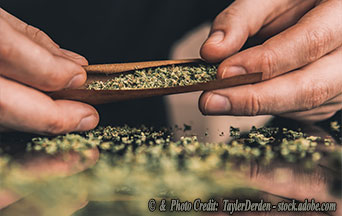
Advocates for the legalization of marijuana promised a new golden era with increased municipal revenue, reduced illegal drug sales and better mental and physical health.
This grand vision has failed. The results feel less like a victory and more like a slow-moving train wreck. This failure is based on the dangerous myth that marijuana use is “harmless” fun.
A Sickening Irony
Marijuana enjoys a special immunity from regulatory scrutiny. While cancer treatments may be delayed for years to ensure safety, recreational cannabis is assumed to be safe. States have hurried to open the floodgates of legal access without FDA approval, effectively handing out hall passes before the lesson plan was even written.
This “natural wellness” narrative is quickly crumbling under the weight of medical facts.
Enter Cannabinoid Hyperemesis Syndrome (CHS), for example, a new sickness hitting users everywhere. The very herb often prescribed to alleviate nausea is now sending heavy users to the emergency room with violent, intractable vomiting and pain. The condition can cause kidney failure, cardiac arrest and even death.
The Mind on Fire
The implications for mental health are just as serious. Extensive research over decades across the U.S. and Europe has revealed a strong correlation between youth marijuana use and the later development of schizophrenia. The British Journal of Psychiatry did not mince words, concluding that marijuana is a “causal component” in the development of psychosis.
Cannabis triggers these disorders in brains that are naturally prone to psychosis. Despite this strong link, however, 24 states, Washington D.C. and three American territories have legalized cannabis for recreational use. Scientific evidence of harm is ignored in favor of public opinion polls and future tax revenue.
Not Your Parents’ “Pot”
Perhaps the most dangerous misconception is that today’s marijuana is the same substance smoked at Woodstock. That era is gone. In the sixties, most marijuana contained less than 5 percent THC, the active chemical ingredient that induces the high. Today, high-potency concentrates have skyrocketed to over 80 percent THC, hitting the brain like a freight train.
The Reality of Addiction
As legalization normalizes use, many have the widespread, unshakeable belief that something “natural” cannot cause addiction. The statistics prove the contrary.
- 1 in 6 of those who start using marijuana before age 18 become addicted.
- 1 in 10 adults who use the drug frequently become addicted.
Daily marijuana use now surpasses daily alcohol consumption, as nearly 18 million Americans light up each day. This rise has led to an increase in Cannabis Use Disorder, affecting about 30 percent of users. Its symptoms include cravings, psychosis, sleep disorders, withdrawal, problems with attention, memory, and an inability to learn.
Addiction also harms relationships, careers and educational opportunities. An addiction that hides behind a mask of recreation destroys lives.
The Unwelcome Guest: Crime
Marijuana’s legalization also has a corrosive effect on society and the legal system. The hope that legalization would reduce crime and social problems linked to the illegal drug trade has not come true. In California alone, illegal marijuana farms outnumber legal ones by ten to one.
In Denver, the neighborhoods around marijuana dispensaries, both recreational and medical, pay the consequences. One study found that areas near these dispensaries experienced an average of 85 percent more property crimes per year compared to areas without them.
Another study from the University of Colorado painted an even starker picture, finding crime rates soaring by as much as 1,452 percent in neighborhoods with at least one dispensary. Looking at a broader timeframe, from 2013 to 2018, violent crime in the state increased by 36.5 percent—a rather grim statistic following the state’s 2012 legalization.
Research from the Kansas City Federal Reserve links marijuana dispensaries to double-digit increases in homelessness, addiction and arrests. The effect on local neighborhoods in cities like Seattle and Vancouver shows that living near a dispensary can decrease property values. To make matters worse, there is the unwanted sensory experience; nearly half of residents in New York City, Portland and Seattle report that the unavoidable skunky stench has become a regular part of life.
An Economic and Moral Disaster
The most bitter pill for promoters to swallow is that legalization failed in its primary economic mission. It did not kill the black market; it inadvertently gave it a makeover. By expanding the pool of consumers while strangling the legal supply with regulations, the illicit alternative is now more appealing than ever. Projections suggest that by 2026, the black market will still claim 60 percent of all sales. The problem of illegality was not solved, but only made more complicated.
Indeed, the most troubling effect is the rapid decay of virtue. Marijuana use is eroding self-discipline, responsibility and sober judgment essential for sustaining a free and self-governing society. A nation obsessed with pleasure will inevitably spiral into decline.
Photo Credit: © TaylerDerden – stock.adobe.com