
The first posters announcing the Emperor Napoleon’s excommunication appeared in Paris in the early summer of 1809. Soon thereafter, the distribution of documents on the relations between France and the Holy See began. Immediately, the French police began their investigations which it hoped would quickly lead to the arrest of those responsible. The police did not count on the existence of the extensive underground network organized by the Lyon Sodality.
The imprudence of a young royalist almost led the agents of Joseph Fouché, Napoleon’s Minister of Police, to discover and dismantle the organization. The misstep occurred at a meeting of opponents of the imperial regime. A certain Beaumès, a resident at the Boulevard des Invalides, made an imprudent boast. He claimed to have counted the trees in his street and found there were enough to hang Napoleon, his family members, ministers, senators, and the entire Legislative Body from them.
Why America Must Reject Isolationism and Its Dangers
The police soon learned of this rant and raided Beaumès’s house to arrest him. They found his son, Antoine, a Marian sodality member, copying the documents about Napoleon’s excommunication. They arrested the entire family, as well as Beaumès’s royalist friends. The detainees revealed nothing in their statements. However, the papers the police seized yielded names and provided clues for further investigations. With his usual perspicacity, Police Minister Fouché realized he had stumbled upon a secret network. In an initial report, he wrote the emperor:
“Examining the papers shows a very extensive secret and mystical association whose ostensive aim is to obtain conversions and pray for converts. Father [Denis-Luc] Frayssinous’s lectures at Saint-Sulpice dangerously impressed the imagination of young Beaumès and many other young attendees, especially Alexis, Count de Noailles. They acquired exaggerated fervor, devotion to the pope, and characteristic fanaticism. The young Beaumès refuses to name the person who gave him the documents. He obstinately refuses to answer any question, showing the fanaticism of a man who thinks he is and wants to be a martyr.”
Eternal and Natural Law: The Foundation of Morals and Law
The new investigations led to the arrest of Father Lafon of Bordeaux, Count Alexis de Noailles, and several other sodality members. At the time, Napoleon was courting the French nobility to attract them and strengthen the revolutionary Empire. Therefore, he tried to underestimate Noailles’s participation. Besides belonging to a great family, Count Alexis de Noailles had a brother, Alfred, serving in the imperial armies. Bonaparte hastened to write Fouché:
“Twenty-four hours after receiving this order, you will send to Vienna Monsieur Alexis de Noailles, implicated in this conspiracy of altar boys, to serve as a lieutenant at his brother’s side. You will tell his parents how annoyed I am to see such an ill-mannered young man indulging in pious credulity. The air of a regiment will do him good and cure him of this mystical madness.”
Keenly aware of the situation, the Minister of Police sent the emperor another report showing the network’s likely extent and good organization, emphasizing Noailles’s active role in distributing the documents. Napoleon issued a new order: “I have received your new report and see that Monsieur Alexis de Noailles is very guilty. You may keep him under arrest until further notice. What makes this youth so senseless?”
Alfred de Noailles distinguished himself on the battlefield shortly afterward. When offered a reward for heroic conduct, he asked that his brother be freed, a request Napoleon granted.1 But Alexis remained under surveillance by the police, who could not discover the network heads. Naturally, the other prisoners remained behind bars.
 Read About the Prophecies of Our Lady of Good Success About Our Times
Despite this bitter blow, the clandestine distribution of documents continued. In his memoirs, analyzed by Bertier de Sauvigny, Count Ferdinand de Bertier de Sauvigny2 reported that many of his collaborators supervising the operation asked him if they should immediately scuttle the printing presses and burn the printed copies given police arrests and investigations:
“I asked for a short moment of reflection and replied: continue printing actively and without fear. The police can never suppose that just as they make so much noise over a handwritten copy discovered by chance, we keep calmly printing thousands of copies. Work in peace. Send parcels to all Departments and let no copy be distributed in Paris before they reach their destination.”
Napoleon believed he could eradicate the danger of Catholic reaction completely. He took a series of measures that would have been effective were it not for this organized underground network. Indeed, the secret group continued operating until the end of the Empire. It remained undiscovered by the police.
10 Razones Por las Cuales el “Matrimonio” Homosexual es Dañino y tiene que Ser Desaprobado
Napoleon’s first measure was to forbid Father Frayssinous’s lectures at Saint-Sulpice. Napoleon knew that these lectures played a major role in restoring the Catholic movement in Paris after the Revolution. They attracted and encouraged young people who later joined the Marian Sodalities all over France.
Shortly afterward, on November 4, 1809, Fouché ordered the dissolution of all “mystical associations and sodalities devoted to the Virgin Mary” as contrary to “good order and the true ends of religion.” One by one, France’s flourishing sodalities were closed down. Later, even pious confraternities without an external apostolate had to cease their activities. Missions were forbidden. Government aid to the Foreign Missions Seminary, one of the bulwarks of the resistance, was suppressed because members of the powerful Aa gathered there.
Science Confirms: Angels Took the House of Our Lady of Nazareth to Loreto
In 1810 Fouché was replaced by Jean Marie René Savary, 1st Duke de Rovigo as head of the police. Although not as efficient as his predecessor, the new minister continued the investigations. He suspected the Catholic resistance command was based in Lyon. But he achieved nothing, and the famous documents continued to spread. In a report, Savary confessed:
“Not a single copy [of the documents] has been seized. No positive evidence has confirmed the extreme suspicion that the printing came from Lyon. Is this an effect of the contempt many have for such works of ignorant superstition, or is it the sign of the secret power of other classes of people?”
He could not answer this question during his time as head of the imperial police. The documents continued to be published. Posters were displayed throughout France and Italy. Despite all their diligence and countless arrests and interrogations, the police did not destroy the underground network, which rendered the most remarkable services in this highly tumulteous period of Church history.
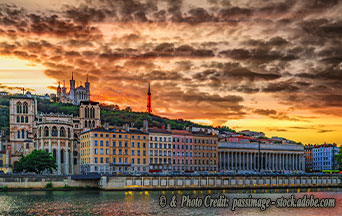
Photo Credit: © passimage – stock.adobe.com
Footnotes
- Alfred de Noailles was later killed in the Battle of La Bérésina on November 28, 1812 at the age of twenty-eight.
- Ferdinand De Bertier de Sauvigny (1782-1864) was the founder of the Chevaliers de la Foi, a Roman Catholic ultra-royalist secret society, in 1810.