How I Came to Accept and Love Suffering

How I Came to Accept and Love Suffering

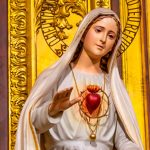
Someone asked me how I came to love suffering. To answer this question, we need to realize that, naturally speaking, nobody loves suffering; it horrifies us. For example, I am horrified by the thought of a drop of boiling water or, even worse, a drop of sealing wax falling on my skin. … Read more

Was a Recent Latin American Summit a Promotion of Democracy or an Affirmation of the Left?

Was a Recent Latin American Summit a Promotion of Democracy or an Affirmation of the Left

On July 21, Chilean President Gabriel Boric welcomed his counterparts from Spain, Brazil, Colombia, and Uruguay to Santiago for a meeting of Latin leaders from the continent and Spain. The meeting’s theme was “Always Democracy,” alluding to the need to strengthen democracy in the face of growing right-wing movements worldwide. Now that … Read more

It’s Time to Restore the Necktie

It’s Time to Restore the Necktie

One article of men’s clothing that is sadly on the decline is the necktie. This abandonment reflects a refusal to accept any restrictions, discipline or discomfort in clothing or presentation. Many want to feel comfortable at any cost, even if undignified. Comfort and informality are today’s fashion gods. People will go to … Read more

Sacrality or Vulgarity

Sacrality or Vulgarity

When Brazilian Catholic thinker Professor Plinio Corrêa de Oliveira reflected on events in São Paulo during his childhood at the beginning of the last century, the social habits of that time particularly attracted our attention. He spoke of the joy of family life, and his lively narrations transported our imaginations to those … Read more

Father Linsolas’s “Marian Sodality of Lyon” Strove to Preserve Catholicism During the French Revolution

Father Linsolas’s “Marian Sodality of Lyon” Strove to Preserve Catholicism During the French Revolution

Due to the vicissitudes of history, Catholics often formed societies whose existence they kept secret so that they might have some freedom of action. Those associations were always known to the competent ecclesiastical authorities. Civil officials were also informed of their activities when circumstances permitted. For example, during the seventeenth century, France’s … Read more