
During the tumultuous negotiations leading to the Concordat of 1801, Napoleon systematically applied the tactics of a fear/sympathy syndrome. Sometimes he pleased the Holy See by making some concessions toward freedom of worship in France. On other occasions, he made threats and instigated Revolutionaries who intimidated the Holy See’s representatives and lukewarm Catholics alike. Those of weak faith feared returning to the harsh conditions they faced during the French Revolution when trying to remain faithful to the religion of their ancestors. However, as we have seen, Bonaparte was primarily interested in forging the Concordat because he realized that he needed Church support to stay in power. The French people remained deeply Catholic despite many years of persecution.
As mentioned in the last installment, Napoleon unilaterally added the so-called Organic Articles to the Concordat’s text once the treaty was signed. He presented a pretext that including these passages was the only way he could obtain legislative approval of the document. Of course, he completely controlled the Corps législatif and the Sénat conservateur throughout the process.
Why America Must Reject Isolationism and Its Dangers
These Organic Articles annulled all restrictions on state interference in ecclesiastical matters, which the Pope’s negotiators had painstakingly included. Although the Pope did not recognize these addenda, Napoleon kept them. His actions created a de facto situation in which everything proceeded as if the Concordat had been approved with the Organic Articles.
In 1804, Pius VII saw the depth of France’s Catholic spirit. On his way to Paris to consecrate Napoleon as Emperor of the French, he was enthusiastically received by the people of all the cities he passed through. In Paris, he received a triumphant welcome. When Joseph Fouché asked the Pope how he found France, he replied, “Blessed be Heaven! We have come through a people on their knees! We were far from imagining them in this state!”
With the Concordat negotiations came a thaw in Napoleon’s ecclesiastical policy. Accordingly, the French Catholic movement, which had long been forced to live underground and kept in constant alarm by frequent police raids, gradually came back into the sunlight. It began to promote a genuine religious renewal. The Marian Sodalities, founded in various cities, were the driving forces behind this resurgence. The Sancta Maria Auxilium Christianorum was the most distinguished among them and came to lead the French Catholic movement. It was founded in Paris on February 2, 1801, by Father Jean Baptiste Bourdier Delpuits.
Father Delpuits had joined the Society of Jesus at seventeen in 1753. When the Jesuits were suppressed in 1762, the young priest had still not taken his solemn vows. He was allowed to remain in France and pass over to the secular clergy. After ministering in the interior for some time, he went to Paris, where Archbishop Christophe de Beaumont appointed him the canon of the Holy Sepulchre Collegiate. He became well-known as a preacher of spiritual retreats and did not abandon France during the Revolution. Defying revolutionaries, he was one of the heroic priests who continually administered the sacraments to the faithful. Along with brave lay Catholics, he fought to preserve the true religion.
Eternal and Natural Law: The Foundation of Morals and Law
The Sancta Maria Auxilium Christianorum sodality began modestly in Father Delpuits’ residence. Its initial nucleus was six young students from the Paris colleges of law and medicine. None of them, perhaps not even Father Delpuits, could foresee the role this association, established in such a modest way, would play.
The sodality became famous, influenced French politics, and was an authentic seedbed of great Catholic leaders during the nineteenth century.
The Revolutionaries devoted special care to spreading their errors among youth in higher education. Dominated by the heirs of Rousseau and Voltaire, they encouraged studies in existing colleges and created others that enjoyed significant development and prestige in Napoleon’s time. It is easy to imagine the atmosphere that reigned in them. Professors and students, formed under Revolutionary ideas, encouraged one another to attack the old order and religion. During a sodality session, the Duke of Rohan1—praising Paul Emile Teysseyrre2, a former student at the École Polytechnique, thus expressed himself about the atmosphere in academia at the time:
“Upon emerging from the horrors of revolutionary anarchy, the elite of French youth showed in this school all the energy that great political upheavals produce and displayed the immorality that usually accompanies revolutions. The desire for glory turned into a frenzy, and the love of country degenerated into fanaticism because the love of God—the only motor of lofty and noble feelings—found hearts closed. France seemed to place its hope for happiness in this bubbling youth, while religion, weeping over past misfortunes, trembled before the triumphs being announced.”
Facing their colleagues’ hostility and the ill will of professors, Delpuits’ small student group bravely unfurled the banner of their sodality in academia. Their struggle was arduous. Soon, however, many of their colleagues soon joined to help propagate Counter-revolutionary ideas. The members participated in victorious arguments with their professors. Two students who enrolled in the new sodality became eminent academicians. Nevertheless, they remained forever faithful thanks to the influence of this apostolate. They were the celebrated physician Hyacinthe Laënnec3 and Baron Augustin Louis Cauchy,4 one of the greatest mathematicians of all time.
 Read About the Prophecies of Our Lady of Good Success About Our Times
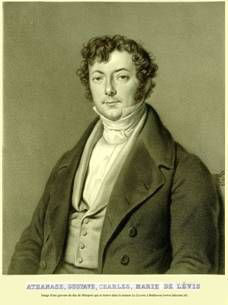
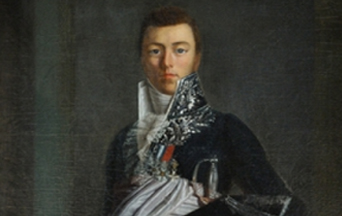
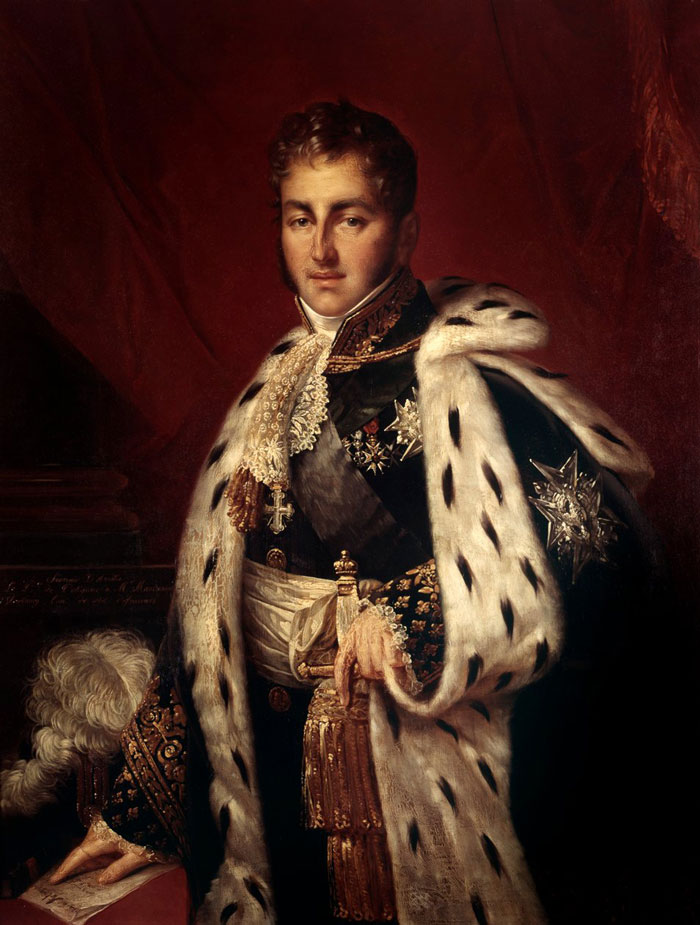
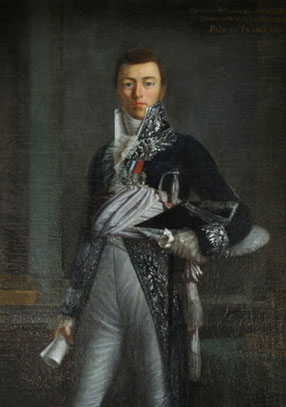
Not all of the elite youth of that time were students. Cruelly decimated by the French Revolution, the nobility emerged strengthened and prestigious. Since most elderly nobles had perished on the scaffold, their young descendants held the highest noble titles from the ancient monarchy. Napoleon courted them, especially after establishing the empire, and all of France turned its eyes to them. Father Delpuits succeeded in attracting these young aristocrats. Duke Mathieu de Montmorency-Laval and Marquis Eugène de Montmorency joined the sodality in its first year. Then, one by one, the Duke of Béthune Sully, the Duke of Rohan, Prince Jules de Polignac, Count Alexis de Noailles, the Marquis de Rivière, Charles de Levis Mirepoix, Louis de Rosambo, Charles de Breteuil, Emmanuel de Cossé Brissac, and numerous other bearers of great names that illustrate the history of Christendom, joined the ranks of the sodality.
Duke Mathieu de Montmorency soon became the soul of the sodality. He was its leader for many years and decisively supported the main Catholic initiatives during the Empire and Restoration, many of which he planned and executed himself.
The role of the Sancta Maria Auxilium Christianorum sodality proves the strength of French Catholicism at the time of the Concordat negotiations. Founded with only six members before Pope Pius VII ratified the Concordat, it had seventy members by the end of its first year of existence. It obtained a good number of victories against the Revolutionaries.
Footnotes
- Louis-François-Auguste de Rohan-Chabot (1788-1833) was a French nobleman who, after the death of his wife, became a priest and eventually served as the Cardinal Archbishop of Besançon.
- At the end of this studies, Paul Teysseyrre became a Sulpician Priest. His biography, Monsieur Teysseyrre: ancien élève de l’école polytechnique, prêtre de Saint-Sulpice, fondateur de la petite communauté des clercs de Saint-Sulpice : sa vie, son œuvre, ses lettres was published in 1882. It has not been translated into English.
- René-Théophile-Hyacinthe Laënnec invented the stethoscope in 1816.
- Augustin-Louis Cauchy, among his other achievements, is credited with clarifying the principles of Calculus.