
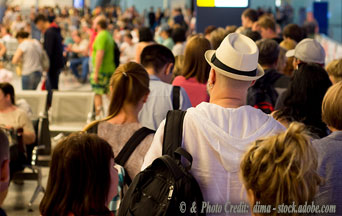
U.S. Transportation Secretary Sean Duffy officially launched a campaign calling for a “Golden Age of Travel.” It was a plea for civility to restore courtesy and class to the friendly skies. His theory is simple but difficult to enforce: If passengers dress a bit more respectfully—swapping sweatpants and pajamas for something more appropriate—they might act with more civility.
By dressing with respect for ourselves, we might stop acting like unruly toddlers. Since 2019, in-flight outbursts have skyrocketed by 500 percent.
The Runway vs. the “Runway”
Comfortable clothes might be hard to find on the fashion runways of Paris and Milan, but they are firmly entrenched on the tarmac. For many, the plane is simply a bus in the sky, where they might dress accordingly. A few TikTok influencers have vowed to turn the “airport aesthetic” into a public bedroom, making pajamas the official uniform for air travel.
However, the Secretary’s point has substantial merit. Clothes are not merely superficial details in social interaction; they are a form of nonverbal communication. They signal who we are, what we value and how we feel. Whether we like it or not, our attire creates an immediate impression on strangers—and perhaps more importantly, on ourselves.
The Science of the Suit and Why It Makes You Behave Better
This phenomenon is more than mere speculation. Clothes have a well-documented psychological effect known as “enclothed cognition.”
A study by Dam, H., & Galinsky, A.D., titled “Enclothed Cognition,” was published in the Journal of Experimental Social Psychology (2012). Researchers found that participants wearing lab coats—symbols of scientific precision and focus—performed significantly better on tasks requiring attention to detail than those who did not wear them.
The coat itself had no magical powers. Instead, the association it carried altered how the participants viewed themselves. It was not just about looking the part; it was about stepping into the mentality the garment represented. The study showed how clothes change how we think, move, interact and process the world.
The Costume of Character
We tend to emulate the role models we admire, and often, clothes come before character. Punks dress like punks before they fully adopt the lifestyle. Young musicians dress like rock stars before they learn their first chord. This connection between clothing and psychology is deeply rooted in our cognitive processes.
We create meaning through shared symbols such as language, gestures and objects. This concept is called symbolic interactionism. Thus, dressing like someone we aspire to be can have a profound effect on our self-esteem. It is not about putting on a façade but about the subtle, powerful ways our wardrobe influences our behavior. We act out the roles our clothes assign us until they become an innate way of being.
A Tailored Step Forward
Critics will argue that a change of clothes is hardly a cure-all for deep-seated emotional or anger issues. A new blazer will not erase personal struggles or instantly turn a rude passenger into a saint. However, choosing to dress in a way that reflects who we want to be is a step toward that transformation.
How we dress is a commitment to ourselves—a tangible expression of our aspirations. While true personal growth requires introspection and time, changing how we dress is immediate. This simple first step creates a positive feedback loop with those we interact with, reinforcing the virtue we aim to practice with every button fastened.
Shoes, Socks and Civility
Ultimately, Mr. Duffy should not be surprised if the flying public largely ignores his plea for considerate dress. After all, we are a profoundly selfish generation. He noted, “It shouldn’t be controversial to suggest dressing respectfully in public,” wistfully hoping to recapture a more fashionable era.
However, for some, the bar is lower than the proposed “golden age.” Sara Nelson, international president of the Association of Flight Attendants, makes a far more modest request for civility. She noted that “Flight attendants would just be happy if people would keep their shoes and socks on.”
The clothes we wear do more than protect us from the elements. When dressed properly, they help curb our unbridled impulses. Thus, when choosing an outfit for flying, we need to consider the message we are sending. Dressing for the occasion might just be the first step in becoming the person next to whom we would want to sit.
Photo Credit: © dima – stock.adobe.com