

In the first picture, there are select chickens, plump fish and splendid cold cuts. The reader will think, “Certainly, this is a shelf in a well-stocked grocery store or supermarket.” Seeing the other photo, he will say, “It must be a supermarket.” Were anyone to suggest that these are, respectively, objects of art and an angled shot of the gallery where they are displayed, he would laugh at the absurdity. For who could consider cheeses, salamis, watermelons and canned foods as artistic creations?
However, this is exactly what these are being called. For fans of the infamous “pop art,” making a copy of something so realistic that the public can mistake it for the original item constitutes a true work of art.
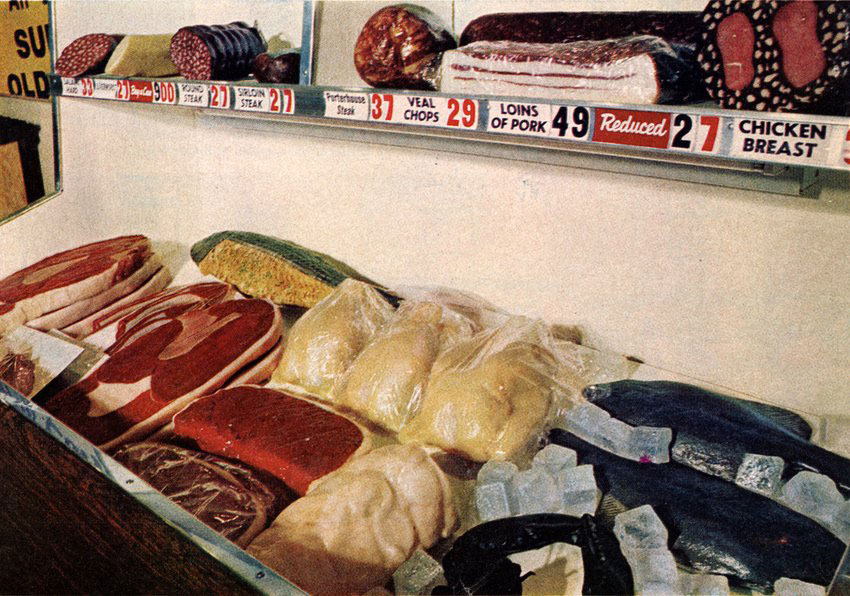
There is nothing wrong with striving for this level of realism. It reveals a level of artisanal ability that is noteworthy at times. From a certain perspective, such creations are real curiosities. On the other hand, this skill can have commercial value, such as when one decorates a showcase for effective advertising.
However, these creations should certainly and resolutely be denied the title of works of art. Art requires the artist to interpret reality, not merely copy it exactly, which would enslave the artist to his subject. Moreover, even when representing the horrendous, the mission of art is to raise the human spirit above the level of that which is trivial, ordinary and banal.
These considerations may cause some to smirk at their antiquated nature, but they are entirely true and, therefore, must be proclaimed with growing insistence. While many painters have represented domestic objects on their canvases—as emphasized in “still live” paintings—they never intended their work to be an exact copy of the subject. Instead, they have always brought their compositions to life with a personal interpretation.
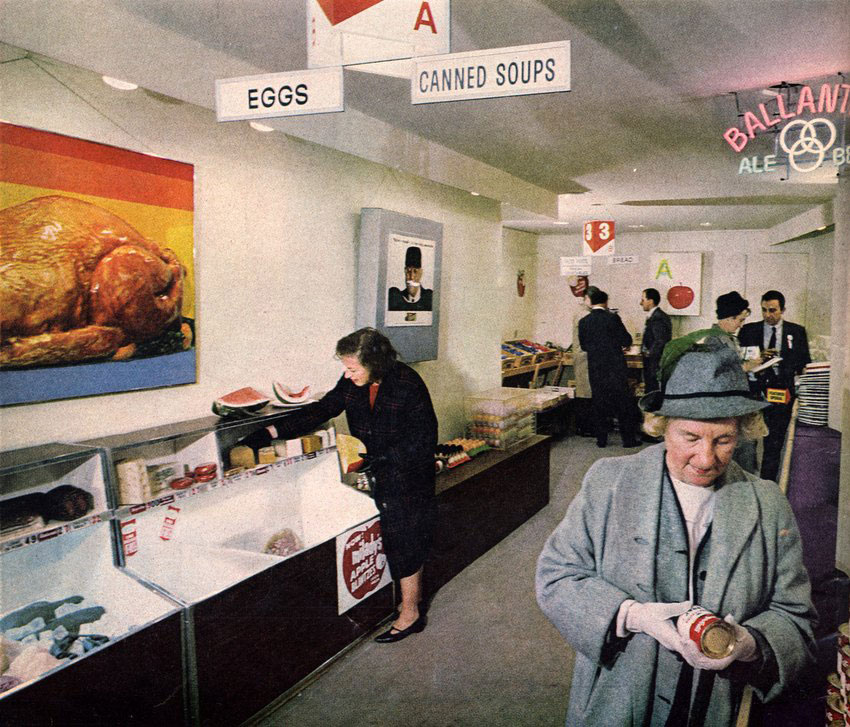
The exact representation of reality in wax and other materials is a skill that is quite old. At times, these are shockingly realistic. There are wax museums in several European cities that display this type of attraction, at times with dizzying accuracy. Among these is the Museum Grevin. However, these have never been designated as art, nor has anyone made an equivalency between Grevin’s dolls and the sculptures of the Louvre, for example, the Venus of Milo or the Victory of Samothrace.
So, if these exact representations of the human figure have been denied the title of “works of art,” why concede it to lifelike depictions of canned goods, hams or a slice of watermelon? That is why it is also unthinkable that the partisans (or rather the sectarians) of “pop art” enthusiastically acclaim their works as marvels of art. Doing so depreciates art and, thus, man too.
In this sense, “pop art” is a novelty that, despite being somewhat old, is entirely in consonance with so many other novelties these days that constitute the terrible effort to depress man. However, is this all there is to say about “pop art”? Does it not carry some other meaning that is even more clearly depressing?
Eternal and Natural Law: The Foundation of Morals and Law
An article in the magazine Look reported that the “pop artist” Robert Dalford Brown set up a meat refrigerator he called the “Meat Show” which he set up as an art show at the Washington Meat Market. It is a display of imitations of objects usually kept in the refrigerator. The artist claims that this display serves as the inauguration of the “First National Church of Refined Panic.” The magazine commented that “pop art” aims to express an “archetype for the nightmare of the twentieth century.” It adds that according to the “pop artist,” this exposition of meats “induces spontaneous spiritual, sexual and aesthetic revelations in the viewer” through the presentation of the “hideous and beautiful vision of tons of meat, gallons of blood…and other sights not yet unveiled.”
This is yet another step in the continual path downwards, towards triviality, the prosaic and ultimately to imbalance.
The preceding article was originally published in the November 1966 issue of Catolicismo. It has been translated and adapted for publication without the author’s revision. -Ed.