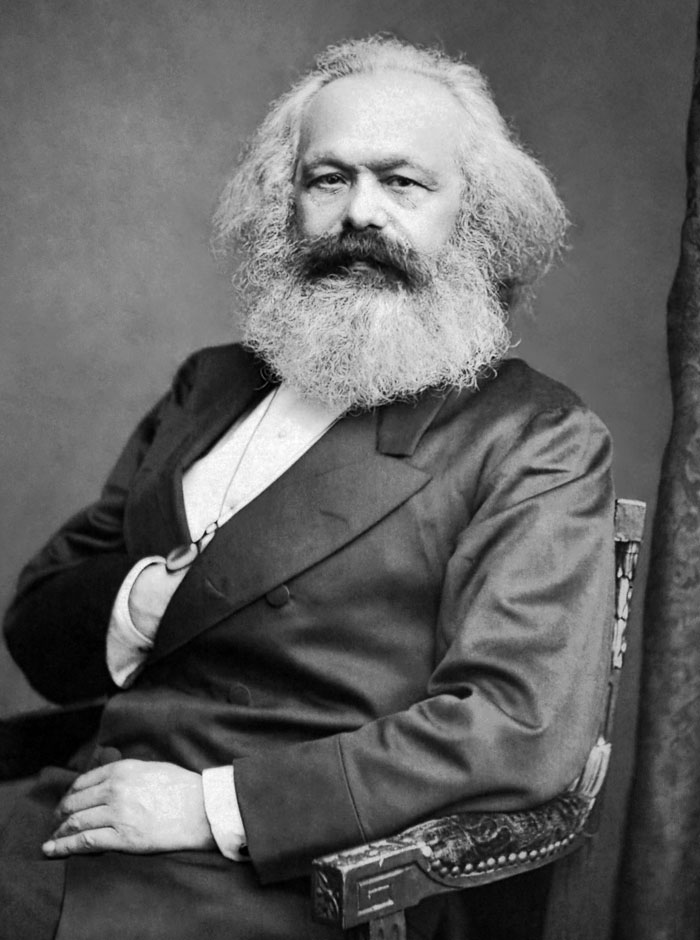
Unlocking the Diabolical Mystery of Karl Marx’s Life and Influence
“In the end, Marx’s tragic vision is one where the descent is final—an abyss where revolution consumes its own, and redemption is neither sought nor granted. It is a world abandoned to its illusions, where humans, having cast off the divine, are left to wander in the wreckage of their own making.”
-Robert Orlando, Karl Marx: The Divine Tragedy
Understanding Communism’s Appeal
How can anyone explain the continuing popularity of Marxism? Everywhere it has been tried, disillusionment is universal. Starvation, repression, mass execution and so many other horrors make up the philosophy’s only definable legacies.
Despite this horrible record, the number of those who claim to embrace Karl Marx’s ill-begotten creed continues to expand. It has become an umbrella that embraces all leftist and liberal causes.
Robert Orlando’s Karl Marx: The Divine Tragedy is a good start in the right direction, aiming to unlock the mystery of Marxism and its appeal.
Well Researched, but Highly Readable
Mr. Orlando is not a scholar in the usual sense. He does not possess a doctorate, nor does he gain his bread from a tenured professorship. The subjects of his other books cover a wide variety of topics, including the Apostle Paul, Donald Trump, the Holy Shroud of Turin and General George Patton. That is not to say that he indulges himself by writing about ideas that he barely understands. Quite the contrary, this volume is fully—one could even say extravagantly—sourced and footnoted. Fully one-third of its pages are dedicated to those purposes.
Interestingly, Mr. Orlando is working on a film adaptation of his book, to be titled Marx in Hell.
His book is a short biography of one of the most influential thinkers since the French Revolution. It begins by summing up Marx’s life in a single statement: “Marx’s intellectual journey is one of wild but bold idealism turned into tragic disillusionment—a divine tragedy.” (Emphasis in the original.)
A Life of Contradictions
To put skin, muscle and sinew on that bare bone, the author guides readers through the stages in that life. He begins with Marx’s thoroughly bourgeois father and the older man’s bewilderment over his son’s choices. He then introduces readers to the amazingly loyal wife who withstands poverty, betrayal and near-abandonment at the hands of her utterly impractical husband. Mr. Orlando also explains the crucial role of Friedrich Engels in providing economic support and publishing Marx’s works posthumously.
More importantly, the book never stops trying to explain the inner Karl Marx as he followed the paths that defined his life. Marx abandoned Christianity, led the reckless and dissolute life of a student and groped to find an intellectual base in the radical hotbed of German university life.
After university, Marx became an optimistic revolutionary who relished the atmosphere of 1848, only to suffer disillusionment as those revolutions fizzled. Exiled from Paris and Prussia, he took his family to London, pursuing an intellectual life while impoverishing his wife and children. The last—and longest—step sees Marx as the bitter, frustrated visionary who has abandoned all to serve a vision that never bloomed during his lifetime.
Consider this description of Marx’s old age. “The endless revisions of Das Kapital became his intellectual purgatory from which there was no escape. His work, once a call for revolution, had become an albatross around his throat…. His vision of a classless society, once a source of hope, now seemed an impossible dream, fading into the smoke-filled solitude of his London flat.”
Influences and Impulses
Perhaps the greatest virtue of this book is Mr. Orlando’s exposition of the literary works that most motivated Marx as a student, an adult and an old man. There are four of these touchstones. The most important is Dante’s Inferno, which Marx virtually memorized. In fact, Mr. Orlando points out that the book began with the fascinating question, “Would Dante place Marx in hell?” The second guide is Goethe’s Faust and its harrowing line, “Everything that exists deserves to perish.” Yet Marx also, and often, seems subject to the moral ambivalence of Shakespeare’s Hamlet. (How else could one who claims to work for the betterment of humanity create so inhuman a moral and political system?) Finally, there is Hegel’s dialectic with its emphasis on the contrary nature of thesis and antithesis.
Remarkably, Mr. Orlando moves through all of these ideologies without resorting to the philosophical jargon that could easily turn a book like this into a doorstop volume that no non-philosopher could decipher. The author clearly understands these ideas and their effects on Marx well enough to explain them in easily understandable prose.
Overall, Karl Marx: The Divine Tragedy is an excellent book for those with a layman’s curiosity about the man and his undoubted effect on modern society. It could also serve as an excellent introduction to a more scholarly study of Marx. Indeed, its bibliography is a valuable guide to other titles in that line. Hopefully, many readers will benefit from it.