
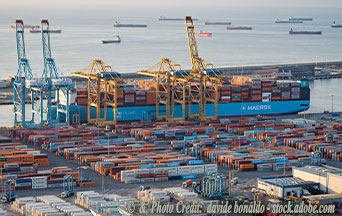
In a world where everything is equal, tariffs would be unnecessary. Every place would have the same resources. Everyone would produce the same things at more or less the same price. Consumers would all desire the same products.
This terrible world, where all things are equal, would be a bland globalized society of monotonous sameness. Trade would only be needed in times of emergency and shortages.
Making Everything Equal
Of course, everything is not equal in the real world. However, that does not prevent some with a liberal mindset from desiring the same bland globalized society of monotonous sameness. Their goal is to equalize everything in the name of maximizing efficiency.
Why America Must Reject Isolationism and Its Dangers
To solve the problem of building an equal economy in an unequal world, these equalizers resort to certain artificial mechanisms.
One way is to let some nations do those things they do best. This is called comparative advantage. Nations like communist China and Vietnam, for example, provide the factory goods for the whole world. Other nations provide specialty products or natural resources so that, in the end, everyone shares everything.
Another way to equalize is for nations to protect home industries through tariffs. This is the opposite of comparative advantage. To keep jobs at home, politicians can impose tariffs so that local workers can provide the same products as workers who work for cheaper rates in other countries.
In both cases, nations aim for trade balances of equal exports and imports. All markets become more or less the same, and products look alike. Despite its advantages, this system favors a purely materialistic economic outlook.
Making the World Safe for Walmart
Using these methods, mass markets and consumption become possible. The world is made safe for innumerable McDonald’s, Walmarts and Starbucks. A billion iPhones can then ring across the world. Social media conveys the same news of mass consumption via Instagram’s two billion subscribers.
Such mechanisms can cause some turbulence in markets, as indeed they are now. Some nations might game the system to their advantage. However, the goal is to make a deal so that things end up as one globalized economic system where everyone can buy everything everywhere. All this must be done with the frenetic intemperance of demanding everything, instantly, and regardless of the consequences.
Some consider this frenzied model to be the ideal economy. Indeed, many methods of this system can be used to help nations prosper. However, they can also prove destructive to the development of culture and, therefore, should not dominate.
Problems Tariffs Cannot Solve
There are problems that tariffs and comparative advantage cannot solve. Such a frenetic economy cannot address those parts of the human soul that ask for personal care, reflection and artistic expression. They are not to be found on spreadsheets or in commodity markets.
Eternal and Natural Law: The Foundation of Morals and Law
Equal markets lead to the proliferation of the same products everywhere. They favor the Walmartization of the world. Such bland economies can reflect a world without meaning, purpose or poetry.
Indeed, it is part of being human to long for those organic moments in life that defy quantification and commodification. The creative part of humanity cries out for expression in products outside the reach of complete automation. There needs to be farmer’s market moments, artisan breads and family-like treatment in markets that give spice to life.
In an unequal world, economies can be—need to be—messy, defying efforts to systemize them. Economics is a social science because the human heart is fickle, and even the best economists cannot predict exact outcomes. Nor should they want to do so. Some things are best left to develop naturally.
Economy as an Expression of Culture
What is missing in economies today is the human element that makes markets fascinating. Numbers and theories have their roles, but the economy cannot be reduced to cold, hard matter and money.
An economy should express a people’s culture, talents and peculiarities, not rigid trade balances. Instead of the same standardized products everywhere, people should improvise and innovate with the God-given resources at hand. Such products should stand out, not blend in.
The Tenth Commandment orders everyone not to covet the goods of others but to content themselves, be loyal to and proud of the things that are special to their region or nation. Thus, let each people enjoy its own wines, cheeses or cuisine, independent of world markets. Let them develop crafts over generations that reflect the beauty of their God-created souls and their love for their communities.
Other Aspects of the Economy
That is not to say that one country cannot enjoy the products of another. People need to have broad horizons and appreciate the qualities of others.
 Read About the Prophecies of Our Lady of Good Success About Our Times
Trade is necessary in an unequal world since not all nations have the same resources. Trade must be ample when needed. However, this exchange should be temperate and never dominate an economy or destroy a local culture.
A real economy also considers all aspects of life, including the more spiritual ones. Thus, the only real way to run an economy is a virtuous society under God, not a dog-eat-dog scramble for money and profit.
The Need for Temperance
An economy dominated by the frenetic intemperance of unbridled demand will eventually crash. It is much better to build an unequal world of products and demand based on virtue, where everyone can develop a rich variety of skills and products that are so much a part of a people’s culture.
The key to everything is the cardinal virtue of temperance. It is the virtue by which people govern their natural appetites and passions in accordance with the norms prescribed by reason and Faith. Temperance gives rise to the joy of living together within one’s own means at both the individual and community levels.
Indeed, there are some problems that tariffs will not resolve. These are best left to virtue to find new ways for the economy to fulfill its purpose.
Photo Credit: © davide bonaldo – stock.adobe.com