
Throughout history, Providence has never left the Church without defense. Whenever new errors appeared, God supplied new graces so that the faithful might confront them.
When heresies spread in medieval Europe, for example, God raised Saint Dominic and his sons to fight them through preaching and learning. When the spirit of the world threatened Christendom, He raised Saint Francis and his followers to remind people, through their poverty, of the Gospel’s radical demands.
Today, the Church faces the worst errors in her history. The threat comes from the present stages of a centuries-long process that Prof. Plinio Corrêa de Oliveira described as an anti-Christian Revolution. This Revolution seeks to disfigure the Church and destroy the fruits of Christian civilization.
As this Revolution advanced, Prof. Corrêa de Oliveira noted that the Church and the popes insistently recommended, explained, and spread one specific devotion for all those engaged in a Counter-Revolution. He suggested nine things to request when praying for aid in these troubling times.
A Special Devotion for the Times
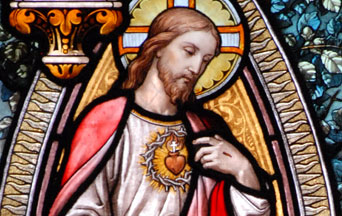
This devotion was the Sacred Heart of Jesus. The Church promoted this devotion with encyclicals, consecrations, liturgical feasts and public acts of reparation. As the modern evils grew, so also did the faithful’s attachment to the Sacred Heart.
This fervor for the Sacred Heart was not just a personal preference. It had a deep providential role in history.
From the very beginning, this broad intention to influence events appeared. When Saint Margaret Mary Alacoque received the revelations of the Sacred Heart in the seventeenth century, she was given precise instructions with a public and social dimension.
In the name of the Sacred Heart, she was to ask King Louis XIV to consecrate France to that Divine Heart and to place its emblem on the royal coat of arms. The promise was clear: In all fights against the enemies of the Church, he would obtain victory. The Sacred Heart asked that he place himself at the head of the defense of the Christian order. He was to be part of a Counter-Revolution against the anti-Christian Revolution.
During the French Revolution, persecuted Catholics had recourse to and adopted the Sacred Heart as a sign of identity and resistance. The revolutionaries understood the meaning of this gesture perfectly: wearing an emblem of the Sacred Heart meant declaring oneself faithful to the Church and opposing the new revolutionary order. Many priests and faithful were imprisoned simply for carrying it. Numerous other historical examples point to devotion to the Sacred Heart as a center of resistance to the Revolution.
The Importance of the Heart
Some might object that the heart is too sentimental a symbol to inspire the firmness needed to confront the Revolution. This impression comes from a modern misunderstanding of the heart’s role.
Quite to the contrary, Professor Corrêa de Oliveira explains how in Sacred Scripture the heart represents not the soul’s feelings or emotions but its will. When the Psalmist says, “My heart is ready, O God” (Ps. 108), he speaks of firm resolve. When the Gospel says that the Virgin Mary “kept all these things in her heart” (Luke 2:19), it points to deep reflection and decision.
In biblical language, the heart is where one decides and directs one’s life. Thus, devotion to the Sacred Heart is not about stirring up emotions, but about uniting the soul to the holy will of Jesus Christ. The person learns to think as He thinks, to want what He wants and to act as He would act. The Sacred Heart fulfilled this role as a rallying point for Catholics because the heart is such a strong and expressive symbol.
Nine Requests to the Sacred Heart
Thus, a true devotee of the Sacred Heart desires the defeat of the Revolution since it is now the greatest obstacle to the Church’s mission of saving souls. Defeating this Revolution would open up conditions for the Catholic Faith to triumph. Fighting this evil is not optional but is a natural consequence of this devotion.
In light of this, Professor Plinio Corrêa de Oliveira suggests nine concrete intentions that a devotee of the Sacred Heart can bring to prayer, especially on the First Fridays of the month. These petitions ask for graces and favors that help souls fight for the Church.
1. Ask for a Catholic sense so that one’s mentality is in sync with the mind of the Church.
2. Ask for a Counter-revolutionary sense so that a soul’s thoughts are directed toward the defense of Catholic principles today.
3. Ask for an awareness of the battle so that the soul remains alert to the spiritual struggles of the times.
4. Ask for interior discernment so that one might recognize what is revolutionary and counter-revolutionary inside one’s soul.
5. Ask for a knowledge of defects so that one can make sincere and constant examinations of conscience.
6. Ask for an understanding of the souls of others so as to help them effectively.
7. Ask for sound judgment in studies so that one might correctly judge what one reads and learns.
8. Ask for interior balance to keep serenity amid the agitation of the times.
9. Ask for healing of spiritual blindness so that the Sacred Heart might cure all resistance and coldness to grace.
Turning to the Sacred Heart is a source of graces especially suited to the present fight. Ask Him to renew the world through the Blood and Water that flowed from His Heart. Ask for the disposition to unite with Him, according to what the present moment requires.
Heart of Jesus, salvation of those who trust in Thee, have mercy on us!
Sources Used:
Plinio Corrêa de Oliveira, Meeting “Santo do Dia” 4/3/1965.
“El Estandarte de la Victoria” By Péricles Capanema, 1998 (Spanish version by Asociación Santo Tomás de Aquino, 2017) Original title: O Estandarte da Vitória – A devoção ao Sagrado Coração de Jesus e as necessidades de nossa época.
Photo Credit: American TFP Photo Archive.