
The last three articles (found here, here and here) in this series have examined a remarkable letter sent by Father Nicholas Deissbach to the newly crowned Holy Roman Emperor Leopold II in 1790. This article will conclude that exploration.
In that missive to the Holy Roman Emperor Leopold III, Father Nicholas Deissbach emphasized the papacy’s importance and recalled every Catholic sovereign’s duty to respect and protect it. Then, he concluded with a discussion of the situation in Austria. He exposed the ways that government ministers and officials united in the fight against the Catholic Church and successfully undermined Austria with revolutionary errors.
The message studies the main processes used to achieve the government’s goals. Two measures, Father Deissbach argued, predominated. The first consisted of the measures the imperial government took against the Church. The second was Leopold’s older brother, Joseph II’s unfortunate tolerance of errors, which he allowed to spread freely.
Eternal and Natural Law: The Foundation of Morals and Law
Before Leopold II acceded to the throne, the government systematically took measures restricting the freedom of the Church. It forbade hermits and forced the religious of both sexes to leave their convents. Furthermore, it placed many seminaries under state control, thus preventing bishops from forming clergymen free from heterodox doctrines and influences. Joseph’s ministers created many other obstacles to the priestly ministry. At the same time, their complete tolerance for error allowed the spread of books and periodicals that corrupted the population from the highest to the lowest classes.
Under such leadership, moral corruption spread because the government protected evil practices while restricting the Church’s means to fight against them. Even worse, confusion and doubt settled in a people once faithful to the Religion of their fathers. They were moving away from it faster and faster as religious persecution reduced the number of priests. In turn, this reduction hindered the distribution of the sacraments, the sources of life and the sanctification of souls.
Unfortunately, Father Diessbach did not seem to clearly understand the Revolution’s real aim—to destroy Christian civilization. However, his true thinking emerges in the paragraph we are about to quote.
It is important to remember that Father Deissbach was addressing the ruler of a Catholic monarchy who gave ample proof of being a revolutionary during his time as governor of Tuscany. During that period, Leopold even tried to establish the first secular state in Europe. This paragraph is a stern warning to the Emperor. It predicts what would happen to the imperial throne if he persisted in imposing the same policies over his Empire.
“There is an intimate connection between some principles of civil liberty, preached by Luther and further developed by the Calvinists, and those advocated by Voltaire, Rousseau, and Raynal. There is an intimate connection between the movement of Bavaria’s Illuminati and the leaders of the French Revolution. Led by active and skillful men scattered throughout Europe, these principles and movements seriously threaten the authority of almost all present governments. There is no other barrier to oppose them than the true Religion, accepted in theory and practice with all its force and intensity, with sovereigns wisely protecting and assuring authentic and entire freedom to the Catholic Church. She alone possesses all the means necessary to re-establish and preserve order. With a skillful policy, O Monarch, you can delay for a while, but not for long, the real crisis being prepared. Suppose the unfortunate distrust of the priesthood instilled by powerful enemies of the princes continues, and the princes keep fearing the pope and priests more than Weisshaupts1 and Mirabeaus.2 In that case, you will have to give way to a National Assembly or resort to extreme violence, but you will become the subject of your subjects. God will undoubtedly hold you accountable for not employing all your might and halting the policies destroying Catholicism in your states.”
Clearly, Father Diessbach perceived that the Revolution’s ultimate goal was to destroy Catholic civilization. Still, this paragraph also shows that he lacked a complete vision of the revolutionary process and could not evaluate the full gravity of events in France. If he had assessed these events correctly, he would have further emphasized the danger of the French Revolution for all of Europe and Leopold II’s duty to fight it.
Father Diessbach’s primary defect consisted in placing the Revolution’s driving force in the ideological terrain without considering the Revolution in tendencies. Prof. Plinio Corrêa de Oliveira highlights this process in his book Revolution and Counter-Revolution. Father Deissbach, thus, lacked a perfect notion of the full character of the revolutionary process. The Revolution in tendencies predisposes souls to accept the Revolution in ideas and facts. These disordered tendencies, then, become the most intimate propelling force of the revolutionary process.
 Learn All About the Prophecies of Our Lady of Good Success About Our Times
All this becomes more apparent in the message’s proposed remedies to stop the Revolution in Austria. We do not describe them in detail because our primary goal in studying this document is to assess Amicizia’s knowledge of the Revolution.
At the end of the message, Father Diessbach suggested measures premised on propagating good books. It gives Leopold II numerous pieces of advice to combat the nefarious action of the usual evil counselors and ways to prevent bad books and newspapers from continuing to corrupt the people. Along with this offensive against the Revolution, it contained many good strategies for spreading Catholic doctrine, preaching missions, etc. Father Diessbach ends his message by calling for the restoration of the Jesuits. This exhortation may have been why Leopold II’s aides did not bring the message to the Emperor’s attention.
Amicizia’s members read Father Diessbach’s message fully and shared his thinking. That partly explains why they did not fight against the French Revolution before it spread its errors everywhere.
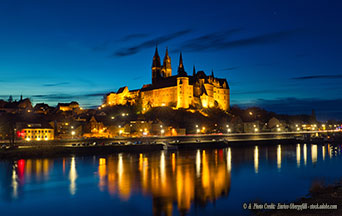
Photo Credit: © Enrico Obergefäll – stock.adobe.com
Footnotes
- Johan Adam Weishaupt (1748-1830) was a Bavarian law professor who was one of the founders of the infamous “Illuminati,” and author of A Complete History of the Persecutions of the Illuminati in Bavaria (1785), A Picture of Illuminism (1786), An Apology for the Illuminati (1786), and An Improved System of Illuminism (1787).
- Honoré Gabriel Riqueti, Count of Mirabeau (1749-1791), was a leading member of the Jacobin Club during the early stages of the French Revolution.