
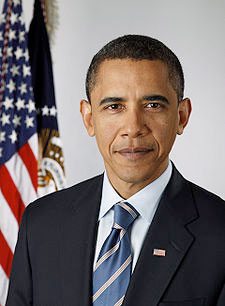
 In his speech introducing President Barack Obama at the 2009 Commencement ceremony at the University of Notre Dame, Father John I. Jenkins, C.S.C, president of the most emblematic Catholic university in the nation, did more than try to justify the invitation and the granting of an honoris causa degree to a politician definitely favorable to abortion and embryonic stem cell research—he called on Catholics to “dialogue” with abortionists.
Division, not Abortion, is Dubbed the Great Evil
Making no mention of the intrinsic evil of abortion—the reason for the great wave of protests brought on by his invitation—Father Jenkins focuses on the evil caused by “political, religious, racial, or national” divisions.1
The stigma of evil, and the debate, is shifted from the sin of abortion—the cause of the division—to the existence of division. Thus, according to Father Jenkins, “too often differences lead to pride in self and contempt for others,” making people “demonize each other.”
So, the fact that one person wants “abortion on demand and without apology!”2 and another—faithful to Catholic teaching and the natural moral law—abhors and opposes it as intrinsically evil, would be in itself totally secondary, as both positions, in the view of Father Jenkins, supposedly lead to “pride” and to a desire to “demonize each other.” The solution for the problems of our time would not be found in a restoration of society’s moral principles but in a “dialogue” that would put an end to all division.
Hence, for Father Jenkins, “easing the hateful divisions between human beings is the supreme challenge of this age.”3
Dialogue: a Magic Solution?
If the great evil of our times consists in division, the solution is to put an end to them, through “dialogue,” the formula proposed by Father Jenkins. But his conception of dialogue is rather singular, calling to mind the somewhat magical concept described by Prof. Plinio Corrêa de Oliveira in his book Unperceived Ideological Transshipment and Dialogue, which is more timely than ever.
Indeed, for the Notre Dame president, once animosity between people is eliminated, “we have a chance to come together and solve all the other [problems].”4
In this kind of dialogue, doctrinal differences become secondary and are overcome by an amenable conviviality, “a chance to come together,” that would solve all problems.
It would suffice, therefore, to find a way of talking in a relaxed atmosphere—during a fishing expedition, for example—to forge agreement with anyone, even if irreconcilable doctrinal differences remain; and even if such differences were over the intrinsic evil of aborting an innocent human fetus.
Philosophical-Moral Relativism
The moral relativism implicit in the “dialogue” approach put forth by the president of the University of Notre Dame is based on a philosophical relativism that effectively denies the principle of contradiction. Father Jenkins seems to disregard the capacity of human reason to know the objective truth, as well as to accept the true religion and follow the dictates of the natural moral law written into the hearts of all men.5
His emphasis is always on the body language, the temperamental overtones, rather than doctrinal substance. He stated, for example:
“Dialogue…is an ongoing process made possible by many acts of courtesy and gestures of respect, by listening carefully and speaking honestly.” However, courtesy is not enough, for in order to “dialogue” one must honor the interlocutor: “If we want to extend courtesy, respect and love–and enter into dialogue–then surely we can start by acknowledging what is honorable in others.”
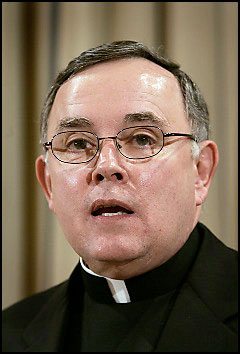
Most Rev. Charles Chaput, the Archbishop of Denver, had strong words to denounce this false conception of dialogue: “we…have the duty to avoid prostituting our Catholic identity by appeals to phony dialogue that mask an abdication of our moral witness.”6
An Unperceived Ideological Transshipment
The “dialogue” Father Jenkins proposes to establish with abortionists can bring serious consequences such as the loss of faith and of the moral sense; for when a man fails to show proper indignation toward evil and appropriate admiration for its opposite, good, he weakens the strength of Catholic principles and the moral sense in his soul.
Following Father Jenkins’ bad advice of treating abortionists with continuous cordiality and highlighting their “honorable” aspects, would lead to great difficulty in maintaining the moral horror that procured abortion must always cause and the admiration one must have for a peaceful, legal, but unashamed antiabortion stance expressed courageously in the public square.
This great difficulty stems from the intimate link between principles and feelings. When they no longer correspond, one or the other will be weakened and eventually change, seeking consistency.
In the concrete case, by dint of molding one’s own feelings to those of abortionists, our principles would tend to be molded as well, leaving the soul defenseless before the sophistries of the “nice and friendly abortionist.”
This is the very phenomenon which Prof. Plinio Corrêa de Oliveira describes in great detail, defining it as unperceived ideological transshipment.
The truth is that “one must live as one thinks, under pain of sooner or later ending up thinking as one has lived.”7
Footnotes
- All the quotes from Fr. Jenkins’ speech are from http://fratres.wordpress.com/2009/05/18/full-transcript-fr-jenkins-notre-dame-speech/.
- One of the slogans being chanted by pro-abortionists at the gates of Notre Dame on the day of the commencement ceremony, Sunday, May 17, 2009.
- All the emphases in quotes are mine.
- Cf. Prof. Plinio Corrêa de Oliveira, Unperceived Ideological Transshipment and Dialogue, at https://tfp.org/unperceived-ideological-transshipment-and-dialogue/.
- Cf. Rom. 2:14-15.
- “Archbishop Chaput on Notre Dame and the issues that remain,” in Statements by Archbishop Chaput, May 18, 2009, at http://www.archden.org/templates/print.cfm/ID/2081.
- Paul Bourget, Le Demon du Midi (Paris: Librairie Plon, 1914), vol. 2, p. 375.